
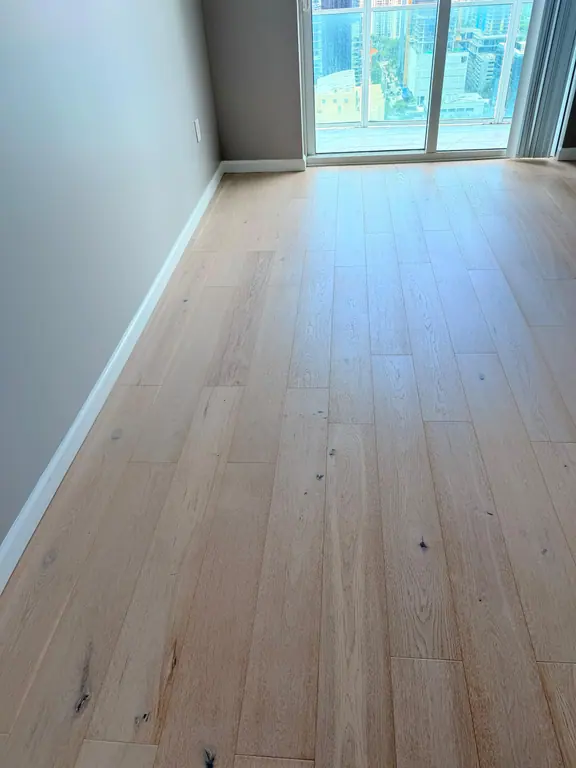
Move out cleaning is the detailed cleaning performed after a tenant or occupant leaves and before a landlord, property manager, buyer, or new resident takes possession. It resets the property to a documented, usable condition by addressing accumulated dirt and residue.
Your boxes may already be downstairs, and the moving truck may be waiting. But the empty apartment suddenly reveals things you couldn't see before: dust behind furniture, crumbs inside drawers, and a greasy oven door. For a Miami-Dade renter or landlord, those details belong on a clear handoff record, not in an argument after the keys change hands.
Table of Contents
- Why Move Out Cleaning Matters More Than a Quick Tidy
- Defining Move Out Cleaning and How It Differs From Routine Cleaning
- Typical Move Out Cleaning Tasks Room by Room
- Reading a 48-Point Move Out Checklist and Sanitizing Steps
- Benefits of Move Out Cleaning for Landlords and Tenants
- Miami-Dade Deposits, Inspections, and Documentation
- Choosing Move Out Cleaning in Miami-Dade and Next Steps
Why Move Out Cleaning Matters More Than a Quick Tidy
It's Friday afternoon. You've swept the living room, wiped the counters, and taken out the rubbish. From the doorway, the apartment looks ready.
Then the landlord opens the refrigerator. There's a sticky shelf, a spill beneath a drawer, and food residue around the handle. Nobody needs to be dishonest for a disagreement to start. You judged the room from the entrance. The landlord checked the surfaces the next resident will use.
A tidy-looking property and a turnover-ready property aren't the same thing. The practical difference is whether someone has checked the less visible areas and agreed on what completion means.
Think of the keys as a handoff
When you return the keys, you're handing over more than access. You're transferring responsibility for the property's condition. A useful cleaning plan makes that moment easier to understand.
Consider these possible walkthrough notes:
- Too vague: The kitchen needs more cleaning.
- Actionable: Remove food residue from the refrigerator drawer and wipe the cabinet shelves.
- Separate issue: The cabinet hinge is loose and needs repair.
The actionable note gives the cleaner a task. The repair note gives the owner a different decision. Keeping them separate prevents a cleaning appointment from becoming an open-ended restoration job.
Practical rule: Describe the surface and the condition, rather than calling the whole property clean or dirty.
Agree before the deadline
Before anyone starts scrubbing, ask what the receiving person expects to inspect. Is the oven interior included? Are the closets empty? Is a balcony part of the agreed scope?
Write those answers down. For a renter, that creates a working plan. For a landlord, it creates a consistent way to explain expectations without relying on memory.
The strongest approach isn't frantic cleaning just before key return. It's a planned reset with visible completion criteria. That lets both keyholders discuss specific conditions instead of competing impressions.
Defining Move Out Cleaning and How It Differs From Routine Cleaning
If you're asking, “What is move out cleaning compared with the cleaning I already do?”, focus on purpose, access, and acceptance.
Routine housekeeping keeps an occupied home usable. Turnover cleaning prepares that home for someone else to take possession. Empty cupboards, exposed floor edges, and accessible appliance interiors change what the cleaner can inspect and address.
The hotel room reset analogy
Think about a hotel room during a stay. A housekeeper may refresh the bathroom, remove rubbish, and straighten the room while the guest's belongings remain.
Between guests, the task changes. The departing guest's possessions are gone, and the room needs a deliberate reset for someone who has no connection to the previous stay. The analogy isn't a technical hotel procedure. It's a useful way to understand why changing occupants changes the cleaning assignment.
| Question | Routine cleaning | Move out cleaning |
|---|---|---|
| What's the purpose? | Maintain an occupied home | Prepare the agreed spaces for handover |
| What affects access? | Furniture and belongings remain | Empty rooms expose overlooked surfaces |
| How is completion judged? | Ongoing household preferences | Agreed scope and inspection criteria |
This comparison makes the difference easier to picture.
Why rental properties need a repeatable process
Turnover isn't an unusual interruption in rental housing. Census historical data show renter mobility generally ranging from 38% to 42%, compared with approximately 9% to 12% for homeowners, illustrating the recurring nature of rental handoffs in the Census historical mobility tables.
Those historical ranges aren't a current Miami-Dade forecast. Their value is context: landlords need a process they can repeat, rather than inventing expectations whenever someone leaves.
That process still needs flexibility. An empty apartment with ordinary dust isn't the same assignment as a furnished rental with heavily used upholstery. A student apartment may have different priorities from a home that has just undergone repairs.
The distinction between move out cleaning and deep cleaning is therefore less about a universal level of intensity and more about the intended handoff. Confirm the actual surfaces and conditions instead of choosing a service by its name alone.
Typical Move Out Cleaning Tasks Room by Room
Start with an empty-room walkthrough and a written scope. A useful specification names the surface, not just the room. “Kitchen cleaning” leaves too much unanswered when someone expects an oven interior and someone else expects only the stovetop.
Use the following as a planning framework, not a promise that every provider includes every task.
Kitchens and bathrooms
In the kitchen, identify appliance interiors individually. Check the refrigerator, oven, and microwave against the booking scope and the appliance's care instructions. Empty cabinet and drawer interiors should also be named explicitly.
Then address counters, sink, backsplash, cabinet fronts, and accessible hardware. The reason for separating these tasks is simple: a polished counter doesn't tell you whether the drawer beneath it contains crumbs.
In the bathroom, distinguish removable soap film and residue from damaged finishes or failed grout. Agree on the sink, toilet, shower, tub, mirror, storage interiors, and accessible fixture surfaces. Don't keep applying stronger products to a mark that may need repair rather than cleaning.
This visual checklist helps you identify the spaces that need their own completion checks.
Bedrooms, living areas, and overlooked edges
In bedrooms and living spaces, inspect the places furniture previously concealed. For each room, consider these scope items:
- Closets and built-ins: Check empty shelves, storage recesses, and floors.
- Trim and doors: Include baseboards, door frames, and accessible handles.
- Switches and controls: Name these separately so they aren't lost within a general dusting task.
- Windows and blinds: Confirm which interior surfaces are included and which require separate access or treatment.
- Vents and appliance gaps: Clarify whether the job covers accessible covers and reachable areas only.
Areas behind movable appliances deserve special care. Don't assume a cleaner will disconnect equipment, move a heavy appliance, or risk damaging a floor. Agree on who provides safe access before the appointment.
Finish with floors and a close inspection
A practical work order is to remove loose dust and debris, clean the agreed surfaces, and leave the final floor pass until afterward. That avoids finishing a floor and then dropping cabinet crumbs onto it.
Check corners, floor edges, and the entry area before calling the job complete. In kitchens and bathrooms, use strong directional light to look for remaining film or residue.
Record any unresolved condition precisely. “Dark mark remains on shower joint” is more useful than “bathroom unfinished.” It gives the owner something specific to assess without implying that every mark can be scrubbed away.
Reading a 48-Point Move Out Checklist and Sanitizing Steps
A checklist count only matters if the entries are meaningful. A 48-point move-out package should turn its promises into defined surfaces, methods, and pass-or-fail conditions, consistent with the structured approach described in guidance on cleaning and disinfecting indoor spaces.
Don't judge a checklist by its length alone. Read an entry and ask whether another person could verify it without guessing.
What a useful checklist entry looks like
Compare “clean bathroom” with the more precise examples below. These are proposed acceptance checks, not guarantees about any particular provider.
| Surface | Agreed method | Observable completion check |
|---|---|---|
| Cabinet shelf | Remove loose debris and wipe with a suitable cleaner | No visible crumbs or removable residue |
| Bathroom mirror | Clean with a compatible product | No visible splashes under inspection light |
| Door handle | Clean, then disinfect if specified | Cleaning checked and treatment recorded |
The last entry needs more than a photograph. A shiny handle doesn't prove that disinfectant was used correctly.
Cleaning comes before disinfection
Cleaning removes soil. Disinfection targets microorganisms. The cleaner should first remove grease, dust, and soap film with a compatible detergent. Disinfectant then belongs on the appropriate surfaces identified in the service scope.
The CDC's facility cleaning and disinfection guidance explains that an EPA-registered disinfectant must remain visibly wet for its label-specified contact time. Wiping it off too soon can prevent the claimed performance.
Prioritized touchpoints may include:
- Door and faucet handles: Clean away residue before applying the selected disinfectant.
- Toilet flush handles: Treat according to the product label and surface instructions.
- Light switches and appliance controls: Follow compatibility instructions and avoid careless liquid application.
Don't mix chemicals. Follow ventilation requirements and the product label rather than improvising a stronger solution.
A surface can look clean without having received a correctly completed disinfection treatment.
For verification, ask the provider to record the product identity, label contact time, treated surfaces, and completion time. That creates a process record. It doesn't turn the property into a sterile space, but it makes the word “disinfected” more specific than a marketing description.
A well-written checklist should make exclusions just as visible as completed tasks. If disinfection isn't included, the customer should know before the appointment, not after the inspection.
Benefits of Move Out Cleaning for Landlords and Tenants
The next resident shouldn't have to investigate which surfaces the previous occupant remembered to clean. A consistent turnover process gives that resident a clearer starting point.
Residential property care includes the surfaces people touch and the dust they might otherwise inherit.
A cleaner indoor baseline
Americans spend approximately 90% of their time indoors, and concentrations of some indoor pollutants can be 2 to 5 times higher than typical outdoor levels, according to the EPA's indoor air quality overview. That same guidance explains that cleaning can reduce, though not eliminate, dust mites, pollen, animal dander, and other allergy-causing agents.
That's a reason to address accumulated dust and residue, not a reason to promise medical outcomes. A move-out clean doesn't certify indoor air quality, eliminate every allergen, or replace specialist attention to a building problem.
For the incoming occupant, the practical benefit is less inherited cleaning. They can put belongings into the agreed storage spaces without first removing someone else's crumbs or residue.
Different benefits for each keyholder
For a landlord, the value is consistency. A defined specification makes it easier to prepare a property for showings, identify unfinished work, and separate cleaning issues from maintenance requests.
For a departing tenant, the value is clarity. They can check their work against the agreed expectations instead of paying for an undefined promise to make the property perfect.
- Landlords gain: A repeatable acceptance process and a clearer record of what remains unresolved.
- Tenants gain: A practical way to demonstrate the condition they left behind.
- Incoming residents gain: A usable starting point rather than an uncertain cleaning assignment.
The handoff is easier to understand when everyone can see the same spaces and conditions. For an additional visual perspective, watch the video below.
The fairest measure of success isn't whether the property looks newly built. It's whether the agreed cleaning was completed, remaining concerns were identified, and the receiving person knows what condition they're accepting.
Miami-Dade Deposits, Inspections, and Documentation
The deepest possible clean isn't automatically the most defensible deposit strategy. A renter can spend time and money trying to improve an old finish without addressing the actual lease requirement. A landlord can also create confusion by treating cosmetic aging as unfinished cleaning.
For Miami-Dade properties, lease language and applicable local law control obligations and deposit outcomes. Don't treat a cleaning checklist as legal advice or assume that hiring a professional guarantees a refund.
Match the work to the documented starting condition
Begin with the entry condition report, move-in photographs, and written notes about existing defects. Compare like with like: the same cabinet, the same floor area, the same appliance interior.
As a general documentation model, Tenant Resource & Advisory Centre's moving-out guidance recommends comparing condition records, completing an exit inspection, and photographing the cleaned premises. That resource concerns British Columbia, not Florida law. Its evidence-gathering approach is useful, but its legal rules shouldn't be applied to a Miami-Dade tenancy.
The distinction matters when deciding what to do about a mark or defect:
- Removable soil: Identify the surface and arrange the agreed cleaning.
- Possible damage: Record the condition separately and discuss responsibility without labeling it a cleaning failure.
- Existing deterioration: Refer to the starting record rather than assuming it appeared during the tenancy.
- Unclear condition: Photograph it and request clarification before authorizing cosmetic restoration.
This preparation-to-proof sequence keeps the inspection focused.
Build a usable exit record
Photograph the empty property after cleaning. Capture room views for context and closer views of included interiors or disputed conditions. Keep timestamped files, the completed checklist, and written notes together.
Arrange an exit inspection where possible. Record unresolved items specifically, including pre-existing defects, rather than accepting an unexplained note that the unit needs work. Confirm key return in writing so the handoff has a clear endpoint.
A move-in and move-out checklist for landlords can help organize the comparison without replacing the lease or applicable requirements.
Deposit perspective: Evidence supports a discussion about condition. It doesn't guarantee a particular legal or financial outcome.
A cleaning receipt shows that a service was purchased. Photographs show visible condition. A checklist records scope and completion. Keep those roles distinct, because none of those documents alone answers every question in a deposit dispute.
Choosing Move Out Cleaning in Miami-Dade and Next Steps
Choose a provider by how clearly it defines the handoff, not by how many times it uses the word thorough. You can clean the property yourself, hire a professional, or divide the work. The right choice depends on access, condition, available time, and the requirements you've confirmed.
Ask for a written scope
Before booking, send room details and disclose known problems. Ask for clear answers to these questions:
- Inclusions: Which appliance interiors, storage areas, windows, and blinds are covered?
- Treatment: Is targeted disinfection included, and how is it recorded?
- Exceptions: What happens if the team finds an unsafe condition or a surface requiring specialist work?
- Completion: Will you receive a checklist, photographs, or another agreed record?
Use a move out cleaning cost guide to frame questions about scope, then request a quote based on the actual property rather than assuming every turnover involves the same work.
Put the appointment in the right place
As a practical sequence, remove belongings and rubbish first. Record the exposed condition, finish repairs or specialist work, and schedule the final clean before inspection. Arrange utilities so the cleaning team has the services it needs.
This separation of moving tasks, inspection, and property-specific cleaning is also reflected in the Western Australian tenant leaving guide. Its tenancy rules aren't Miami-Dade rules, but the scheduling distinction is useful.
Junk removal, pest treatment, mold remediation, carpet restoration, and post-construction cleanup shouldn't be assumed to come with ordinary turnover cleaning. Disclose those needs before requesting a quote.
Before you book, review the lease, list the rooms, identify known defects, and decide what completion evidence you need. That information gives a provider a concrete assignment and gives you a fair basis for checking the result.
Canes Cleaners offers a 48-point Move-In/Move-Out Clean, detailed checklists, non-toxic products, customizable room scopes, and online booking with secure payments across Miami-Dade, including Miami, Miami Beach, Coral Gables, and Doral. Visit Canes Cleaners with your room list, lease requirements, and known condition issues to request a scoped quote for your property handoff.