
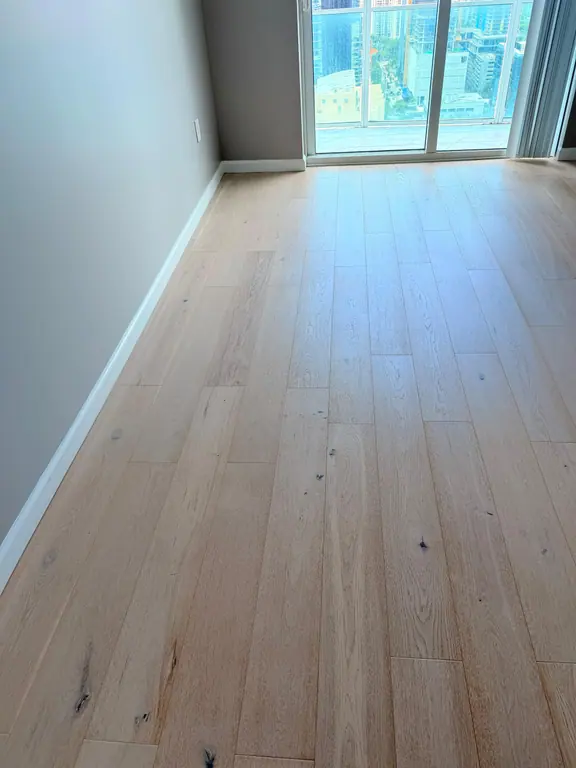
A professional short-term rental cleaning turnover typically costs $150 to $300 per stay in Miami and takes roughly one to three hours, depending on the property size. Those figures cover far more than wiping surfaces, they reflect laundry, bathrooms, kitchens, restocking, staging, and the inspection required before the next guest arrives.
At 11:00 AM, the departing guests leave a Miami Beach apartment with wet towels, sandy floors, a refrigerator full of leftovers, and beds that need stripping. The next reservation begins at 3:00 PM. Then the guest messages asking whether early check-in is possible.
That four-hour window looks generous until the laundry machine is still full, a cleaner is delayed, and the inspection reveals a missed shower drain or empty soap dispenser. Back-to-back hosting doesn't fail because someone forgot that bathrooms need cleaning. It fails because the work wasn't sequenced, assigned, checked, and protected with enough time to absorb real-world delays.
Table of Contents
- The High-Stakes Math of Turnover Timing
- Executing the Room-by-Room Turnover Workflow
- Understanding Miami Rental Cleaning Costs and Fees
- DIY vs. Hiring Professional Cleaning Services
- Quality Control and Guest Satisfaction
- Actionable Tips for Managing Your Cleaning Operations
The High-Stakes Math of Turnover Timing
The checkout-to-check-in gap is a production window, not free time. A host has to convert a used property into a guest-ready one while coordinating access, laundry, supplies, repairs, and quality control. In Miami, sand, humidity, wet towels, and frequent reservations make that conversion less predictable than a standard residential clean.
A typical handoff might look like this:
- 11:00 AM: Guests depart, and the property manager confirms the unit is vacant.
- 11:10 AM: The cleaner photographs the starting condition, removes trash, strips beds, and begins the first laundry load.
- 11:30 AM: Bathrooms and kitchen receive their detailed cleaning while linens cycle.
- Early afternoon: Bedrooms and living areas are reset, replacement linens are installed, and consumables are replenished.
- Before arrival: The manager or cleaner completes a final inspection, checks access and climate controls, and reports defects.
The sequence matters because laundry is the least flexible part of the job. If it starts late, every later task competes with the dryer. If the cleaner leaves inspection until the last minute, there may be no practical recovery time for a stained towel, broken glass, or missing remote.
Operational rule: Build the turnover backward from the guest's arrival, then protect time for inspection instead of treating inspection as an optional final glance.
Where timing conflicts become expensive
The most dangerous bookings are those with an early arrival, a late departure, or a same-day maintenance visit. A cleaner may finish the visible work but still lack dry linens. A maintenance contractor may enter after cleaning and leave dust behind. A guest may request luggage drop-off while the team is moving supplies through the entryway.
The answer isn't asking cleaners to move faster indefinitely. It's creating decision rules. Early check-in should depend on verified readiness, not a hopeful estimate. If a repair affects a bathroom, kitchen appliance, lock, or air conditioning, cleaning and inspection need to be rescheduled around that work.
A written timeline also exposes the difference between a manageable turnover and an overloaded one. When the property has multiple bedrooms, extensive laundry, a hot tub, or heavy sand buildup, the host should adjust staffing, scope, or arrival expectations before the checkout occurs.
Executing the Room-by-Room Turnover Workflow
A reliable workflow reduces wasted movement and prevents clean areas from being contaminated by unfinished work. Industry guidance recommends starting with beds and laundry, then moving top-to-bottom and back-to-front through the property, sanitizing high-touch points during the process, and finishing with staging, floors, and inspection. The cleaner should follow the same order every time, even when the unit appears lightly used.
Start with the work that runs in the background
Strip beds and begin laundry. Remove sheets, pillowcases, bath towels, kitchen towels, and used mats. Separate visibly stained items, inspect mattress and pillow protectors, and start the first appropriate load before detailed surface work begins.
Collect trash and survey the unit. Empty indoor bins, check closets and balconies, look for abandoned food, and note damage or missing items. This first pass gives the cleaner a condition report before anything is moved or discarded.
Clean high areas before low areas. Dust ceiling corners, light fixtures, shelves, headboards, and furniture before vacuuming or mopping. Working downward prevents settled dust from landing on surfaces that were already finished.
Move through the rooms in a fixed direction
Clean the kitchen methodically, starting with counters, cabinet fronts, appliances, sink, and touchpoints. Check the refrigerator, microwave, dishwasher, cookware, and glassware for residue or guest belongings. Restocking should follow written par levels, not memory, so every cleaner knows how much toilet paper, paper towel, soap, detergent, and other consumables belong in the unit.
Bathrooms need deliberate sanitization of toilets, showers, tubs, sinks, faucets, mirrors, handles, switches, and ventilation areas. Keep bathroom tools separate from kitchen tools, and replace cloths when they become visibly soiled. In a humid coastal property, lingering moisture and odors deserve attention before the next arrival, not after a complaint.
Bedrooms come next. Vacuum beneath beds and furniture, wipe reachable surfaces, inspect linens under good light, and make beds only after the correct clean set is ready. In living areas, reset cushions, remotes, décor, dining chairs, and window coverings to the layout shown in the listing photographs.
Practical standard: “Clean” means the room has been cleaned, supplied, staged, and checked. A polished counter with no coffee supplies is not guest-ready.
The final floor pass should happen after furniture is returned and every other task is complete. Vacuum sand from entryways and upholstery, mop hard surfaces with the correct product, and allow wet areas to dry before access is handed back.
For a printable room-by-room reference, use the Airbnb cleaning checklist as a starting point, then adapt it to the property's finishes, amenities, and guest expectations.
Record the property standard in a shared document. It should define what “guest-ready” looks like in every room, list high-touch and commonly missed areas, identify restock thresholds, and include a sign-off field for the final inspection. A checklist doesn't replace judgment, but it prevents rotating staff from applying different definitions of finished.
Watch the workflow in action here:
Understanding Miami Rental Cleaning Costs and Fees
Cleaning fees are now a normal part of short-term rental pricing in the United States. AirDNA's analysis reported that 89% of U.S. listings charged a cleaning fee as of April 1, 2025, representing roughly 1.5 million listings. The same dataset put the average U.S. short-term rental cleaning fee at $161.10 per stay in 2025, with the average one-bedroom fee at $96. AirDNA's market analysis shows why cleaning should be treated as a core operating cost rather than an incidental add-on.
A standard turnover generally takes about one to three hours and costs roughly $150 to $300, with the scope increasing for larger properties, additional guests, multiple bathrooms, hot tubs, extensive laundry, or heavier restoration work. National pricing commonly clusters between $75 and $250 per turnover, while multi-bedroom homes often sit higher. These benchmarks are summarized in Hostfully's vacation-rental turnover guidance.
Set the fee from the actual scope
A fair fee should recover labor without disguising a basic rate as a luxury surcharge. Calculate the recurring work first:
- Laundry: Include washing, drying, folding, sorting, and replacing damaged linens.
- Inspection: Pay for the person who verifies the result, not just the person holding the vacuum.
- Supplies: Account for cleaning chemicals, bags, paper goods, guest toiletries, and replacement items.
- Property complexity: Add scope for bedrooms, bathrooms, outdoor areas, sand, balconies, and special amenities.
- Scheduling risk: Same-day turnovers may require additional coordination or backup labor.
Miami pricing also varies sharply by neighborhood, property type, season, and guest profile. The verified market data includes a $328 average cleaning fee in Santa Rosa Beach, a Florida beach market, which illustrates how destination properties can carry unusually high turnover costs. It doesn't establish a universal Miami price, but it does warn hosts against comparing a compact city studio with a large beach house.
Guests often object less to a fee they can understand than to a fee that feels disconnected from the stay. Airbnb describes a cleaning fee as a one-off charge set by the host, while its hosting guidance identifies cleanliness as a common reason guests give fewer than five stars. Airbnb's cleaning-fee guidance supports a practical pricing question: does the separate fee accurately reflect the work, especially for short stays, or would a more balanced nightly price communicate value better?
For local service pricing context, compare the published scope and packages in Canes Cleaners' house cleaning prices, then match any quote to your property's real turnover checklist rather than choosing the lowest headline figure.
DIY vs. Hiring Professional Cleaning Services
DIY cleaning gives a host direct control over standards, timing, and spending. It also makes the host responsible for recruiting, vetting, training, covering absences, buying equipment, handling payroll or contractor administration, and fixing failures when a cleaner cancels before a same-day arrival.
Professional outsourcing costs more per completed clean in many situations, but it can remove coordination work from the host. The value is not only a cleaner arriving with supplies. It's the operating capacity behind that arrival, including documented procedures, replacement coverage, scope control, and an inspection process.
The DIY route
Self-management can work when the host lives nearby, understands the property intimately, and has enough schedule flexibility to absorb surprises. It can also make sense for a single unit with modest turnover and a stable cleaner who already understands the home.
The model becomes fragile when one person carries all the knowledge. If that cleaner is unavailable, a replacement may not know where supplies are stored, which sheets fit each bed, how the lock works, or what the host considers acceptable. A short checklist won't solve a training gap if nobody has demonstrated the standard and reviewed completed work.
Use DIY only when you can maintain:
- A written scope: Every room, amenity, supply, and inspection point is defined.
- Backup coverage: Another trained person can take over without improvising.
- Equipment ownership: Vacuums, mops, microfiber cloths, laundry products, and protective gear are available and maintained.
- Documented condition checks: Damage, stains, missing items, and maintenance defects are reported before the next guest arrives.
The outsourced route
A professional service is usually the stronger fit when the host manages multiple units, has frequent back-to-back bookings, or cannot personally inspect each turnover. Canes Cleaners serves Miami-Dade with scheduled and on-demand cleaning for homes, apartments, offices, short-term rentals, and boats. Its teams are sourced and trained from five-star hotel standards, and its packages range from express tidying to post-construction cleanup.
That doesn't eliminate the need for host oversight. The host still needs to provide access instructions, property-specific preferences, linen inventory, supply locations, and a clear escalation path for damage or maintenance. A vendor with a broad menu of services may still need a custom turnover scope for a unit with unusual finishes or demanding staging requirements.
Decision test: If the host is the only person who can tell whether a turnover is complete, the operation has a single point of failure.
For cleaners building demand beyond referrals, a useful resource on local link building for cleaners explains how local visibility supports service-area customer acquisition. That marketing work won't fix a weak operation, but it can help a capable cleaning company reach property managers who need dependable coverage.
Choose the model that protects the host's most limited resource. For some owners, that's cash. For others, it's time, availability, and the ability to respond when two properties need attention at once.
Quality Control and Guest Satisfaction
A guest doesn't experience your checklist. They experience the result when they open the door, place a suitcase on the floor, enter the bathroom, and inspect the bed. Airbnb's hosting guidance connects cleanliness with lower review outcomes, which means the turnover standard directly supports the value promised in the listing.
The strongest operators define guest-ready in observable terms. The kitchen has no food residue, the bathroom has no hair or water marks, the bed has the correct clean linen, the trash is removed, supplies are replenished, furniture matches the staged layout, and high-touch surfaces have been addressed. “Looks fine” isn't a standard another cleaner can reliably reproduce.
Inspect what guests notice first
A final inspection should be a separate pass, not a quick look around while carrying supplies. Walk in through the guest entrance and follow the same path a visitor will take. Check the first visual impression, smell, temperature, lights, floors, bathroom, kitchen, sleeping areas, and access points.
Common failures include:
- Touchpoints: Door handles, remote controls, switches, thermostats, and cabinet pulls are missed when teams focus only on visible dirt.
- Consumables: Soap, paper goods, coffee supplies, and trash liners are below the property's expected level.
- Laundry: A towel is damp, a sheet has a stain, or the wrong size is placed on a bed.
- Staging: Chairs, cushions, décor, and blinds are left in a disorderly arrangement.
- Reporting: A loose fixture or damaged item is noticed but not documented before arrival.
Photographs can support accountability when used consistently. Capture exceptions, damaged items, and completed high-risk areas, but don't turn photography into a substitute for personally checking the room.
Guest communication also matters when a problem appears after arrival. A service business can use a service business chat tool to organize incoming questions and route requests, but the response still needs a clear owner, a realistic resolution time, and a documented follow-up. Fast acknowledgement is useful; pretending a problem is resolved when it isn't damages trust.
Actionable Tips for Managing Your Cleaning Operations
Create one master supply list for each property. Store backup linens, approved products, trash bags, toiletries, batteries, and replacement items in labeled locations, then set reorder points that a cleaner can recognize without asking the host.
Use a shared calendar for checkout, arrival, maintenance, laundry, and inspection status. A simple status system works well:
- Vacant and accessed
- Laundry running
- Cleaning in progress
- Inspection required
- Guest-ready
Assign one person to make the final readiness decision. If a cleaner finds a leak, broken appliance, heavy staining, excess sand, or an air-conditioning issue, the escalation rule should identify whether to repair, replace, delay arrival, or move the guest.
Miami properties need special attention to sand removal, humidity, damp linens, odors, and entryway floors. Keep exterior mats functional, check that wet textiles aren't stored in closed bins, and include balcony or patio areas when the listing promises usable outdoor space.
The broader cleaning-services market reflects how turnover work has become a specialized operating category. One market report valued global short-term rental cleaning services at $12.4 billion in 2025 and projected $23.8 billion by 2034, while another projected $24.8 billion by 2034, both reporting an 8.7% CAGR for the relevant forecast period. These projections are reported by RapidEye Inspections' vacation-rental maintenance research, and they reinforce the business case for structured support rather than improvised housekeeping.
For properties in the Miami Beach area, review the service details for Canes Cleaners' Miami Beach cleaning coverage and compare the available scope with your turnover checklist.
Canes Cleaners provides scheduled and on-demand short-term rental turnover cleaning across Miami-Dade, with customizable packages, hotel-standard-trained teams, and online scheduling. If back-to-back arrivals are making your operations unreliable, visit Canes Cleaners to discuss a guest-ready cleaning plan for your property.