
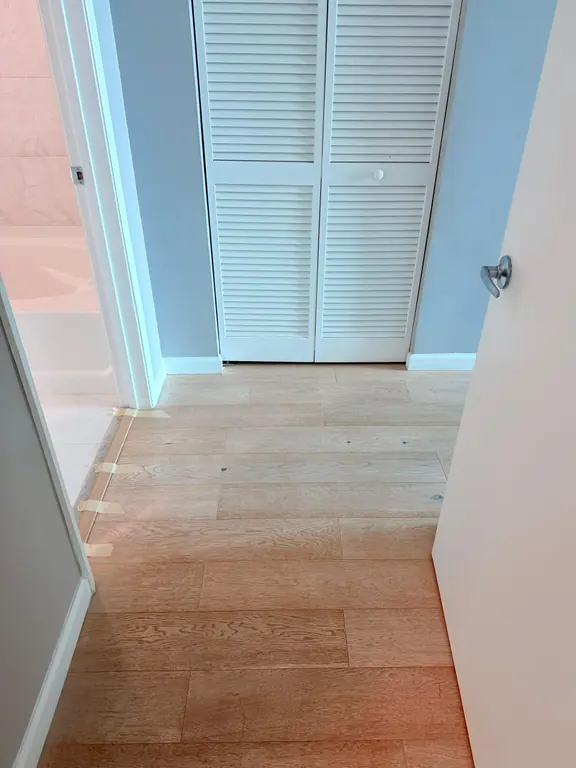
You mop the tile, wait for it to dry, and still feel grit under your feet by evening. In a Coral Gables home, that haze may come from beach sand carried through the entry, fine renovation dust settling along the baseboards, or moisture that keeps bringing residue back. A stronger-smelling cleaner won't solve the wrong problem.
Deep cleaning floors works when you match the method to the material and the soil. Miami homes need a plan for abrasive sand, humid air, condensation, leaks, rental turnover pressure, and construction residue. The practical rule is simple: remove dry debris first, control moisture, then use the least aggressive compatible product that gets the floor clean.
Table of Contents
- Why Miami Floors Get Dirtier Than You Think
- The Deep Cleaning Sequence That Works on Any Floor
- How to Deep Clean Each Floor Type in Miami Homes
- Eco-Friendly Products and Equipment Worth Using
- When Floors Need Disinfecting and When They Don't
- Fixing Stains, Water Damage, and Post-Construction Dust
- Deep Cleaning Schedule and When to Call the Pros
Why Miami Floors Get Dirtier Than You Think
A tile floor near a balcony or beach entrance collects more than ordinary household dust. Fine sand works into grout and scratches delicate finishes when someone drags it across the surface. Salt residue arrives on shoes, paws, and wet towels, while tracked-in water spreads the soil into a dull film that a quick mop can redistribute instead of remove.
Humidity adds another layer of difficulty. Air-conditioning condensation, small plumbing leaks, damp mats, and wet entryways can leave floors repeatedly exposed to moisture. In a rental or short-term turnover, the problem compounds because a property may need to look ready quickly, even when residue has settled into grout lines, floor edges, seams, or carpet fibers.
Post-renovation cleaning has its own failure pattern. Fine drywall and construction dust can remain around baseboards and beneath movable furniture. If you apply a wet mop before capturing that loose powder, the dust turns into a smear and may lodge in textured tile or unfinished edges.
Soil removal comes before chemical strength
Deep cleaning floors is a soil-removal process. The job is to lift and remove grit, dust, residues, spills, and embedded soil. More chemical does not compensate for a saturated mop, poor sequencing, or a vacuum that never reaches the perimeter.
The CDC's environmental-services guidance classifies hard-surface floors as low-touch surfaces that generally present a low risk for pathogen transmission. It recommends routine cleaning when spills or visible soil occur and reports no meaningful advantage from disinfecting floors compared with ordinary detergent-and-water cleaning under normal circumstances.
Practical rule: If the floor still feels gritty after mopping, inspect the dry-soil removal and rinse process before reaching for a stronger product.
That distinction matters in a Miami home, condo, office, boat, or rental turnover. First remove what is physically on the floor. Then investigate whether moisture, damaged finish, or a known contamination event requires a different response.
The Deep Cleaning Sequence That Works on Any Floor
Every successful floor job starts with identification, not a bucket. Confirm whether the surface is hardwood, engineered wood, laminate, luxury vinyl plank, ceramic or porcelain tile, natural stone, sealed concrete, or carpet. Check the manufacturer's restrictions, especially around steam, standing water, acidic products, abrasive pads, and machine agitation.
Start dry and control the direction
Loose grit is the first enemy because sand and construction particles can scratch finishes during wet cleaning. Vacuum slowly along edges, corners, transitions, and beneath movable furniture, or use a clean dust mop where the material allows it. Don't drag debris across the surface with a stiff broom or a damp mop.
Work from the cleanest area toward the dirtiest, and from the farthest point toward the exit. That direction prevents cleaned sections from being crossed by shoes, tools, or a contaminated mop. It also keeps the operator from trapping themselves in a wet corner.
Apply a compatible detergent to a manageable area, then agitate according to the floor's tolerance. Tile grout may accept a soft or medium nylon brush, while hardwood, laminate, and some stone surfaces need gentler action. Use overlapping figure-eight strokes with a damp mop rather than flooding the floor.
Keep the mop and solution clean
One bucket across an entire room is a common reason a floor looks cloudy after cleaning. The mop picks up suspended soil, then deposits it in the next section. The CDC's cleaning procedures recommend turning the mop head every 5–6 strokes, processing small sections of approximately 3 m × 3 m, and working from cleaner areas toward dirtier ones.
Rinse or replace the mop solution as it becomes visibly dirty. Use fresh mop heads or cloths when soil builds up, and never use the same cloth for a bathroom edge and a clean living area without changing or laundering it.
For textured outdoor surfaces or decorative concrete, material-specific guidance can prevent a well-intended scrub from damaging the finish. This stamped concrete cleaning guide is a useful reference when the surface has grooves, color treatments, or a protective sealer.
Finish with a visual check under angled light. Then wipe representative high-traffic areas with a clean white cloth. Visible transfer means the floor needs another controlled pass, not automatically a stronger chemical.
How to Deep Clean Each Floor Type in Miami Homes
The same sequence behaves differently on each material. A tile floor can tolerate targeted grout agitation that would damage a wood finish, while a carpet in humid air needs extraction and rapid drying rather than repeated surface wiping.
Hardwood
Use the lowest moisture level that removes the soil. Vacuum with a floor-safe attachment, clean edges carefully, and use a manufacturer-approved wood cleaner on a barely damp microfiber mop. Dry any visible moisture promptly.
Don't flood boards, steam clean without manufacturer approval, or leave wet mats against the finish. Miami humidity makes slow drying a bigger risk, particularly near sliders, kitchens, and bathrooms.
Tile and grout
Tile benefits from mechanical agitation because sand, body oils, and residue settle into grout lines and textured faces. Vacuum first, apply a compatible neutral cleaner, scrub limited sections with a nylon brush, then recover dirty solution and rinse when the product requires it.
Glazed tile may handle more moisture than porous grout or unsealed tile, but standing water can still migrate into edges and transitions. Give grout lines their own inspection instead of judging the floor only by its surface shine.
Vinyl and LVP
Luxury vinyl plank generally needs a dry vacuum followed by a damp microfiber mop and a product approved for the manufacturer's wear layer. Pay close attention to seams, perimeter gaps, and transitions where moisture can creep underneath.
Avoid abrasive pads, waxy residue, and excessive water. For linoleum, product selection also matters, so this guide to the best cleaner for linoleum floors can help distinguish a compatible cleaner from one that leaves buildup.
Laminate
Laminate has a moisture ceiling that shouldn't be ignored. Remove grit with a soft vacuum, use a lightly damp laminate-safe mop, and dry remaining moisture with microfiber. Never create puddles or push water into joints.
Wax, steam, harsh scrubbing, and soaking can leave the surface dull or contribute to swelling at seams. If residue has accumulated, test the cleaner in an inconspicuous place before treating the full room.
Natural stone
First identify the stone and its finish. Marble, limestone, travertine, and other calcareous stones can react badly to acidic products, while textured finishes may hold sand and residue in their pores. Use a stone-safe neutral cleaner and a soft brush or microfiber tool unless the care instructions permit more agitation.
For bathroom marble, the marble tile cleaning guide from Melbourne Tiling Services P/L offers useful material-specific care context. Don't assume a product safe for porcelain is safe for natural stone.
Carpet
Vacuum slowly, including edges, before applying moisture. Spot-test the solution, extract rather than saturate, and create airflow so the carpet and pad dry quickly. A musty smell, damp pad, or recurring discoloration needs moisture investigation, not repeated fragrance or surface shampooing.
Mechanical floor care has always combined dry and wet methods. Milestones including Melville Bissell's 1876 sweeper, H. Cecil Booth's 1901 suction patent, and James Murray Spangler's 1908 household vacuum design help explain why one-pass cleaning remains unreliable (historical floor-care milestones).
A machine can remove loose particles, but the operator still has to choose the right moisture level and recovery method.
Eco-Friendly Products and Equipment Worth Using
Eco-friendly floor care isn't about replacing every product with a homemade mixture. It means choosing chemistry and equipment that remove the soil without leaving unnecessary residue or exposing a household to an aggressive product that the material doesn't need.
For most sealed hard surfaces, begin with a pH-neutral detergent approved for that floor. Use a vacuum with good filtration, clean microfiber heads, a soft detail brush, and a wet vacuum only where the flooring can safely tolerate the moisture and the operator can recover it.
A quick product and method comparison
| Floor Type | Eco-Friendly Product | Moisture Level | Best Method |
|---|---|---|---|
| Hardwood | Manufacturer-approved wood cleaner | Minimal | Vacuum, damp microfiber mop, immediate drying |
| Tile and grout | Neutral tile detergent | Moderate and controlled | Vacuum, sectional mopping, nylon-brush agitation |
| Vinyl or LVP | Manufacturer-approved neutral cleaner | Low to moderate | Vacuum and damp microfiber mop |
| Laminate | Laminate-safe low-residue cleaner | Very low | Soft vacuum, lightly damp mop, microfiber drying |
| Natural stone | Stone-safe neutral cleaner | Low to moderate | Dust removal, gentle agitation, controlled rinse |
| Carpet | Carpet-compatible low-residue solution | Controlled extraction | Vacuum, spot treatment, extraction, rapid drying |
Match tools to the household
A family with pets needs strong dry-soil capture and washable microfiber, not automatically stronger disinfectant. A student apartment may need edge work, spot treatment, and fast drying around kitchens and bathrooms. A rental turnover benefits from repeatable equipment, labeled products, and a checklist that records what was treated.
Avoid vinegar or other acidic mixtures on acid-sensitive stone, unapproved oils on wood, wax on laminate, and abrasive pads on finished surfaces. “Natural” doesn't mean universally safe.
For homes that need a broader recurring service alongside floor work, eco-friendly house cleaning is one way to compare a whole-home approach with a targeted floor restoration visit. Canes Cleaners is also one Miami-Dade option that uses non-toxic, eco-friendly cleaning products and offers floor-focused work within defined cleaning packages.
Keep products labeled, never mix chemicals, and use separate cloths for visibly different soil zones. The most sustainable process is often the one that avoids rework, prevents finish damage, and uses only the product volume the label and floor require.
When Floors Need Disinfecting and When They Don't
A clean floor and a disinfected floor aren't the same thing. Detergent cleaning physically removes soil and organic matter. Disinfection is a separate step that only makes sense after the surface is visibly clean, the product is registered for that use, and the floor is compatible with the label directions.
For ordinary residential dirt, tracked-in sand, dust, food residue, and routine rental turnover, detergent cleaning is usually the appropriate foundation. The CDC guidance cited earlier treats hard-surface floors as low-touch surfaces and doesn't support routine floor disinfection as automatically more effective than ordinary detergent-and-water cleaning.
What the label actually requires
Use disinfectant when there's a known contamination event, a specific public-health requirement, or a documented reason to treat a compatible surface. Confirm the pathogen claims, dilution, application method, and contact time on the product label.
The surface must remain visibly wet for the full stated contact time. A 10-minute contact time means the floor can't dry after five minutes. If it dries early, CDC guidance on cleaning and disinfecting facilities explains that additional product must be applied so the required wet period is maintained.
Spraying and wiping immediately may leave the floor looking clean, but it doesn't satisfy a label contact period. A product also isn't automatically effective against every organism. Efficacy depends on the microorganism, organic soil, concentration, and contact duration.
Separate the records and the chemistry
For a professional or property-management job, record the product name, dilution, start time, and completion time. Allow the floor to air-dry, or rinse only when the label directs you to do so.
Never mix disinfectants with detergents, acids, bleach, or other chemicals. Strong odor isn't proof of stronger protection. In many Miami homes, careful soil removal, clean equipment, and moisture control provide the practical result the floor needs without adding unnecessary chemical exposure.
Fixing Stains, Water Damage, and Post-Construction Dust
A stain that disappears while wet and returns after drying may not be ordinary surface dirt. Darkening grout, recurring baseboard marks, swelling seams, a persistent musty odor, damp carpet padding, or mold returning after cleaning all point toward moisture or material damage.
Start by finding the source. Check plumbing connections, air-conditioning condensation, window and balcony entries, wet mats, and areas beneath appliances. Dry the affected space, improve airflow, and use dehumidification while the source is being investigated.
Treat stains according to the material
Grout darkening may need controlled brushing and recovery, but porous stone can absorb a stain rather than hold it on the surface. Pet accidents can affect carpet backing or subfloor materials. Tannin-like marks on wood may indicate moisture interaction with the finish or boards.
Use a spot test before applying a stronger treatment. For marble and other sensitive stone, gentle daily care is safer than improvised acid-based chemistry, and these daily care tips for marble provide useful context for avoiding preventable surface damage.
Post-construction dust requires patience. Vacuum with suitable filtration, work edges and ledges, remove residue in dry passes where possible, and only then use a controlled damp clean. A wet mop used too early turns powder into a film that may require additional agitation.
Know when cleaning isn't enough
The EPA recommends keeping indoor relative humidity below 60%, ideally between 30% and 50%, and advises vacuuming or damp-wiping hard flooring with mild detergent before drying it quickly (EPA moisture and mold guidance). Wet cleaning alone doesn't control an ongoing moisture problem.
Escalate when the source remains active, porous materials can't dry promptly, swelling continues, or mold keeps returning. Flooring removal, water-damage restoration, or professional mold remediation may be more honest and safer than another cleaning pass. For a surface-level hardwood issue, this guide on removing water stains from hardwood floors can help you decide whether the mark is treatable or needs a flooring professional.
A clean surface cannot compensate for a wet subfloor. Drying and source control come first.
Deep Cleaning Schedule and When to Call the Pros
Build the schedule around traffic, moisture, occupants, and deadlines rather than a universal calendar. Busy family homes, pet households, beach-facing entries, and humid rooms need closer observation than lightly used spaces. Short-term rentals and move-out properties need a reset whenever the occupant changes, while post-renovation floors need cleaning after dust-producing work and again after the remaining residue has settled.
Use routine vacuuming and spot cleaning to limit abrasive grit. Plan a deeper floor service when edges, grout, seams, or high-traffic paths hold visible residue that ordinary maintenance no longer removes. Increase attention after leaks, construction, heavy guest use, or a long vacancy.
DIY ends when the material is uncertain, the floor is damaged, moisture keeps returning, contamination is known, or the deadline leaves no room for a failed experiment. It also ends when the job requires extraction, controlled recovery, detailed edge work, or a documented turnover checklist that you can't complete reliably.
A 36-point deep-clean package, such as the floor-focused work included in Canes Cleaners' service options, exists for situations where vacuuming, mopping, edge cleaning, spot treatment, and detail work need to happen as one coordinated visit.
Keep the plan simple:
- Remove dry grit first.
- Use the lowest safe moisture level.
- Change dirty tools before they redeposit soil.
- Investigate recurring moisture instead of masking it.
- Disinfect only when the situation and label justify it.
Canes Cleaners provides residential and commercial floor-focused cleaning across Miami-Dade, including deep cleans, post-construction work, rental turnovers, apartments, offices, and boats. Visit Canes Cleaners to review the available service scope and book a cleaning matched to your floor type, moisture concerns, and deadline.