
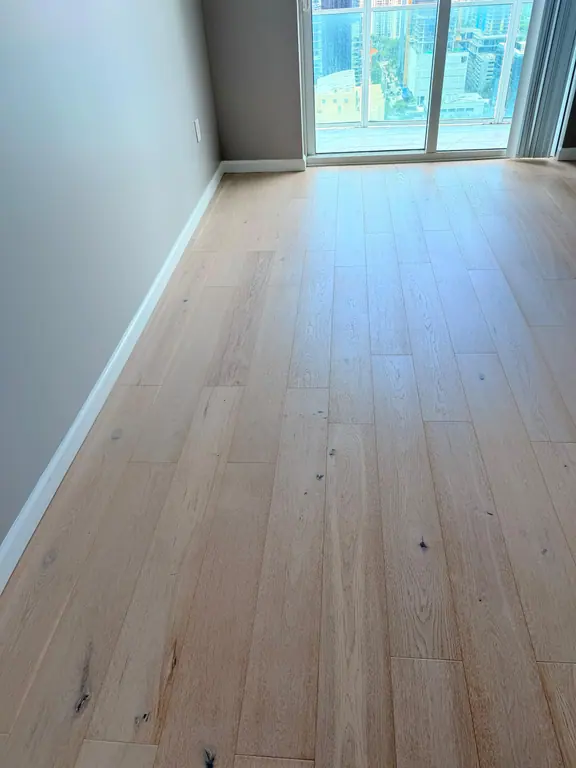
Your lease ends on a Friday. You pack in a day, haul the boxes out on Saturday, and hand back the keys Monday morning with a tired wave. Three weeks later the itemized statement arrives: a charge for a chip in the paint beside the bedroom door, a carpet stain you can't prove wasn't yours, and an oven you're certain was already dirty when you moved in. None of it reflects how hard you scrubbed.
The cleaning usually isn't the problem. The missing record is. A landlord compares the unit against a memory of how it looked on day one, and without a dated photo or a signed form, that memory wins the argument. Deposits turn on evidence, not effort, and evidence gets built twice, once when you take the keys and once when you hand them back.
That pairing is what the ten checkpoints below are for. Each one creates a document at the front of the tenancy that answers a question at the end of it: what was broken, what was dirty, what was used, what was returned, what was promised. Miami-Dade adds its own pressure to the sequence, from humidity that hides moisture behind fresh paint to air-conditioning vents that push dust into every room, plus a summer turnover season when reliable cleaning crews book out weeks ahead.
Work the list in order. Skip a step and you're negotiating from memory. Complete all ten and the conversation at move-out takes five minutes instead of five emails.
Table of Contents
- 1. Photo and Video Documentation of Unit Condition
- 2. Signed Move-In Condition Checklist
- 3. Utility Transfers and Meter Readings
- 4. Key, Access Device, and Lock Inventory
- 5. Security Deposit Tracking and Lease-End Notice
- 6. Change of Address and Mail Forwarding
- 7. Appliance Testing and Cleaning
- 8. Wall, Paint, and Fixture Damage Repair
- 9. Professional 48-Point Move-In/Move-Out Cleaning
- 10. Final Walkthrough and Key Return
- How each move-in and move-out task compares
- Turn Your Checklist Into a Clean Exit
1. Photo and Video Documentation of Unit Condition
Start the file before a single box crosses the threshold. The camera comes out twice in a tenancy, once on move-in day when the unit is empty and untouched, once at move-out after cleaning, and every frame should carry a timestamp.
The outcome matters more than it feels. Zillow-derived rental data summarised in a move-out inspection guide from SiteCapture indicates that only about 40 to 42% of renters receive their entire security deposit back, while approximately 24% lose the full deposit and 27% recover only part of it. Most of those outcomes were decided by documents that existed, or didn't, months earlier.
Take a scenario. A chip in the paint beside a bedroom door looks like nothing in the moment. At move-out it becomes a $75 charge for "wall damage." One dated photo from move-in, emailed the same day, ends that argument in a single reply. Without it, you're describing a wall you can no longer see.
Five minutes per room gets you a defensible record:
- Shoot before you unpack. Boxes hide baseboards, thresholds, and window frames, which are exactly where pre-existing damage lives.
- Lights on, blinds open. Flash hides discoloration and moisture rings; daylight shows them.
- Email the set to your landlord or property manager. A message in your sent folder is a dated copy nobody can dispute later.
- Repeat the same room order at move-out. Kitchen, bathroom, bedroom, hallway, in that sequence both times, so before-and-after pairs line up when a manager is reviewing them side by side.
2. Signed Move-In Condition Checklist
A signature on a condition form is worth more than a folder of photos nobody else has seen. Photos prove what you observed. A signed form proves what both of you agreed to, which is the version that matters when a deduction is challenged.
The form itself should be room by room, with a plain condition label against each item: good, fair, damaged, or not working. Ambiguity is the enemy here, so "fair" on a bathroom vanity tells a future manager nothing, while "faucet drips, cold handle loose" tells them everything. Get both signatures, tenant and landlord or property manager, and keep a copy in your own records rather than trusting the office file alone.
What the Form Should Record Beyond Cosmetic Damage
Visible dirt is the easy half. A move-in inspection is also your one clean opportunity to record the conditions that cleaning cannot fix, which is why the form should carry notes on moisture and air quality. Government of Canada indoor-environment survey data on rental housing found that mold and humidity ranked among the top three indoor concerns for 38% of respondents, and 27% of renters said they had little control over maintaining a healthy home (Government of Canada indoor air quality report).
Walking the unit in Miami-Dade, add these to the notes column:
- Condensation and stains. Check window sills, ceiling corners, and the wall behind beds for rings that were painted over rather than cleaned.
- Under sinks and around toilets. Photograph any staining before you touch it, and note whether it comes back wet after the cabinet doors have been shut overnight.
- Exhaust fan operation. A bathroom fan that doesn't pull air is a maintenance issue, not a cleaning one, and it belongs in writing on day one.
- Odour after the air handler runs. Run the AC for ten minutes, then judge the smell. A musty note in your file explains a great deal at move-out.
Property teams running their own turnovers can mirror the same structure with this landlord-side move-in and move-out checklist, which keeps both sides working from one document.
The test for any line item: if you couldn't describe it to a stranger over the phone, the note is too vague to defend.
3. Utility Transfers and Meter Readings
Say your electricity start date slips by three days. You move into a dark apartment, run extension cords from the hallway, and lose food from a cooler. The fix isn't complicated, but it has to happen before you pack, not after.
Set every transfer at least a week ahead, and pick the start date deliberately. Utilities switched on the day before move-in cost a few dollars of unused power and remove all the risk of a dark first night. On the exit side, set the shutoff for the day you hand back the keys, not the day you finish moving, or you'll be carrying buckets for the last two days.
Then photograph the meter. On both dates, get the numbers in frame with the unit identifier visible. If a final bill arrives later with usage that isn't yours, a meter reading is the difference between a billing dispute you win and one you absorb. Ask the landlord in writing which utilities are included in the rent and which sit in your name, because metered water and trash are common splitting points in South Florida buildings.
Keep one document, physical or digital, with:
- Provider names and account numbers for power, water, gas, internet, and trash.
- Start and stop dates confirmed in writing by each provider.
- Meter photographs from move-in day and move-out day.
- The building's utility policy, including any required providers named in your lease.
A week without service is inconvenient. A month of someone else's usage on your final bill is money.
4. Key, Access Device, and Lock Inventory
Count the keys out loud on move-in day. Every key, fob, garage remote, mailbox key, and parking card gets a line on the condition form, because a key you never knew existed is still a key you're responsible for returning.
Here's where it gets practical. During a move-in walkthrough in an older building, finding a spare key left behind by the last tenant is common enough that you should assume it. If you find one, ask for the locks to be rekeyed before you unpack, and put the request in writing. Lock changes are cheap for the owner and expensive for you if a stranger has the same key.
- Ask directly whether the locks were changed after the previous tenancy, and record the answer.
- Note every access device on the form, including devices you were told not to use.
- Return everything in person and ask for a signed receipt, or send it by a method that produces written confirmation.
- Take the keys off your personal ring before the final walkthrough so nothing gets walked out of the building in your pocket.
The number of access devices is less important than the record of who returned what, on what date, and to whom.
5. Security Deposit Tracking and Lease-End Notice
A deposit is a loan you make to your landlord, and the paperwork decides whether it comes back. Track four things from day one: the amount, the lease-end date, the notice period your lease requires, and the deadline for the return or an itemized statement.
The rules give you a model to work from. HUD requires owners of HUD-subsidized multifamily properties to complete and document both inspections, lets the tenant attend the move-out inspection on request, and sets a 30-day window after move-out (shorter where state or local law requires) to either return the deposit with accrued interest or provide an itemized statement of unpaid rent, damages, and estimated repair costs, per HUD's inspection and deposit guidance.
Florida sets its own notice and return timelines under the residential landlord-tenant statute, and they run on the date your written notice and forwarding address are received, not the date you mention it in conversation. Send notice in writing, early, with the forwarding address included.
A worked example: a tenant sends written notice, provides a forwarding address, and later disputes a carpet cleaning charge with move-out photos plus a receipt from a professional clean. That combination answers the deduction on its own terms rather than arguing about intent. The same approach, laid out step by step, is covered in this guide to getting a security deposit back.
Calendar the return deadline the day you send notice, and follow up in writing if it passes. A reminder email costs nothing and creates a dated record.
6. Change of Address and Mail Forwarding
Mail is the quiet risk in a move. A bank statement sitting in a vacant apartment mailbox is an identity-theft opportunity, and a tax document that never arrives is a problem you'll be solving next April.
File the USPS change of address at least a week before you leave, online or at a post office, and set the start date for the day after your last mail day at the old unit. Forwarding catches what's already in transit, but it updates nothing on any account, so treat it as a safety net rather than a solution.
There's a documentation angle here that renters miss. Your forwarding address is also where your deposit statement, any itemized deductions, and any refund check will be mailed after move-out. If the landlord's letters go to a unit you no longer control, you can lose weeks of the return window just finding out what was charged. Update your address with the landlord in writing on the same day you file with the post office, and keep a copy of that notice with your move-out records.
Accounts That Still Mail to the Old Address
- Banks and card issuers, including the ones you rarely log into.
- Insurers, including renters insurance, which often needs to move with you anyway.
- Your employer's payroll and benefits records.
- Government agencies, including the IRS, and the Florida DHSMV for your driver's licence and vehicle registration.
- Schools, medical providers, and subscriptions that keep renewing.
Licence and registration updates are the ones people skip. State vehicle and licensing records are supposed to follow where you live, and a stale address on a vehicle record becomes a paperwork problem at the worst possible moment: a traffic stop, a renewal notice that never reaches you, a title document mailed to your old apartment.
Work through the list in one sitting, account by account. It takes about an hour.
A two-week forwarding window is a courtesy, not a plan. Update the accounts first and let the forwarding mop up the stragglers.
7. Appliance Testing and Cleaning
Every appliance has a working state and a clean state, and most leases treat them as separate obligations. Run each one the day you move in, then again before you hand back the keys.
The money follows cleaning more often than renters expect. The Deposit Protection Service reports that cleaning accounted for 28.66% of tenancy-deposit claims in 2024, the leading listed claim reason that year, in its deposit deduction analysis. An oven that was never self-cleaned, a hood filter greased since the last tenant, and a lint-clogged dryer all read as neglect on an inspection sheet, whether or not the buildup was yours.
Test on move-in and report faults in writing the same day. A dishwasher that drains slowly or a washer that walks across the floor on spin is exactly the kind of intermittent fault that disappears when a technician shows up. A fault logged early is a repair. The same fault reported at move-out is your fault.
When you clean for handover, work appliance by appliance:
- Read the manufacturer's care guidance and skip abrasive pads on stainless steel, which scuff permanently and read as damage on the final walkthrough.
- Replace the range hood filter if the lease or the building expects it, and note the date you swapped it.
- Empty the dryer lint trap after your last load and vacuum any accessible lint around the appliance if the manual allows it. Lint is a fire risk as well as a cleaning item, so if you suspect buildup deeper in the venting, report it in writing or book professional service rather than pulling the vent apart yourself.
- Clean the refrigerator and freezer and leave the doors slightly open for airflow after you switch them off, so mildew doesn't set in before the next tenant.
- Photograph each appliance at move-in and at move-out so condition is a record rather than a debate.
The photographs are what turn this chore into evidence. A timestamped shot of a spotless oven interior, paired with the written fault report you filed on day one, closes off the two arguments deposit deductions are built on.
8. Wall, Paint, and Fixture Damage Repair
Walls are where the wear-and-tear argument is won or lost. Nail holes, scuffs, chipped paint, loose cabinet hardware, and cracked fixtures all sit on a line that Florida law draws between normal wear, which the landlord absorbs, and tenant-caused damage, which can come out of your deposit.
The dispute data explains why this item deserves its own slot. Cleaning was identified in 54% of tenancy-deposit dispute cases in 2024 to 2025, ahead of damage at 49% and redecoration at 31%, according to the NRLA review of deposit dispute trends. The pattern is consistent: the arguments are rarely about structural failure, they're about whether a mark was there before, whether it was dirt or damage, and whether anyone wrote it down.
Where Wear and Tear Ends and Damage Begins
A single nail hole from a picture frame is ordinary. Twenty holes across a bedroom wall, patched badly with a different shade of paint, is damage. The difference is scale, cause, and whether the repair is visible. That's why touching up your own walls badly can cost more than leaving them alone.
Before you fill anything:
- Ask for the paint colour and brand at move-in, and photograph the label if the building keeps spare cans.
- Use lightweight spackle for small holes, applied thin and sanded flush once dry, not a thick blob pressed in with a finger.
- Touch up with a matching sample, and test it on an off-angle wall first, because a fresh patch on a weathered wall can show even when the colour matches.
- Photograph the repair before and after, so the record shows a repair rather than a scar that was always there.
- Report pre-existing damage at move-in, which is the only reliable way to stop it being charged to you later.
Small repairs done properly save the repaint charge. Big repairs or a full wall repaint are usually a job for the property's painter, and paying for that yourself rarely makes sense. If you're filling holes for the first time, these step-by-step wall repair methods from Neasden Hardware cover the order of spackle, dry time, sanding, and primer.
9. Professional 48-Point Move-In/Move-Out Cleaning
The truck leaves Tuesday and your lease ends Wednesday. If cleaning still sits on your to-do list, a professional appointment can protect your remaining time, but only if its scope matches the handoff requirements.
An inspection checklist gives both sides a clearer record of condition. The rental property inspection guide from HappyCo provides a framework for that record, rather than a basis for assuming what any particular turnover will cost.
Treat cleaning as paired evidence: record the starting condition before a move-in reset, then document the cleaned surfaces at move-out. A cleaning receipt records a service; photos show the condition left behind.
Canes Cleaners' 48-Point Moving Clean covers kitchens, bathrooms, bedrooms and living areas, office areas, and move-specific details. Its move-in and move-out cleaning includes inside appliances, cabinets and closets, plus interior windows and blinds. It suits an empty-unit lease handoff as well as a move-in reset.
- Book for the day before the final walkthrough, leaving time to check the work and address missed areas before returning keys.
- Empty the unit first. Boxes and furniture block surfaces that need cleaning and make the finished condition harder to document.
- Ask for the checklist in advance and compare it line by line with your lease. Resolve scope gaps before the appointment, especially inside appliances and storage.
- Book early in summer and at month-end, then confirm availability rather than building your moving schedule around an unconfirmed slot.
Share the unit's condition, parking, building access and timing requirements when booking. A defined scope and workable access matter more than a general promise to leave everything clean.
10. Final Walkthrough and Key Return
The walkthrough is the last chance to fix something rather than argue about it. It happens after cleaning and after repairs, while you still have access, tools, and time, and before the keys leave your hand. Every item on it is evidence in one direction or the other: either the manager signs off on a condition, or you document that the condition was never raised.
Schedule it in the morning. A 9am walkthrough gives you the rest of the day to address anything the manager flags, while a 5pm slot turns a loose door handle into a deduction because nobody can come back. Bring your move-in checklist, your photo set, and the cleaning receipt if you used a service. That pairing is the whole point of the paperwork you have been building since move-in day: the signed checklist from day one answers any claim about pre-existing damage, and the receipt answers any claim about cleaning standard.
Ask one question at the start of the walkthrough: "Is anything here going to be a deduction?" Then write down the answer while the manager is still in the room.
Close the loop in this order:
- Walk each room with the checklist and tick the same items you ticked on move-in day, so any dispute becomes a comparison between two dated records rather than two memories.
- Note moisture, odour, and pest evidence while the unit is empty, since these read clearly in an unfurnished space and belong in the final record.
- Request a written move-out report signed by both parties, and keep your copy with the photos. If the manager will not sign, photograph the completed checklist next to the unit number on the door.
- Take a final set of time-stamped photos and video after the walkthrough and again after the keys are returned, so the last state of the unit is documented by you, not by memory. This is the evidence that matters if a deduction notice arrives weeks later.
- Return every access device and get a receipt listing each key, fob, and garage remote by count, which is where a written key log pays off, as these key control tips for property managers from Lotus Locksmith make clear on the building side. Unreturned devices are one of the few deductions that is hard to argue against, because replacement cost is easy to document.
The tenancy ends when the paperwork says it ends. Get that in writing before you drive away.
How each move-in and move-out task compares
| Item | When to Complete | Who Handles It | Main Benefit |
|---|---|---|---|
| Photo and Video Documentation of Unit Condition | At move-in and move-out | Tenant | Provides dated evidence of the unit's condition |
| Signed Move-In Condition Checklist | At move-in | Tenant and landlord or property manager | Establishes an agreed record of existing conditions |
| Utility Transfers and Meter Readings | Before move-in and at move-out | Tenant, with landlord confirming included utilities | Prevents service gaps and charges for others' usage |
| Key, Access Device, and Lock Inventory | Count at move-in; return at move-out | Tenant and landlord or property manager | Protects access security and helps avoid replacement fees |
| Security Deposit Tracking and Lease-End Notice | Before lease-end; track deposit after move-out | Tenant, with landlord handling deposit notices and return | Helps meet deadlines and challenge unfair deductions |
| Change of Address and Mail Forwarding | Before move-out | Tenant | Helps prevent missed mail and identity risks |
| Appliance Testing and Cleaning | Test at move-in; clean before move-out | Tenant; landlord handles needed repairs | Identifies problems early and reduces cleaning disputes |
| Wall, Paint, and Fixture Damage Repair | Identify at move-in; address tenant-caused damage before move-out | Tenant, coordinating with landlord when needed | Reduces avoidable damage deductions |
| Professional 48-Point Move-In/Move-Out Cleaning | Before move-in or after move-out, as needed | Tenant or landlord; professional cleaners perform the service | Saves time and helps meet cleaning requirements |
| Final Walkthrough and Key Return | After cleaning and repairs, before or at key return | Tenant and landlord or property manager | Documents final condition and confirms the tenancy has ended |
Turn Your Checklist Into a Clean Exit
Keys are due Friday at noon, the walkthrough is Thursday at 4, and the truck is already half loaded. That gap is where deposits get lost, not because one chore was skipped, but because the record and the condition never lined up.
Treat the ten items as one file that has to survive a dispute. Photos, the signed condition form, meter readings, and the key count are the baseline you can only capture while you still hold the unit. Notice, deposit tracking, the forwarding address, appliance notes, and wall repairs are the deadlines that make that baseline usable. The clean and the final walkthrough close the file: a dated receipt and a signed report, not a hallway conversation.
Order is the trade-off most renters miss. A walkthrough only argues your case if move-in photos exist to compare against. A carpet charge is harder to fight if written notice and a forwarding address went out late. Cleaning only helps the deposit when it is finished before the inspection and the receipt sits in the file. Reverse the order and you are rebuilding proof after the window has closed.
Three choices decide how that file looks.
Effort versus documentation. A spotless apartment with no dated photos still loses the argument that a moderately clean unit with a full photo set wins. Spend the hour on the camera before you spend it on another wipe-down.
Doing it yourself versus hiring it out. A self-clean costs no cash and a full day, usually while furniture is still in the way. That is the worst timing for inside appliances, cabinets, and floors. If time, humidity, or the empty-unit detail load is the constraint, book the clean and keep your hours for notice, meters, and the walkthrough.
Repairing versus reporting. Small marks you can fix so they disappear are worth fixing. Anything you would be guessing at is better photographed and turned over to the property's own trades than patched badly and billed twice.
Calendar the lease-end notice first, transfer utilities early, and finish with a walkthrough that produces written confirmation. A move clean booked for the day before that walkthrough takes the largest job off the last week. For the wider move around those lease dates, the NJ moving checklist from AM Moving Services lays out sequencing beyond the unit itself.
Keep one folder for at least a year after the tenancy ends: photos, the signed form, meter images, receipts, notices, and the move-out report. Deposit disputes often show up after you have already changed cities. The renter with a dated, complete record is the one who stops trading emails and starts receiving the check.
When the clean will not fit into the last 48 hours, Canes Cleaners runs a 48-point moving clean built for empty units at lease handover, covering inside appliances, cabinets, closets, interior windows, blinds, and floors across Miami-Dade. Share the unit size, condition, access details, and timing, and you get an instant online quote and a booking slot that fits the walkthrough date. Book the clean for the day before the inspection, keep the checklist in the file, and leave the last item on the move-out list as the one you did not have to do yourself.