
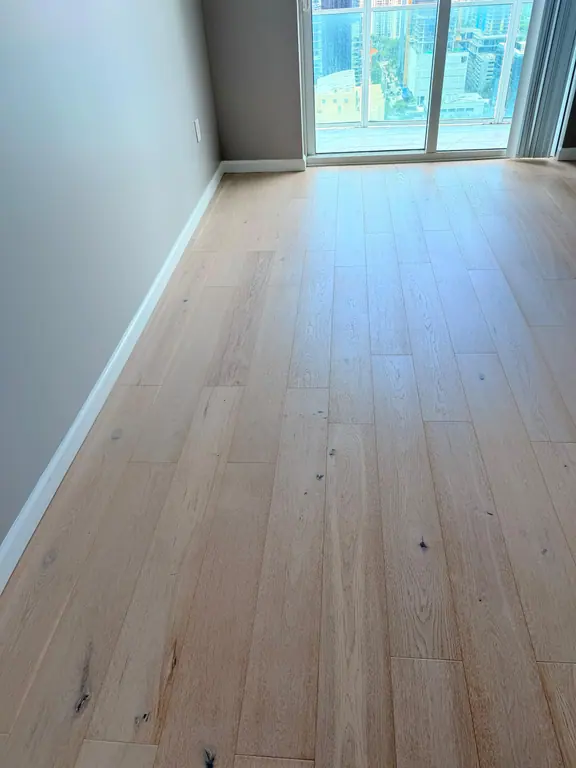
The typical security deposit reported by U.S. renters who paid one was $750 in 2024, according to Zillow's Consumer Housing Trends Report. A last-hour wipe of the counters is a weak defense of that amount. The person taking the keys judges an empty unit in bright light, and the next occupant breathes whatever you leave in the air.
How to clean an apartment before moving out is that handoff. Empty the rooms before any product hits a surface, work from the ceiling to the floor, and keep dated photos that split old damage from cleaning you skipped. What follows is the staged kit, the room chart, the order of work, the photo punch list, and the rules for chemicals and smell.
Table of Contents
- What the Move-Out Clean Has to Protect
- Room by Room Tasks and Supplies
- How to Clean the Apartment Top to Bottom
- Final Inspection and Deposit Photos
- Odors Chemicals and Disinfection Mistakes
- Hand Over the Keys or Book a Move-Out Clean
What the Move-Out Clean Has to Protect
Say the keys are due Friday morning on a one-bedroom. The fridge still holds leftovers, the shower has a soap film, and a couch just left a gray outline on the wall. That $750 is what a manager can hold while they price a cleaner, a carpet treatment, or a repaint of marks you never photographed. A shiny sink doesn't answer any of those charges.
Treat the job as two things at once. It's an empty-unit handoff someone will score under a flashlight, and it's a dated record that separates a stain that was already there from grease you never touched. I would not wet a cloth until the unit is empty. Cleaning around boxes hides the shelf lips and closet floors that show up on a deduction list.
Before any bottle is open
Pull belongings and bagged trash out, including food. Read the lease for the oven, the fridge, the carpet, and filled wall holes, because some handovers only want exteriors and some want the racks. Write down the meter readings while the doors are still on. Photograph stains, scuffs, and appliance condition in daylight, before water changes how they look.
Stage supplies in the empty kitchen, then run a top-to-bottom order so ceiling dust doesn't settle on a floor you already washed. The room chart tells you what to set out and what gets noticed. The numbered sequence is the order. The photo list is the walk from the door toward the exit. The chemical and odor rules keep a "fresh" smell from becoming the next tenant's air problem.
Practical rule: If you can't show the condition with a date on the photo, the clean is weaker than the deduction.
Room by Room Tasks and Supplies
Stage one kit on the empty kitchen counter before the first cloth is wet. Split damp microfiber cloths by color and keep them apart: one set for the kitchen, one for the bath, one for general dust. A dry duster just moves particles onto the next surface. Moisture holds them on the cloth.
You also want a vacuum with a HEPA filter, because the exhaust goes back into the room. Add a mop and a bucket you can dump, so dirty water isn't spread across the last room. Pack a degreaser for the stove and hood, a non-scratch pad for soap film, glass cleaner for interior glass only, and trash bags. Put cleaners, paints, and batteries in a sealed box that does not go in the trash. That box is for a proper drop-off, not for the cleaning itself. This kit is tools. Leftover chemical disposal is its own job.
Confirm appliance interiors against the lease before you pull a rack. Some managers only score exteriors. Opening a self-clean oven with the wrong paste can etch the finish and create a damage claim you didn't have an hour ago.
How to read the chart
The second column is what you stage in that area. The third column is the work that has to be done for the handoff. The last column is what a walk-through catches when the obvious surfaces already look fine. Do the must-do tasks while you're in the room. Save the often-missed column for the final pass with a side light, not for a second full clean.
| Area | Stage these | Must-do tasks | Often missed |
|---|---|---|---|
| Kitchen | Degreaser, microfiber, non-scratch pad | Grease, sink, counters, cabinet fronts and interiors, appliance exteriors | Fridge gasket, hood lip, top of fridge, drawer runners |
| Bathrooms | Bath cloths, soap-film pad, toilet brush | Toilet, tub or shower, mirror, floor | Behind toilet, shower tracks, exhaust grille, under-sink cabinet |
| Bedrooms and living areas | General microfiber, vacuum | Closet shelves, switches, baseboards, sills | Tops of doors, curtain tracks, outlet plates |
| Floors | HEPA vacuum, mop, bucket | Vacuum edges and carpets after overhead dust, then damp-mop | Corners, under the fridge if it moves, carpet edges |
| Windows and tracks | Glass cleaner, dry cloth | Interior glass and sills | Window tracks, blind slats, screen dust |
| Closets and cabinets | Empty boxes, damp cloth | Shelves, rods, pantry, drawers | Shelf lips, closet floors, inside cabinet corners |
| Entry and touchpoints | General cloth | Knobs, pulls, switches, door interiors | Door tops, strike plates, light switches by the exit |
Retire a cloth when it goes gray. A kitchen cloth that then wipes the bath, or a bath cloth that then wipes a counter, puts the film back where a manager will smell it. Each row is either deposit evidence (grease, tracks, baseboards) or the next occupant's air (vents, closet dust, a dry floor). If a task doesn't serve one of those, it can wait.
How to Clean the Apartment Top to Bottom
Dry dusting alone doesn't hold up. In a cleaning study of a five-story mixed-use building in lower Manhattan, the EPA examined 13 apartments and 5 commercial spaces after the World Trade Center collapse, testing HEPA-filtered vacuuming, wet cloths, mopping, carpet cleaning, and air-duct cleaning. The agency reported that those methods reduced World Trade Center-related contaminants below health-based benchmarks, though some areas needed a repeat. For a normal move-out, the useful part is the order: debris and vacuum first, wet-wipe next, damp mop last, and a second pass when furniture or repairs expose more residue.
- Haul belongings, food, and trash. That includes fridge contents and the under-sink bottles you've set aside for a proper drop-off. Reason: you can't clean a shelf you're still working around, and a forgotten bag becomes an odor deduction.
- Vacuum loose debris before any wet work. Hit floors, carpet edges, closet floors, and vent faces. Reason: settled dust plus water turns into mud that a mop smears into corners.
- Damp-wipe from the top. Use microfiber, not a dry duster, on reachable ceiling corners, fan blades, high shelves, wall marks, doors, and trim. The EPA's indoor particulate guidance backs frequent cleaning, ventilation, damp dusting, and HEPA vacuuming, and it warns that vacuuming can temporarily resuspend dust. Anyone with asthma or allergies should step out while the vacuum runs.
- Wet-wipe the working surfaces. Detergent and water on cabinet interiors, counters, appliance edges, and sinks. Reason: grease and crumbs are what a side light shows, and they fall while you wipe, which is why the floor is still waiting.
- Bathrooms get a retired set of cloths. Clean the toilet, tub or shower, and bath floor only after the kitchen cloths are done. Leave a surface wet only as long as that product's label requires, then dry showers and floors so humidity doesn't sit overnight.
- Floors last, toward the exit. Vacuum again if moving the fridge or a bed exposed new dust, then damp-mop out of the unit. On wood, stay with a barely damp mop and the right cleaner, the same idea covered in our note on the best way to clean wood floors. A soaked mop raises grain and can look like damage in the photos.
- Repeat the trio, don't add spray. After repairs, heavy dust, or furniture removal, vacuum, wet-wipe, then mop again. More fragrance doesn't lift residue the first pass left behind.
A short clip of a full empty-unit pass is worth watching once, then put the phone down and follow the order above.
The failure that forces a second clean is washing floors or counters before the overhead dust is down. You will see the film in the manager's light, and you'll redo the horizontal surfaces anyway.
Final Inspection and Deposit Photos
Cleaning without a record is a coin flip on the money. An industry summary of Zillow's 2024 Consumer Housing Trends Report says the survey covered more than 36,000 renters. It reports that 87% of recent renters had paid a security deposit, and that only 40% of recent movers received the entire deposit back. Treat that as risk context. The lease and local law decide what a manager may deduct. The survey isn't a promise that photos win the argument.
The same summary ties a gap to documentation. Renters who used photographs, video, a condition checklist, and landlord notification reportedly received the full deposit 50% of the time, compared with 41% among renters who did none of those actions. 20% of the fully documented group reportedly received nothing back, versus 37% of the undocumented group. That's a smaller miss rate, not a guarantee.
| Record kept | Full deposit back | Nothing back |
|---|---|---|
| Photos, video, checklist, and landlord notice | 50% | 20% |
| None of those actions | 41% | 37% |
| All recent movers in the summary | 40% | not reported |
The punch list under a side light
Keep the damage photos and meter shots you took before any cleaning. After the unit is empty and dry, shoot each room from the same corners in daylight: fridge interior, oven, tub, inside closets, and floors. Walk from the entrance toward the exit so you don't cross a finished floor. With a strong side light, check the tops of doors, cabinet interiors, appliance edges, baseboards, window tracks, exhaust grilles, and behind the toilet.
Store receipts and a one-page checklist with the files. Name the folder with the move-out date. Send the set, the meter readings, and the key time to the manager the same day, and keep your own copies until the deposit is settled.
A clean you can't show is weaker than a clean you can date.
Odors Chemicals and Disinfection Mistakes
Disinfect after the dirt is gone, and only where the lease, a recent illness, or a higher-risk next occupant calls for it. The CDC states that dirt can interfere with disinfectant performance, and that the surface must stay visibly wet for the product's labeled contact time. Wiping it dry at once wastes the bottle and leaves a film a manager can still see.
A short sequence, not every wall
Ventilate first. Wash knobs, switches, faucet handles, fridge pulls, and counters with detergent and water. Apply an EPA-registered disinfectant that suits the surface, hold the full wet time on the label, then let it air-dry unless the label says rinse. Routine cleaning is enough for ordinary, already-clean walls. Don't carry one bath cloth through the kitchen. Never mix chlorine bleach with ammonia or with acids. That reaction is a lung hazard, not a stronger clean, and it loads the air you're about to hand off.
Leftovers that aren't ordinary trash
Drain opener, solvent, pesticide, paint, oil, and batteries sit in a different category. The EPA's household hazardous waste guidance treats products like these as household hazardous waste, with risks that include toxicity, corrosiveness, fire, and chemical reactions. Keep them in the original labeled containers. Don't pour them into sinks, toilets, storm drains, or onto the ground, and don't combine half-used bottles to "save a trip."
The resident is the one who gets them to a local drop-off or a scheduled collection event. Movers and property staff may not be allowed to haul that box. Photograph the labels if you need to check your solid-waste agency, and do the drop-off before the cleaners or the walk-through, not after the keys are gone.
Smell is a source, not a spray
Apartments share indoor-air sources with houses, including building materials, furnishings, and household products. EPA apartment guidance stresses source removal, unblocking supply vents, and opening windows when that's appropriate. A July 2025 EPA indoor-air-quality fact sheet also points to filtration and supplemental air cleaning for airborne pollutants. More fragrance isn't a cleaner result.
Should you deodorize before inspection? Pull the odor instead. Trash, a damp bath mat, fridge residue, and a slow drain are the usual sources. A spray covers them for the walk-through and leaves scent in the air the next tenant breathes. In a humid climate, dry wet areas fully, ventilate when the weather allows, and leave supply vents clear. Photograph mold, water stains, or an HVAC problem for the landlord. Those are building issues, not a wipe-down, and paint over a stain hides evidence you may need.
For a longer pass on smell without masking it, see our guide on how to remove odors from a home.
Cleaner air is low residue and a dry room, not a stronger scent.
Hand Over the Keys or Book a Move-Out Clean
If the unit is already empty, the kit is staged, and you still have a full day before the key return, run the chart and the top-to-bottom order yourself. Leave with dated photos, meter readings, and a note of the key time. That's the path when grease is light and you can stay for the walk-through.
Book help when the lease ends within a day, when the oven and cabinets are still heavy with grease, or when you can't attend the inspection. Our 48-Point Moving Clean is built for move-out handoffs as well as move-in resets, and it's the stronger fit for an empty unit at lease end. A lighter express upkeep clean suits a place that only needs a quick refresh of core rooms, not an empty-unit reset. Published checklists show the scope before you book. If the building restricts outside providers, confirm that with the manager first.
Booking is three steps. Share the space and select the service, confirm online by reviewing pricing and choosing an open appointment, then we arrange access and return to a cleaned space. Whichever path you take, send the photo set the same day and keep copies until the deposit is settled. If you're also sorting what leaves the unit, a moving checklist for downsizing homeowners is a useful companion for the haul-out, separate from the clean itself. For what a move-out visit typically runs, see our page on move-out cleaning cost.
Canes Cleaners handles empty-unit move-out cleans across Miami-Dade, including the inside of appliances, cabinets, and the details managers check before they release a deposit. If the clock is shorter than the grease, book the 48-Point Moving Clean and keep your photo set for the handoff. Visit Canes Cleaners to check the checklist and pick a time before the keys are due.