
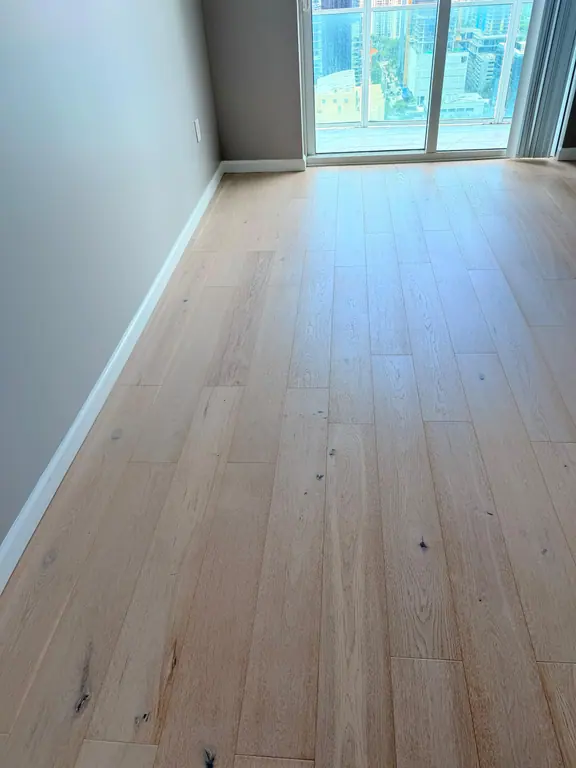
Among U.S. renters in 2023, 25.6% had moved within the previous 12 months, according to Redfin's analysis of Census data. That turnover explains why a move out cleaning crew isn't really selling shine. You're buying a defensible handover. The clean matters, but the cleaning record you keep from it, with a room checklist, timestamped photos, and an invoice that separates cleaning from repairs, is what supports you if the condition gets disputed later.
Table of Contents
- What a Move Out Cleaning Crew Covers Room by Room
- Book the Crew and Work the Timeline
- How to Vet a Crew's Cleaning Method
- What Drives the Cost of a Move Out Clean
- Pre-Clean Steps to Finish Before the Crew Arrives
- Protect Your Deposit With a Cleaning Record
What a Move Out Cleaning Crew Covers Room by Room
Start with scope, not slogans. A full move-out scope runs to 48 points, and grouping them by area lets you match every point to the room where an inspector will look for it.
| Area | Items checked | Why it matters at handover |
|---|---|---|
| Kitchen | Inside and outside of oven, fridge, microwave, cabinet fronts and interiors, sink, backsplash | Grease and food odor are the first things noticed |
| Bathrooms | Toilet base, tub and shower, grout, mirrors, exhaust fan cover | Hard-water stains and mildew show up quickly |
| Bedrooms and living areas | Closets, doors, light switches, baseboards, window tracks, blinds | Scuffs and dust collect in these spots and are often missed |
| Floors | Vacuumed and mopped edges, zones under appliances, entry area | Floor condition is judged in good light at walkthrough |
| Move-specific details | Light fixtures, outlet covers, ceiling fan blades, all window glass, cabinet interiors | These items separate a move out clean from routine upkeep |
Kitchen and Bathrooms Carry the Most Risk
In the kitchen, the crew works inside appliances because that's where a routine wipe-down fails. Oven interiors, fridge shelves, and microwave ceilings hold baked grease and food odor long after countertops look clean. Cabinet interiors matter for the same reason. Crumbs, oil film, and sticky shelf paper read as neglect the moment a door opens.
Bathrooms get judged on evidence of moisture. A crew should scrub the toilet base, where dust and splashes collect out of sight, work grout lines and shower glass for soap film, and wipe the exhaust fan cover. Mirrors are minor by comparison. Hard-water spots on faucets and mildew along caulk signal a deeper problem to a property manager, so those lines deserve more time than polishing chrome.
Living Areas, Floors, and the Details People Miss
Bedrooms and living areas look easy once they're empty, and that's why they get rushed. Closet floors show scuffs, baseboards collect a gray line of dust, and window tracks fill with grit that is obvious when you slide a window open. Doors, light switches, outlet covers, and blinds are all touchpoints an inspector handles during a walkthrough.
Floors close the job. Vacuuming the middle of a room without edging leaves a visible border, and the strips under the fridge and stove often hold the worst debris in the unit. The entry area matters because it's judged first, usually in strong daylight.
That turnover continues even when moves slow. The U.S. household address-change rate was 11.2% in 2024, the lowest figure recorded in the American Community Survey, according to Harvard University's Joint Center for Housing Studies as reported by Boston 25 News. Fewer moves don't lower the standard for yours.
Practical rule: Print the table, take it to your walkthrough, and mark each item as yours or the crew's before anyone starts.
Book the Crew and Work the Timeline
Book the move out cleaning crew the day you give notice. That sounds early until you're competing for the same month-end or summer slots as every other lease ending on the first. Waiting until the truck is reserved usually means accepting whoever is free, not whoever fits the scope.
| Timing | Task | Owner | Practical note |
|---|---|---|---|
| 4 weeks before | Request quotes and check crew availability | Tenant | Book early for month-end and summer dates |
| 2 weeks before | Agree scope in writing, confirm access and share the room list | Tenant and crew | Ask for the checklist used for the job |
| 1 week before | Start pre-clean routine and take first photo pass | Tenant | Remove belongings room by room |
| Day before | Defrost fridge, empty trash, confirm walkthrough time | Tenant | Leave fridge doors open overnight |
| Move-out day | Crew cleans after the last box leaves | Crew | Allow a 2 to 4 hour buffer before walkthrough |
Four Checkpoints That Keep the Date Honest
Four weeks out, request quotes against the same room list and confirm the crew can work on your actual move-out date, not just that week. If you're comparing how companies organize recurring appointments and crew capacity, a guide to streamlining cleaning schedules is a useful primer on why tight turnarounds fail without a system behind them.
Two weeks out, agree the scope in writing. Confirm how the crew gets in, where they park or load, and whether utilities stay on. Ask for the checklist they'll use on the job. If a provider won't share it now, don't expect a usable record afterward.
One week out, start emptying room by room and take your first photo pass. You're not documenting a clean unit yet. You're establishing what wear, marks, and appliance condition looked like before the crew touched anything.
The day before, defrost the fridge and freezer, empty trash and recycling, and confirm the walkthrough time with your landlord or property manager. Leave the fridge doors open overnight so meltwater dries instead of pooling.
Move-Out Day Sequencing
The crew cleans after the last box leaves. Cleaning around stacked boxes means the floor under them, the closet behind them, and the wall beside them don't get done. Allow a 2 to 4 hour buffer before the walkthrough, because a rushed same-day pass is exactly how oven interiors and window tracks get skipped.
Our booking runs in three steps: you share the space and select the right service, confirm online by reviewing pricing and choosing an available appointment, then we arrange access and return to a cleaned space. The 48-Point Moving Clean is designed for move-out handoffs as well as move-in resets, and it's the strongest fit for an empty unit at lease move-out.
Put each checkpoint in your calendar with a reminder the day before it, not the morning of.
How to Vet a Crew's Cleaning Method
A careful crew separates soil removal from disinfection, and they can explain why. First they remove debris and visible soil with detergent and water. Only then do they apply an EPA-registered disinfectant where the risk or scope justifies it, working from cleaner to dirtier areas and from high surfaces downward.
That order isn't preference. CDC guidance on cleaning and disinfecting your home states that cleaning should precede sanitizing or disinfecting because dirt can reduce chemical effectiveness, and that the surface must stay wet during the entire contact period. A crew that sprays and immediately wipes dry is performing the motion without giving the product time to work.
Five Questions to Ask on the Phone
- Products and registration: Which products do you use, and are they EPA-registered where you're disinfecting?
- Fragrance and carpet treatment: Is either included, and can I request unscented products instead?
- Dust method: Do you use HEPA vacuuming and damp wiping, rather than dry dusting or compressed air?
- Work sequence: Do you work top to bottom and from cleaner to dirtier areas, targeting high-touch points like doorknobs, switches, and faucet handles?
- Ventilation: Will you ventilate the unit after the service, and for how long?
Ask specifically how they track dwell time. A defensible record captures product name, dilution or ready-to-use status, application time, required wet time, and confirmation that the surface stayed wet that long. Wiping early can invalidate the product's germ-kill claim, so "we spray everything" isn't an answer.
Ventilation deserves its own question if children, pets, or anyone with asthma will re-enter soon. An EPA-linked study indexed in the EPA HERO database found professional home cleaning was followed by concentration increases in about 60% of measured volatile organic compounds and 80% of measured semivolatile compounds, with most decreases occurring within hours. Schedule early enough that the unit can air out before inspection or occupancy, and don't treat an eco-friendly label as a complete safety claim. Ingredients, quantity, and airflow matter more.
If you're weighing providers beyond this one job, our advice on choosing a cleaning service covers the wider vetting questions. For a move-out, method and documentation come first.
What Drives the Cost of a Move Out Clean
Three drivers explain most of the gap between quotes. Condition is first. Months of cooking grease, pet hair worked into carpet edges, or construction dust on every horizontal surface take longer than a maintained unit. Bathroom count and total size come next, because bathrooms are slow, detail-heavy rooms. Inside-appliance work is third. A fridge and oven cleaned properly inside can take as long as two bedrooms combined.
The rest of the quote usually turns on a short list:
- Carpet extraction: Vacuuming is standard work, while hot-water extraction is a separate pass with separate equipment.
- Windows, blinds, and tracks: Interior glass is quick, but blind slats and gritty tracks add real minutes per window.
- Empty versus furnished: A crew cleaning around furniture can't reach floors, closets, or appliance sides, and the result won't match an empty-unit scope.
- Timing: Same-day requests and weekend slots can cost more because crews are already committed.
Pricing is usually framed two ways, a flat rate for a defined scope or an hourly rate with an estimate. I would take the flat rate when the scope is written down point by point, because you can check the finished unit against it. Hourly billing without a scope invites an argument about pace instead of results.
For a wider sense of how full-property clearing work gets priced when belongings are involved, estate cleanout pricing for 2026 shows how volume and condition drive those quotes too. A move-out clean is narrower, but the logic is similar.
Ask every provider the same three questions: What exactly is included? Will I receive the checklist used for the job? Will I get an itemized invoice I can use as deposit evidence? Then compare quotes against the same scope, not against headline prices.
Pre-Clean Steps to Finish Before the Crew Arrives
The crew's time should go to scrubbing, not sorting your belongings. Work through these steps in the last week, in order.
The Last Week Routine
- Remove everything. Clear all belongings, trash, and food, including closets, under sinks, medicine cabinets, and behind doors. A cleaning crew doesn't move personal property, so anything left behind blocks the surface under it. A packed closet is the classic slip. Its floor and shelves stay dusty and read as neglect at inspection.
- Defrost the fridge and freezer the night before. Empty both, wipe up meltwater, and leave the doors open to dry. A fridge still holding food won't get cleaned inside, and a frosted freezer can't be wiped down properly at all.
- Clear every surface. Empty counters, shelves, cabinet tops, and floor space so the crew can reach what they're being paid to clean. Leave drawers and cabinets open. It speeds the work and makes your after photos clearer.
- Run and empty the dishwasher. Run it one last time, unload it, and take out trash and recycling. A dishwasher full of clean dishes still blocks the seal, filter, and interior walls from being wiped.
- Photograph every room with timestamps. Shoot wide shots plus close-ups inside the oven, fridge, closets, and cabinets, before the crew arrives and again after they finish. Keep your phone's date and location metadata on. Those stamps are what make the photos useful later.
- Confirm utilities, access, and keys. Water and power need to stay on through the clean, since a crew can't mop or run equipment without them. Set the access method, whether that's a lockbox, concierge, or you meeting them, and label every key you're returning.
- Handle small repairs yourself. Patch small nail holes with spackle, replace burned-out bulbs, and reattach anything loose that a screwdriver fixes. Crews clean. They don't repair, and a dead bulb can make a clean bathroom look dingy in photos.
The mistake that wastes the most crew time is a unit that's almost empty. Almost empty means the crew works around your last boxes and none of you get the result you paid for.
Our guide to preparing your home for house cleaning covers prep for occupied homes, where the rules differ. For a move-out, empty means empty.
Your Last Evening Tick List
- Fridge and freezer: Empty, defrosted, doors open
- Every closet and cabinet: Cleared and left open
- Trash and recycling: Out of the unit, not by the door
- Photos: Before set complete, phone charged for the after set
- Access: Utilities on, entry method confirmed, keys labeled
- Small fixes: Nail holes patched, bulbs replaced
Print that list and tick it off on the last evening, room by room, with a pen.
Protect Your Deposit With a Cleaning Record
Deep cleaning everything doesn't automatically protect your deposit. That assumption fails because normal wear isn't a cleaning failure, and no amount of scrubbing changes faded paint or a worn carpet traffic lane. What protects you is evidence showing what condition the unit was in, and which part of that condition cleaning could and couldn't fix.
Under Florida's security deposit statute, a landlord who intends to make a claim against a security deposit must provide written notice within 30 days, and tenants generally have 15 days after receiving that notice to object in writing. Deductions must relate to obligations such as damage beyond normal wear and tear, not ordinary aging. Those deadlines apply to Florida leases, so check your own state's notice and objection rules if your lease is elsewhere.
| Condition | Usually treated as | Why the record matters |
|---|---|---|
| Faded paint or light scuffs | Normal wear and tear | Shows the paint was aged, not damaged by the tenant |
| Carpet traffic lanes | Normal wear and tear | Documents the carpet's state before and after cleaning |
| Small nail holes | Usually wear and tear | Check the lease, since some leases set rules on wall hanging |
| Grease buildup on oven and range hood | Cleaning charge | The crew's receipt shows the cleaning was done |
| Pet urine stains or gouged floors | Possible damage deduction | Photos show the condition before any repair |
| Broken blinds or cracked tile | Damage deduction | Separates the repair invoice from the cleaning invoice |
What to Keep, and What It Can't Do
Build a deposit-ready cleaning record from four pieces: the room-by-room checklist the crew worked from, timestamped before-and-after photos, short notes on appliance condition, and an invoice that separates cleaning from any repairs. Landlords and property teams use similar documentation from their side, which our move-in and move-out checklist for landlords lays out.
Be clear about the limit. A cleaner can document condition accurately, but can't guarantee deposit recovery or decide whether a landlord's deduction is legally valid. The record supports your objection. It doesn't decide it.
Store the photos, checklist, and invoice together in one folder and send a copy to your landlord when you hand over the keys. If the walkthrough turns up a missed item, ask the crew to return to that room before you sign off, then note the re-clean and its time on the invoice. A corrected item, documented, is worth more than an argument three weeks later.
If your unit is empty and keys are about to change hands, book the 48-Point Moving Clean with Canes Cleaners and get the published checklist, inside-appliance and cabinet detail, and an itemized record you can hand over with confidence. Choose your appointment online, confirm access, and walk into your landlord walkthrough with photos and paperwork already in order.