
A house cleaner performs a repeatable room-by-room reset: dusting, vacuuming and mopping floors, scrubbing kitchens and bathrooms, wiping high-touch points and emptying waste, and a typical two-bedroom home takes roughly 2 to 4 hours for one or two cleaners. The reset follows a written checklist rather than a mood, and what changes most from home to home isn't square footage but how much detail each room receives.
So why do two providers quote the same two-bedroom condo at three hours and at six, with both calling the visit standard? Because house cleaning is sold as a scope of work, not a measurable standard. One crew wipes the outside of the microwave and leaves; another pulls the fridge out. Both invoices say clean.
The way to read any checklist, including your own expectations, is to separate three things that get blurred together: what gets touched, what gets left alone on purpose, and what a finished room looks like when you stand in the doorway. Get those three straight, and the work, the price and the argument about whether it was done properly all get simpler.
Table of Contents
- What a House Cleaner Does in Plain Terms
- Cleaning, Sanitizing and Disinfecting Explained
- A Room by Room List of House Cleaning Duties
- Standard, Deep and Move-Out Cleans Compared
- How Long a Professional Clean Takes
- Tasks Most House Cleaners Leave Out
- Set the Scope Before You Book
What a House Cleaner Does in Plain Terms
What happens in the hours between the cleaner arriving and the invoice landing? A house cleaner restores a home's kitchens, bathrooms, bedrooms, living areas and floors to a hygienic, usable condition, repeating the same sequence every visit so the result is dependable. In the United States, the work is a defined occupation, classified as light-cleaning duties in private households, hotels and hospitals: making beds, replenishing linens, cleaning rooms and hallways, and vacuuming. The U.S. Bureau of Labor Statistics counted 836,230 maids and housekeeping cleaners in May 2023, at a mean hourly wage of $16.66 and a mean annual wage of $34,650.
Every visit is really three jobs stacked in order.
Removing soil. Dust, grease, hair, soap film, the brown film that builds on a range hood. This is mechanical work, and it comes first because nothing else works on top of dirt.
Resetting hygiene. Kitchen and bathroom surfaces, high-touch points, waste bins. This part serves health rather than appearance.
Restoring the room. Beds made, linens changed when they are provided, supplies restocked, furniture back in place so the space reads as finished.
Tidying moves clutter. Cleaning removes the dirt the clutter was hiding.
That difference is why a home can look tidy and still fail inspection at the door frame, the toilet hinges and the grout line. A standard clean of a two-bedroom home usually means one or two cleaners and 2 to 3 hours of work, and the last twenty minutes tell you the most. A competent cleaner spends them on edges, glass and the high-touch points the vacuum cord dragged past, not on re-wiping the middle of a floor that was already fine.
The same logic explains why two checklists that both say clean can price differently. Every task sits in one of two columns: covered by the quoted rate, or billed as an add-on. Bed linens show the split clearly, since upkeep cleans typically change them only when fresh ones are provided. A checklist that never states which column a task falls in is a checklist written to be argued over later.
House cleaning also sits next to home preparation, where identical labor is graded on different details. A home cleaned for viewings is judged on baseboards and bathroom grout rather than the sofa, while the listing and handover side of that move sits with a real estate professional such as the Dust Ninjas real estate team.
Cleaning, Sanitizing and Disinfecting Explained
Cleaning, sanitizing and disinfecting get used as synonyms in listings and in conversation, and they aren't. Each does a different job, and only one of them comes with a clock attached.
Cleaning removes soil, grease and organic matter with soap, water or detergent. It doesn't kill germs by itself, and that's fine, because every other step depends on it. Sanitizing reduces bacteria to a level public-health standards consider safe. Disinfecting is a separate chemical step that kills pathogens on a surface, and it only works if the product stays wet on that surface for the full labeled contact time.
The distinction is easier to hold in three columns.
The three checks that decide whether it worked
CDC guidance on cleaning and disinfecting a home treats the job as a sequence, not a spray. Soil removal comes first, because disinfectant applied to a dirty surface spends its kill window on the dirt. Then three checks decide the outcome.
- The product suits the surface. EPA-registered products are labeled for specific materials, and the label is the instruction set, not a suggestion.
- The dilution matches the label. Under-dosing is the most common quiet failure, and it looks identical to doing it right.
- The surface stays visibly wet for the whole contact time. The CDC gives at least 1 minute for certain diluted bleach applications at approximately 1,000 ppm sodium hypochlorite, provided the material tolerates it. Wiping at 20 seconds means the work was cleaning with extra steps.
A disinfectant applied to a dirty surface is mostly wasted.
That's the practical line. If someone tells you a bathroom was disinfected in a five-second wipe, you've learned how they treat the rest of the checklist too. Priority follows hand contact: doorknobs, light switches, handles, toilets, faucets, phones and keyboards get done after the dust has settled rather than before it, so nothing lands on a surface you just finished.
Where the safety layer sits
Ventilation and protective gear aren't decoration. Open a window and run the exhaust fan when disinfectants go on, wear gloves and eye protection where the label says so, and never mix bleach with ammonia, because the resulting gas can cause severe lung damage. Occupational Safety and Health Administration guidance for the cleaning industry puts the U.S. domestic-services workforce at about 2.2 million people, including approximately 305,000 housecleaners, and reports that the rate of occupational asthma among janitorial workers is twice that of other workers. The agency also associates cleaning-product exposure with 12% of work-related asthma cases in California, Massachusetts, Michigan and New Jersey.
Two minutes of context before anyone sprays anything in a small, unventilated bathroom is time well spent.
Routine visits mostly need cleaning, not disinfection. Save the chemical step for a house with someone ill, a recently sick visitor, or a move-in after occupants you know nothing about.
A Room by Room List of House Cleaning Duties
A checklist is only useful if you can check it. The table below pairs what a cleaner does in each area with the physical detail that confirms it was done, so you can walk the room with a fingertip instead of a feeling.
| Area | What the cleaner does | What done looks like |
|---|---|---|
| Kitchen | Wipes counters, sink and stovetop; cleans the exteriors of oven, dishwasher, refrigerator and range hood; spot-cleans cabinet fronts; empties the bin; sweeps and mops | Counters dry with no ring marks, sink free of grit, no crumbs along drawer lines or under small appliances |
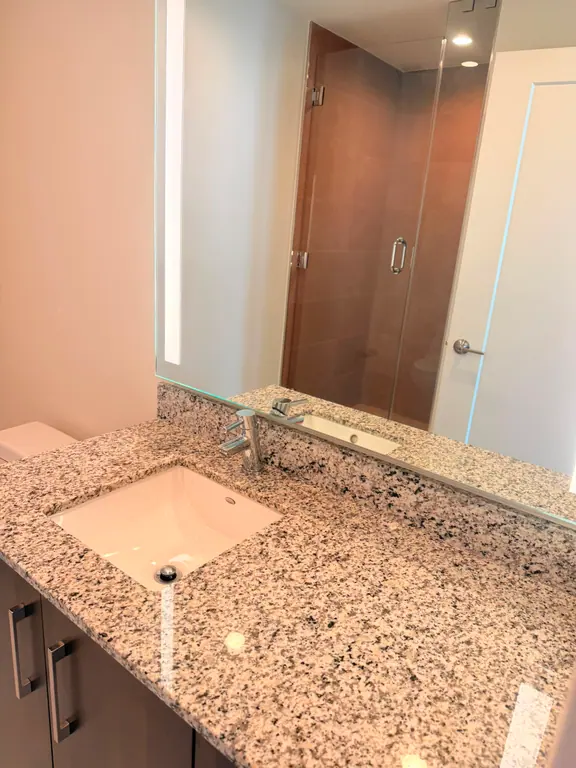
| Bathroom | Scrubs and disinfects toilet, tub, shower and sink; cleans mirrors and fixtures; mops the floor; restocks paper if supplied | No soap film on glass, grout free of loose residue, toilet base and hinges wiped, mirror streak-free |
| Bedrooms | Makes beds and changes linens when provided; dusts furniture and reachable surfaces; vacuums carpet and edges | Bed smooth with corners tucked, no dust line on headboard or nightstand, floor edges clear of hair |
| Living and dining areas | Dusts reachable horizontal and vertical surfaces; vacuums rugs and upholstery; spot-cleans glass tables | Cushions straightened, no visible dust on dark furniture, rug and under-sofa edges vacuumed |
| Entry and hallway | Wipes handles and switch plates; dusts reachable ledges; vacuums and mops | Handles and switches clean to the touch, floor edges free of scuffs and grit |
| Laundry and utility room | Wipes washer and dryer exteriors; sweeps and mops; empties the bin; wipes the utility sink | Appliance tops clear, no lint or detergent residue around the rim, sink drained and dry |
| Floors throughout | Vacuums carpet and rugs; sweeps and mops hard floors; spot-treats marks | No standing water, no grit underfoot when barefoot, corners and thresholds reached |
| High-touch points | Cleans doorknobs, light switches, handles, faucets, remotes, countertops and toilet flush levers | Finished after the rest of the room so they are not recontaminated |
| Waste and linens | Empties containers, replaces liners, changes bed linens and towels when agreed | Bins empty with a fresh liner, linen count matches what was left out |
The order that makes the list hold
Sequence matters more than effort. Work top to bottom so dust lands on floor you haven't mopped yet. Do dry work before wet work, because vacuuming after mopping drags grit across a wet surface. Move from the cleanest rooms to the dirtiest, so the bathroom doesn't contaminate the bedroom. Then finish high-touch points last, after the cloths have been shaken out and the dust has settled, or you'll be wiping the same light switch twice.
Where the list stops short
Grout and caulk get cleaned, not restored, so a stained grout line stays stained even after a good scrub. Pet hair takes two or three vacuum passes in the same direction, and a single damp wipe just pushes it deeper into the carpet. Stainless steel and glass streak when the wrong cloth is used, so lint on a mirror usually means paper towel rather than a bad product.
Read any published checklist against this table and the gaps show up quickly. A list that names rooms but never names high-touch points is telling you the sanitizing step is optional. A list with no waste or linen entry means you're changing your own bins and beds.
The full standard sequence is laid out in this basic house cleaning checklist, and it's worth comparing against whatever your provider publishes. Short-term rental hosts need a variant built around linens, presentation and restocking, which is the version this guide to spotless turnovers that earn 5-star reviews covers.
Standard, Deep and Move-Out Cleans Compared
Service levels get sold by room count, which is the wrong unit. The difference between a standard clean and a deep clean isn't how many rooms get done, it's how much of each room gets touched.
| Service | Typical trigger | What it adds |
|---|---|---|
| Express or upkeep clean | Weekly or biweekly maintenance, a pre-guest refresh | Surfaces, floors, kitchen and bathroom basics only |
| Standard clean | Recurring service in a home already in reasonable condition | Full dusting, beds made, waste emptied, bathrooms and kitchen reset, visible detail |
| Deep clean | First visit, months without professional cleaning, seasonal reset | Baseboards, ceiling fans, light fixtures, door frames, vents, descaled fixtures, detailed high-touch work |
| Move-in or move-out clean | Lease change, sale, new occupant | Inside cabinets, drawers, oven, refrigerator and closets; full interior reset |
| Post-construction clean | After renovation or a new build | Fine dust and residues from ledges, doors, fixture exteriors, floors and reachable baseboards |
| Short-term rental turnover | Guest changeover | Linens, presentation, restocking and an inspection-ready reset |
| Specialty add-on | One specific problem in an otherwise clean home | Inside oven or refrigerator, interior windows, carpet shampoo, balcony or garage |
Read the table down the page, not across. Each tier is cumulative: a deep clean is a standard clean plus extra tasks, and a move-out clean is a deep clean plus interiors. Nothing gets dropped at the higher tier. You aren't paying twice for the same work, you're paying for more of the same room.
That's also why a deep clean on a small condo can run longer than a standard clean on a large house. Condition beats size, and a home with two dogs and a year of buildup carries more detail than a bigger home that's been serviced every fortnight.
Why add-ons exist
Problems cluster in one place. If the oven interior is the only bad thing in an otherwise fine kitchen, you don't need a deep clean; you need the inside of the oven. The same goes for interior windows, carpet shampoo, a balcony, or a garage. Folding those into a tier you don't need is how a quote gets inflated, and it's also how a dirty oven gets skipped because the provider only sells the big package.
One deep clean followed by a maintenance schedule costs less over a year than three resets.
The usual path is exactly that: a first deep clean to bring the house to a known baseline, then a cheaper standard clean on a recurring schedule to hold it. Skipping the baseline means every visit is spent catching up, and you pay deep-clean prices forever without ever getting deep-clean results. The comparison between deep cleaning and regular cleaning is worth reading before you decide which one you're buying.
How to spot an under-specified quote
A single price with no task list is the warning sign. A quote you can evaluate names the rooms, the high-touch points, whether interiors are included, how add-ons are priced, and what the provider expects you to have ready. If two quotes differ by 40% and neither has a list, the difference is invisible scope, not value.
How Long a Professional Clean Takes
Hours are the honest unit for planning, because someone has to be out of the house or out of the way.
| Home size | Standard clean | Deep clean | Move-out clean |
|---|---|---|---|
| Studio or 1 bed, 1 bath | 2-3 hours | 4-5 hours | 5-6 hours |
| 2 bed, 1-2 bath | 2-3 hours | 4-6 hours | 6-8 hours |
| 3 bed, 2 bath | 3-4 hours | 5-7 hours | 8-10 hours |
| 4 bed, 3 bath | 4-5 hours | 7-9 hours | 10-12 hours |
| 5+ bed, 3+ bath | 6-8 hours | 10-14 hours | 14 or more hours |
Figures are for one cleaner on a home that's been serviced in the last few months. A two-person team roughly halves the clock without halving the labor bill, because you're buying hours either way.
What pushes a job off its row
Four things, and none of them is square footage. Pet hair multiplies vacuum time. Months of buildup turn a wipe into a scrub. Clutter that has to be worked around instead of lifted adds minutes in every room. And a house with four bathrooms and two bedrooms sits well above its bed count. A first visit always runs longer than the fifth, because the cleaner is learning the house while the house catches up.
For scale, do-it-yourself cleaning is a skim, not a reset. In 2025, people aged 15 and over in the United States spent an average of 0.33 hours per day on interior cleaning, according to the BLS American Time Use Survey. On days when they performed household activities in 2024, U.S. women spent an average of 2.7 hours on those activities, compared with 2.3 hours for men, per the BLS time-use release.
Three homes, three rows.
A 2-bed, 1-bath condo on a biweekly plan sits at 2 to 3 hours, and drifts toward the bottom of that range by the third visit, because there's less to catch up on each time.
A 4-bed, 3-bath family house with two dogs, cleaned professionally for the first time in a year, lands in the 7 to 9 hour deep-clean row and belongs at the top of it. Pet hair is the single biggest time variable people underestimate when they describe their own home.
A post-renovation unit gets quoted off the move-out column for its size and then extended upward, because fine drywall dust re-settles after every pass and the vents hold it. Budget the top of that range and expect the cleaner to want the windows open.
To get an estimate that holds, describe the home the way a cleaner will see it: bedrooms, bathrooms, approximate size, pets, date of the last professional clean, and the two or three things that bother you most. A provider who quotes from that description and puts the scope in writing is the one to book.
Tasks Most House Cleaners Leave Out
Most first bookings carry the same quiet assumption: that a cleaner will also do the dishes, fold the laundry, scoop the litter box and tidy the closets, because those things are part of keeping a house. They aren't part of a cleaning visit.
- Dishes and general laundry. A linen change is standard when linens are left out. Running a dishwasher and folding a family's clothes is a different job on a different clock.
- Pet waste and litter boxes. A cleaner vacuums around the litter mat. Scooping is not in scope, and asking for it is a conversation, not an assumption.
- Mold, pests, bodily fluids and other biohazards. These need remediation training and equipment that ordinary housekeeping doesn't carry.
- Hoarding-level decluttering and closet organization. Organizing is judgement work about what to keep, not cleaning work about what to scrub.
- Heavy furniture moving. Lifting a sofa or a loaded dresser raises injury risk for the worker and damage risk for the floor.
- Repairs, paint touch-ups, exterior windows, garages and balconies. Different trades, different equipment, different insurance.
The line isn't laziness. It's where training, equipment and liability change. A cleaner who sprays a mold patch and calls it handled has made the problem worse and the warranty void.
Why the phrase house cleaning is so vague
WIEGO's overview of domestic workers notes that domestic workers may also wash clothes and dishes, shop, cook, provide care, garden, drive or perform security work. That's the root of the confusion: one person can be hired for all of it, so the customer reasonably expects the cleaner to cover the edges. When scope is written down, both sides stop guessing.
The customer's half of the deal
Clear floors and counters, pets secured, access arranged, and anything unsafe disclosed before arrival. CDC materials on household cleaning are direct about this: customers need to disclose hazards such as mold, pests, bodily fluids, broken glass, renovation dust, fragile finishes, pets, allergies and medical sharps, because some conditions call for specialized equipment or remediation rather than ordinary housekeeping.
Renovation dust is the one people underestimate. Federal guidance on cleaning-product exposure and ventilation treats post-renovation work and enclosed bathrooms as the places where vapors, mists and particulates concentrate, which is why those jobs get extra passes, more airflow and task-specific gloves rather than a stronger chemical.
Finishes are the other quiet risk. If a piece needs special care between visits, TLC Moving & Storage's furniture care guide covers how to protect wood and upholstery, and it's worth flagging anything fragile before a cleaner reaches for a spray bottle.
Asking whether a task is included costs nothing. Assuming it's included is how the dispute starts, usually after the invoice is paid.
Set the Scope Before You Book
Ten minutes of preparation removes most of the risk from a first booking.
Pick the tier first. Upkeep, standard, deep, move-out or post-construction. A deep clean is generally the strongest starting point if a home hasn't been professionally cleaned recently or needs more than routine upkeep, because every later visit gets easier on top of a clean baseline.
Write a one-page priority list, room by room. Three things that matter most, three that can wait. Hand it over rather than narrating it at the door.
Walk the home against the provider's published checklist. Mark every out-of-scope task you'll handle yourself. Published checklists show the scope of upkeep, deep cleaning and empty-home detail before the appointment, which is why we put ours online instead of describing them over the phone.
Ask the three questions and get answers in writing. What's included, what costs extra, and what standard counts as done. A provider who can't answer all three in specific terms hasn't defined the job.
Book the reset, then the maintenance. One deep clean, then a recurring standard clean to hold it. Maintenance is cheaper than repeated resets.
Confirm the boring details. Access and parking, pets, alarm codes, whether supplies are provided, and the cancellation window. Most first appointments go wrong over these details.
At Canes Cleaners, clients choose a scope from Express Clean, 36-Point Deep Clean, 48-Point Moving Clean, or a specialty service before the appointment is confirmed, and the choice is made against a published checklist rather than a verbal estimate. If you're still comparing providers, this guide to how to choose a cleaning service covers the questions that separate a defined scope from a vague promise.
Canes Cleaners cleans homes, apartments, condos and short-term rentals across Miami-Dade, from Aventura and Bal Harbour to Coral Gables, Doral and Miami Beach, with scopes that run from express upkeep through the 36-Point Deep Clean and the 48-Point Moving Clean. If your home hasn't had a professional reset in months, or you're turning a rental between guests, start with the deep clean and let a recurring visit hold the result. See the published checklists, pricing and available appointment times at Canes Cleaners and choose the scope that matches your home.