
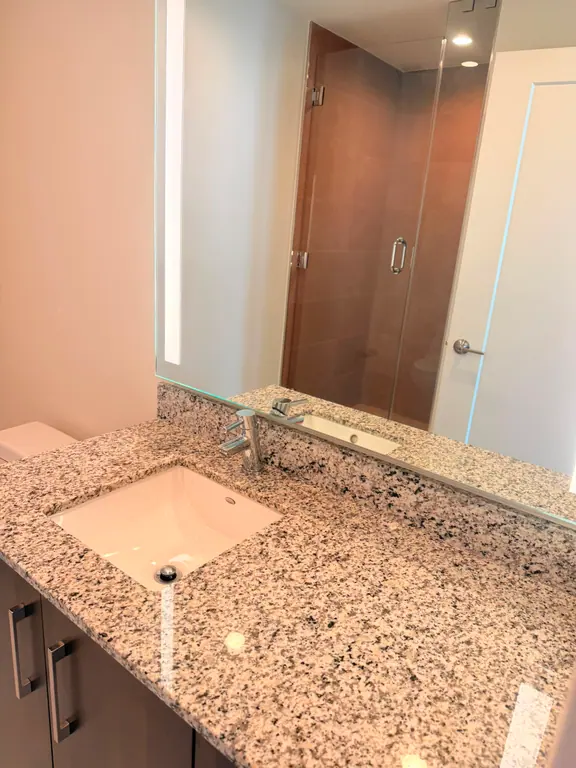
Offices should be cleaned at least once per working day, with extra attention to shared surfaces when traffic or illness increases. Weekly-only cleaning is the wrong default for an occupied workplace, even when the carpets still look tidy.
The better question is which tasks need attention before the next group of people uses the space? Restrooms, food surfaces and shared equipment belong on a different schedule from partition glass or carpet extraction. A sensible plan separates those jobs, assigns an owner and changes when the building's use changes.
Table of Contents
- Office Cleaning Frequency at a Glance
- Why Daily Cleaning Is the Baseline for Most Offices
- How Traffic and Occupancy Change the Schedule
- Air Quality and Ventilation Beyond Surface Cleaning
- Office Types and Their Schedules in Practice
- How to Build a Cleaning Schedule for Your Office
- Confirm Your Office Schedule Before You Book
Office Cleaning Frequency at a Glance
A typical office needs trash removal, restroom care, kitchen surfaces and shared touchpoints cleaned every working day. Personal workstation detailing, dusting, full-floor cleaning and glass can follow a rotating schedule, provided spills, visible dirt and shared desk use receive immediate attention.
Don't confuse a weekly desk-detailing appointment with permission to ignore a frequently touched desktop. A cleaner can wipe an accessible work surface during routine service without reorganizing papers, moving monitors or completing a full workstation detail.
Choose the column that matches actual use
Low traffic means a small, consistently occupied office with few visitors and dedicated desks. A standard office has regular attendance, shared amenities and routine visitor traffic. High traffic or shared includes hot desks, busy reception areas, frequent deliveries and successive shifts.
These are operating categories, not regulatory classifications. Choose by how people use the rooms, not by lease size or the number of names in the company directory.
Recommended office cleaning frequency by task and traffic level
| Task | Low traffic | Standard office | High traffic or shared |
|---|---|---|---|
| Trash and recycling removal | Check daily; remove food waste and full bins | Daily | Daily, plus checks during busy periods |
| Restrooms, restock and cleaning | Daily | Daily | Daily, with additional occupied-hours service |
| High-touch points, including handles, switches, phones and elevator buttons | Daily | Daily | Daily and between heavy-use periods |
| Kitchen and breakroom surfaces, sink and fridge exterior | Every day used | Daily | Daily, plus after busy meal periods |
| Desk and workstation wiping | Routine accessible-surface wiping; scheduled personal-desk detailing | Routine wiping; rotating workstation detailing | Between users or shifts |
| Vacuuming carpets and sweeping or mopping hard floors | Inspect during service; clean dirty areas | Clean traffic routes during routine service; rotate full-floor work | Clean during daily service and address tracked-in soil |
| Dusting furniture and vents | Scheduled rotation; advance when dust appears | Scheduled rotation, prioritizing occupied areas | Shorter rotation where buildup recurs |
| Interior glass, partitions and doors | Spot-clean marks; schedule full detailing | Spot-clean touched areas; rotate full detailing | Address fingerprints during routine service |
| Deep clean, including carpet extraction, upholstery and grout | Schedule by condition and material requirements | Separate maintenance calendar | Inspect high-use areas and advance work when needed |
The table deliberately distinguishes inspection, routine cleaning and restorative work. A carpet doesn't automatically need extraction because another month has passed. Equally, a breakroom sink shouldn't wait for the next full-office appointment after someone leaves food residue in it.
The most common scheduling mistake is treating touchpoint cleaning as optional because the floor looks clean. Don't let appearance in one area determine hygiene work elsewhere.
Write the starting schedule on a single page, with rooms, tasks, service times and responsible people. The janitorial team and facilities staff should work from the same document, not separate assumptions about what daily service includes.
Why Daily Cleaning Is the Baseline for Most Offices
Daily touchpoint cleaning works like brushing your teeth. Regular attention removes ordinary buildup, while periodic professional treatment handles work the everyday routine can't reach. A deep clean doesn't replace the routine between appointments.
For an ordinarily occupied office without a known illness event, daily routine cleaning is a defensible baseline. The CDC's facility cleaning guidance identifies frequently touched surfaces such as desks, keyboards, phones, door handles, light switches, tables, faucets and toilets as priorities and recommends increasing attention when use or illness conditions warrant it.
Clean the surfaces people actually use
A cleaner who vacuums the center aisle and empties wastebaskets hasn't necessarily completed the important work. The conference-room table, shared phone and restroom faucet may still need attention.
Walk the office as a user rather than as an inspector admiring the floor. Follow the route from entrance to workstation, coffee machine, meeting room and restroom. That route reveals the handles, buttons and surfaces that should appear on the daily checklist.
Daily cleaning targets where hands go, not how much floor is covered.
Accessible surfaces matter, too. Staff should clear the portions of desks they expect cleaners to wipe, and the scope should identify equipment that requires special handling. A cleaning team shouldn't have to guess whether it can move confidential paperwork or spray a control panel.
Daily office maintenance involves more than making the room presentable.
Separate cleaning from disinfection
Remove visible soil before applying disinfectant. Organic residue can interfere with disinfectant performance, so spraying a dirty surface isn't a substitute for cleaning it.
Use a surface-compatible cleaner and microfiber cloth to remove residue. Where disinfection is appropriate, apply a suitable product and keep the surface wet for the contact time on its label. For electronics, use the equipment manufacturer's approved method rather than spraying liquid into openings.
Routine cleaning and disinfection aren't interchangeable, and indiscriminate spraying isn't a useful service specification. State which surfaces require cleaning, when disinfection is triggered and how the cleaner will protect sensitive materials.
A complete daily scope should include:
- Waste removal: Empty food waste and occupied-area bins before accumulation becomes a problem.
- Restroom care: Clean fixtures and touched surfaces, inspect floors and replenish consumables.
- Kitchen sanitation: Remove food residue from counters, sinks and shared appliance touchpoints.
- Floor care: Address spills, debris and tracked-in soil rather than vacuuming only unobstructed areas.
- Shared-surface wiping: Follow a consistent route through handles, controls, tables and equipment.
A clean-looking office is a useful presentation standard. It isn't proof that this work happened.
How Traffic and Occupancy Change the Schedule
Crowding deserves more attention than square footage. A 2025 study of non-healthcare university spaces examined 400 environmental samples and found respiratory-virus RNA on 16% of surfaces, with detection on 22% in small classrooms versus 11% in large classrooms.
Those were university spaces, not offices, and detecting RNA doesn't establish that a surface could transmit infection. The practical lesson is narrower: room type and occupancy deserve consideration alongside building size.
A small meeting room used repeatedly by full teams may need more attention than a spacious, lightly occupied department. Count uses, handovers and shared contacts, not just desks.
The following visual summarizes the factors managers should track.
Use observable triggers
A trigger should describe something a supervisor can recognize and act on. Busy isn't specific enough. Restroom supplies running out before scheduled service is.
Signals that justify a higher cleaning frequency
| Signal | Threshold to watch | Response |
|---|---|---|
| Outside visitors or deliveries | Visitor activity leaves entry surfaces dirty or restroom supplies depleted before service | Add an occupied-hours restroom check and entryway wipe-down |
| Shared equipment | Most staff use the same copiers, coffee machines or printers | Include control panels and handles in routine touchpoint service |
| Daily food service | Staff regularly prepare or eat food on site | Clean breakroom surfaces, sink and microwave after use periods |
| Shift work | Successive teams use the same desks | Wipe desks and shared touchpoints between shifts |
| Seasonal illness | Reports of respiratory illness rise among staff | Add targeted touchpoint disinfection and reassess conditions |
| Confirmed illness on site | An illness event affects an occupied area | Apply an illness-specific cleaning and disinfection response before normal use resumes |
| High desk use | More workstations are occupied, with faster waste and supply use | Increase waste checks and restroom replenishment |
These thresholds are management starting points, not legal standards. Record what normal conditions look like, then identify the deviation that warrants extra service.
For example, say a client-facing office hosts an unusually busy appointment period while staff report respiratory symptoms. Add a daytime restroom inspection and targeted entryway cleaning, rather than paying for unnecessary deep cleaning in unused private offices.
Give temporary increases an end condition
The manager should record the affected rooms, extra tasks, responsible person and condition for returning to the regular schedule. Otherwise temporary work can become a permanent charge without anyone checking whether it's still needed.
Don't automatically return to baseline just because an arbitrary period has ended. Confirm that supplies last between services, visible buildup is controlled and any illness-specific response has been completed.
This video provides an additional visual reference for planning office cleaning.
Keep a simple log of complaints, supply shortages, unusual attendance and schedule changes. Staff don't need to diagnose contamination. They need a clear way to report conditions that the current service isn't handling.
Management check: Ask which operating condition changed before increasing the entire cleaning contract.
In Miami-Dade, an office's visitor load may change independently of its employee roster. Reception, shared meeting rooms and restrooms should follow actual use, even when private workstations remain quiet.
At each schedule review, ask: Which signal changed? That question produces a more useful adjustment than asking whether the whole building needs more cleaning.
Air Quality and Ventilation Beyond Surface Cleaning
An office can look spotless and still have poor air. More desk wiping won't fix an obstructed supply vent, a moisture problem or a ventilation system that isn't working as intended.
The EPA's office indoor-air-quality guide describes a layered approach: control pollution sources, dilute pollutants through ventilation and use filtration to clean indoor air. Surface care belongs alongside that work, not in place of it.
Give cleaning staff a reporting role
During routine service, cleaners can notice water stains, condensation, musty smells, dusty grilles and furniture blocking vents. They should report these observations without being expected to diagnose mechanical faults or investigate concealed mold.
Facilities staff own the building-system response. That includes inspecting equipment, arranging repairs, selecting suitable filters and documenting maintenance.
Ventilation and air tasks by owner and frequency
| Task | Owner | Frequency |
|---|---|---|
| Wipe accessible vents and grilles | Janitorial team | Include in the detail rotation; advance when dust accumulates |
| Clear blocked vents and check for obstructions | Janitorial team and facilities | During walk-throughs and after furniture changes |
| Replace HVAC filters | Facilities team | Follow equipment requirements and observed filter condition |
| Inspect fans, ducts, dampers and filter seals | Facilities team | Follow the documented preventive-maintenance plan |
| Monitor carbon dioxide levels | Facilities team | During occupied conditions and when investigating ventilation concerns |
| Report leaks, mold concerns, odors or stuffy rooms | Any staff member | As soon as noticed |
Carbon dioxide monitoring can help facilities staff investigate how ventilation responds to occupancy. It shouldn't be treated as a complete test of indoor air quality or a substitute for inspecting moisture, sources and equipment.
The useful operational distinction is who cleans, who investigates and who authorizes repairs. If nobody owns the handoff, the same odor can appear repeatedly on cleaning reports without anyone addressing its source.
Connect the schedule to workplace responsibilities
Safety Space's explanation of work health and safety provides useful context for treating environmental concerns as assigned workplace responsibilities rather than informal favors. Give staff a reporting route and identify who closes each issue.
Our explanation of how cleaning relates to indoor air quality also helps distinguish removal of settled dust from the separate job of maintaining ventilation. Household and office layouts differ, but that distinction remains useful.
Avoid introducing strong fragrances to conceal a persistent smell. Identify the source, check nearby waste and drains, and escalate unresolved concerns to facilities.
If an air or odor complaint continues after appropriate cleaning, arrange a facilities inspection, not another round of the same cleaning.
Keep maintenance records separate from janitorial completion sheets, but connect them through a shared issue log. A report should show where the problem occurred, what staff observed, who received it and whether the underlying cause was resolved.
Office Types and Their Schedules in Practice
Consider a small accounting practice with dedicated desks and occasional client appointments. Its schedule should protect the shared spaces without treating every private workstation like a public counter.
Daily service covers occupied-area waste, restrooms, kitchen use and shared touchpoints. Staff clear accessible work surfaces, while detailed desk cleaning and full glass cleaning sit on a separate rotation. If a meeting room stays unused, it doesn't need the same intervention as the client reception counter.
A shared technology office
Now consider an open-plan technology office where employees choose a different desk whenever they attend. Cleaning only after everyone leaves creates a gap if another person takes over a workstation during the day.
The important service boundary is between users, not merely between dates. Put approved wipes or another equipment-compatible cleaning method near shared stations, and name the person responsible for the handover.
The facilities manager should also inspect the breakroom and restrooms during occupied hours. If the kitchen becomes unusable after lunch, moving some service into that period is more useful than adding detail work to an already adequate evening visit.
Carpets need their own condition assessment. Inspect chair areas, circulation paths and spill locations before scheduling extraction, and allow for the manufacturer's drying and return-to-use requirements.
A call center with successive shifts
A call center needs a handover procedure that covers desks, keyboards, mice, chair controls and shared telephone equipment. Headsets require an equipment-specific method, with personal assignment preferable where the operating setup allows it.
Don't assume the incoming worker will handle everything. State whether the outgoing worker, a designated attendant or the cleaning team completes each task, and make the required supplies available.
A broader daily service still covers common areas, floors, restrooms and waste. The handover procedure addresses a different problem: equipment passing directly from one person to another.
Put staff expectations in writing
In a 2025 survey commissioned by Stratus Building Solutions, 66.6% of respondents expected their workplace to be professionally cleaned and sanitized every workday, while 24% expected cleaning one or two times per week. Those are reported expectations, not a technical cleaning standard.
The planning implication is straightforward. A contract can meet its written visit schedule while still leaving employees dissatisfied with the work they thought it included.
Agree on the following before service starts:
- Personal workspace boundaries: Specify what staff must clear and which equipment cleaners may handle.
- Shared-space readiness: Define what usable restrooms, kitchens and meeting rooms should look like.
- Between-visit ownership: Identify who handles spills, unexpected waste and supply shortages.
- Reporting and correction: Give employees a clear route for flagging missed work.
A written agreement won't make every employee prefer the same schedule. It will make responsibility visible and help managers distinguish a missed task from a missing task in the contract.
How to Build a Cleaning Schedule for Your Office
Build the schedule around rooms and tasks before deciding how many contractor visits to purchase. Otherwise, you risk buying a familiar package that leaves important work unassigned.
Use a floor plan, an occupancy record and a checklist. The process should produce instructions a relief cleaner or facilities supervisor can understand without a verbal explanation.
Turn observations into assignments
Map every space and its touchpoints. Include doors, phones, kitchen equipment, restrooms, meeting rooms and shared controls. The common slip is listing rooms without identifying the surfaces people touch.
Count the people who use the building. Include visitors, deliveries, contractors and overlapping shifts, not just permanent employees. A payroll headcount misses the people who still use the entrance, coffee station and toilets.
Choose the appropriate traffic category. Match each area to its real use rather than assigning one category to the entire property. A quiet executive suite and public reception can need different coverage.
Assign routine and periodic work. Start with time-sensitive hygiene tasks, then place glass, dusting and restorative floor care on a separate rotation. Don't bury carpet extraction inside an undefined instruction to deep clean.
Write observable escalation triggers. Choose conditions such as supply depletion, repeat food residue or heavier shared-desk use, and name the response. Avoid instructions to clean more when needed without saying who decides.
Give every task an owner. Assign surface work and floors to janitorial staff, with mechanical inspection and filter management under facilities. Vents often fall into the gap, so separate exterior wiping from system maintenance.
Review performance after the schedule has operated under normal conditions. Compare attendance, complaints, inspection notes and unfinished tasks, then revisit it when occupancy or operations change. Don't judge success solely by whether the cleaner signed the sheet.
This visual offers a compact version of the planning process.
Keep specialist work visible
Window cleaning deserves its own scope, including accessible interior glass, entrance fingerprints and any exterior work requiring specialist access. Cultivate House Detailing on business windows is a useful resource when separating routine presentation work from a broader window-maintenance plan.
Use our office cleaning checklist to organize task descriptions, then add the building-specific owner and timing. A checklist becomes operational only when someone knows when to complete it and how to report an exception.
Sample single-page schedule
| Work block | Assigned scope | Completion record |
|---|---|---|
| Routine occupied-day service | Waste, restrooms, food surfaces, touchpoints and dirty floor areas | Cleaner records completion and exceptions |
| Occupied-hours checks | Supplies, spills, entrance condition and shared-space readiness | Designated staff member logs action |
| Detail rotation | Personal-workstation detail, glass, furniture and accessible grilles | Supervisor tracks completed areas |
| Specialist maintenance | Carpet extraction, upholstery treatment and mechanical work | Facilities records contractor and return-to-use requirements |
| Temporary escalation | Affected rooms, additional tasks and return-to-baseline condition | Manager authorizes and closes the change |
Confirm Your Office Schedule Before You Book
Finish the written scope before choosing the appointment pattern. A quote for office cleaning means little unless both sides agree on the tasks, access arrangements and conditions requiring extra attention.
Confirm these items before work begins:
- Touchpoint coverage: List the handles, controls, shared desks and equipment included.
- Restroom responsibilities: Separate cleaning from supply checks and replenishment.
- Waste arrangements: Identify collection areas, removal timing and food-waste handling.
- Illness response: Define who authorizes additional disinfection and which areas it covers.
- Periodic detail: Include accessible vent wiping, glass and other work outside the routine visit.
- Access and exceptions: Record entry arrangements and how staff report inaccessible or unfinished areas.
The Renue Systems Four Points vetting resource offers useful context for evaluating a cleaning company alongside its proposed scope. Compare responsibility and task detail, not just the headline visit frequency.
Our office cleaning service information provides a starting point for that discussion. We provide Commercial Cleaning for offices, retail spaces and commercial environments across Miami-Dade, priced by custom quote.
Our published checklists show the scope of upkeep, deep cleaning and empty-home detail before the appointment. For an office, turn that same scope-first approach into a written commercial task list rather than assuming a residential package describes the work.
Send the starting schedule, actual attendance pattern and escalation triggers with your quote request. That gives the discussion a concrete basis and helps avoid paying for unnecessary detail while leaving daytime essentials uncovered.
Canes Cleaners offers commercial cleaning across Miami-Dade with a custom-quoted scope for your workplace. Write down your tasks, count staff and visitors, and visit Canes Cleaners to request a quote that matches how your office is used.