
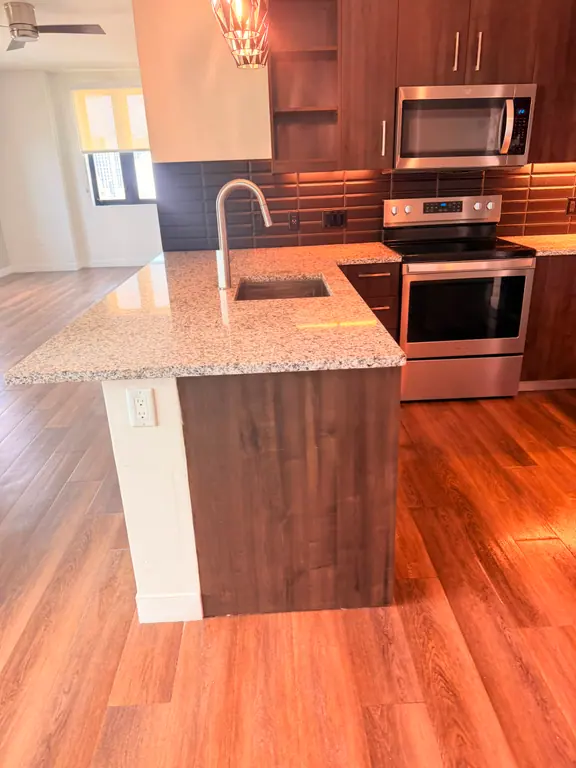
Mild dish soap and warm water remain the safest everyday laminate countertop cleaner for routine cleaning. In sanitation testing, plastic laminate went from 285 bacteria counts to 1 after washing and rinsing, while dilute vinegar improved reduction to 500,000 to 1, so vinegar or alcohol belongs mainly with disinfection or stubborn marks, not every wipe-down.
That answer sounds almost too simple, especially when a kitchen spray promises heavy-duty degreasing, germ control, and a polished finish in one pass. Yet laminate countertops rarely fail because a homeowner can't remove ordinary soil. They fail when cleaner residue, standing water, repeated chemical exposure, or moisture at a seam slowly affects the surface and its substrate.
Laminate is practical and forgiving when you clean it with the material's construction in mind. The safest routine uses little liquid, a soft cloth, prompt rinsing, and immediate drying. The more demanding the product, the more carefully you need to manage contact time and edge exposure.
Table of Contents
- Why the Safest Laminate Countertop Cleaner Is Often the Boring One
- How Laminate Countertop Cleaner Types Compare
- The Right Way to Clean Laminate Countertops Without Damage
- Common Cleaning Mistakes That Silence Laminate Shine
- Tough Stain and Sanitation Fix Strategies for Laminate
- Laminate Countertop Cleaner Comparison for Decision Making
- Maintenance Habits and When to Seek Professional Help
Why the Safest Laminate Countertop Cleaner Is Often the Boring One
A homeowner finishes cooking, sees grease near the sink, and reaches for a heavy-duty spray. They apply several pumps, scrub hard with a textured pad, and leave the surface wet while they load the dishwasher. The counter looks clean at first. Later, dull patches appear, the edge feels rough, or a seam begins to lift slightly.
That result doesn't mean the cleaner failed to remove soil. It may mean the routine exposed the counter to more water and chemical stress than the laminate needed. Plastic laminate is a thin wear layer bonded to a substrate. The decorative surface can lose clarity from abrasion or unsuitable chemistry, while the underlying material can swell if liquid enters an edge or seam.
Plastic laminate became a mainstream home-surface category in the 1930s, and historical care guidance has consistently favored mild dish soap with warm water for ordinary cleaning. That isn't an outdated recommendation. It reflects a useful material-care principle: use the least aggressive chemistry that removes the soil, then remove the residue and dry the surface.
Practical rule: A cleaner's strength matters less than whether you can apply it lightly, rinse away its residue, and keep it out of vulnerable seams.
Why seams deserve more attention than the center
The broad middle of a laminate counter often handles routine wiping well. The vulnerable points are the places where water can travel, including sink cutouts, backsplash joints, front edges, and countertop seams. Once moisture reaches the substrate below the wear layer, swelling can distort the edge or push against the bonded surface.
That makes a low-moisture cleaning process more protective than a saturated spray-and-wipe habit. A damp microfiber cloth delivers enough solution to loosen food and grease without flooding the counter. Rinsing the cloth, rather than repeatedly spraying the surface, also limits residue and runoff.
If the finish is already badly worn, stained, or lifting, cleaning won't reverse the underlying damage. A practical laminate countertop resurfacing guide can help you distinguish between routine maintenance, cosmetic renewal, and a surface that needs more substantial attention.
Clean enough is the right target
Everyday care doesn't require maximum disinfection power. It requires consistent soil removal without sacrificing the wear layer or allowing water to sit near an edge. Save targeted treatments for marks that mild detergent can't handle, and treat them as short, controlled interventions rather than a new daily routine.
How Laminate Countertop Cleaner Types Compare
The safest laminate countertop cleaner is usually the one that removes soil while leaving little moisture and residue behind. Mild dish detergent mixed with warm water handles cooking oil, crumbs, beverage rings, and ordinary food residue. A commercial cleaner labeled for laminate can also be suitable, provided it contains no abrasive particles, leaves no heavy film, and does not require prolonged wet contact.
Cleaner strength matters less than where the liquid goes. A product that works well in the center of the counter can still create trouble if it pools at a sink cutout, backsplash joint, front edge, or seam. Moisture entering those areas can reach the substrate beneath the wear layer, where swelling may distort the edge or weaken the bonded surface.
Specific solvents have a narrower role. A major surface manufacturer recommends acetone, rubbing alcohol, or ethanol for stubborn stains, followed by a full water rinse and drying, as described in its laminate care and maintenance guidance. Use only a small amount on a cloth, avoid soaking, and test an inconspicuous area first. Surface finishes and stains vary, so a solvent recommendation is not permission to leave liquid sitting near an edge.
Commercial formulas and homemade mixtures
Commercial laminate-safe cleaners offer clear instructions for intended surfaces, dilution, and application. Read the label closely. A formula suitable for hard surfaces generally may still be a poor choice if it contains abrasives, strongly acidic ingredients, or a polish that leaves a residue.
Homemade mixtures require the same judgment. Vinegar may suit a targeted sanitation approach, but repeated acid exposure can be harder on laminate care, adhesives, and vulnerable edges. This guide to citric acid cleaning helps explain why an ingredient's cleaning ability does not make it suitable for every surface or cleaning frequency.
Routine cleaning remains effective because thorough washing and rinsing remove soil without demanding aggressive chemistry. Sanitation needs should guide product selection, while moisture control should guide application. Keep contact brief, prevent runoff, and dry areas where seams or edges can collect liquid.
A simple decision map
- Routine soil: Choose mild dish soap, warm water, and a nonabrasive cloth.
- Sticky or solvent-soluble marks: Apply rubbing alcohol, ethanol, or acetone briefly when appropriate, then rinse and dry.
- Sanitation need: Follow a compatible product's label and keep liquid away from seams.
- Anything abrasive or strongly acidic: Treat it as a surface risk, not an upgrade.
The Right Way to Clean Laminate Countertops Without Damage
A safe routine is short and repeatable. You don't need to saturate the counter to loosen everyday soil, and you shouldn't allow a cleaning solution to remain near a seam while you attend to another task.
Use a controlled amount of moisture
Start by clearing crumbs and loose debris. Mix a small amount of mild liquid dish detergent into warm water, dampen a microfiber or other nonabrasive cloth, and wring it until it isn't dripping. The cloth should feel damp, not wet enough to leave trails of water.
Wipe the surface with the finish or pattern direction when that direction is visible. This helps the cloth follow the surface rather than forcing soil across it, and it makes it easier to notice any remaining film.
Rinse the cloth, not the counter
Once the soil is lifted, rinse the cloth with clean water and wipe the surface again. This step removes detergent residue that can attract dust, mute the finish, or leave a tacky feel. Pay particular attention to areas around the sink, backsplash, and visible joints.
Dry immediately with a clean towel. Manufacturer care instructions emphasize rinsing and drying because water intrusion at seams and edges can reach the substrate and cause swelling. For routine maintenance, short dwell time and moisture control matter more than using a stronger cleaner.
A brief visual demonstration can reinforce the hand movements and drying sequence:
If a spill has already pooled near a seam, blot it rather than spreading it outward. Then use a barely damp cloth for the remaining residue and dry the area, including the edge, before moisture can migrate below the laminate.
Common Cleaning Mistakes That Silence Laminate Shine
“Stronger” often sounds like “safer,” but laminate doesn't reward that assumption. The surface needs enough cleaning power to remove soil, not enough chemical force to challenge the wear layer, adhesives, or substrate.
Disinfecting wipes are a common example. A sanitation reference cited that these wipes can create micro-scratches up to 20% deeper than soap-based cleaning and can increase surface degradation by 30, as reported in the laminate-care reference discussing cleaner-related countertop damage. The practical problem is especially clear when someone uses a wipe with pressure on a matte or textured finish, then repeats the motion across the same work zone.
Habits that create avoidable wear
- Scrubbing with abrasive pads: The pad can dull the decorative wear layer even when the stain itself is harmless.
- Leaving bleach in place: Products containing bleach can discolor laminate when prolonged exposure gives them time to affect the surface.
- Repeating acidic cleaning: Acidic formulas can weaken sealants and contribute to a more porous, less protected surface over time.
- Spraying directly at an edge: Liquid can collect where the counter meets a sink, wall, or backsplash.
- Skipping the rinse: A cleaner that removes grease may still leave a film that changes the way the finish reflects light.
Replace spray-and-forget with apply, rinse, dry
A fast wipe-down becomes risky when it leaves the counter visibly wet. Humid kitchens make evaporation less dependable, and liquid can remain unnoticed beside a sink or along a joint. The safer alternative is to put the cleaner on the cloth, work in a small area, rinse the cloth, and dry before moving on.
You should also avoid treating a dull patch by scrubbing harder. Dullness can come from residue, fine abrasion, chemical exposure, or early surface damage. First remove residue gently and inspect the area in good light. More force can turn a cosmetic problem into permanent wear.
Tough Stain and Sanitation Fix Strategies for Laminate
Stubborn marks need a narrower response than everyday soil. Start by identifying the residue, then choose the least aggressive method that fits it. A grease film usually needs detergent and careful wiping, while an ink-like mark may respond better to a brief solvent application.
For a mark that remains after ordinary washing, place a small amount of rubbing alcohol, ethanol, or acetone on a cloth or cotton swab rather than pouring it onto the counter. Work only on the mark, keep contact brief, and follow with a full clean-water rinse and thorough drying. The surface manufacturer's care guidance supports these solvents for stubborn stains, but chemistry-dependent compatibility means you should test first and keep them away from seams whenever possible.
Match the response to the mark
- Grease: Use warm water with a small amount of mild dish detergent. Wipe, rinse the cloth, wipe again, and dry.
- Dried food: Let a damp cloth soften the residue briefly, then lift it without a sharp tool or abrasive pad.
- Ink or transfer marks: Dab a small amount of rubbing alcohol on a cloth or cotton swab, then rinse the area.
- Light sanitation: Use a compatible labeled product with controlled contact, followed by the required removal or rinse step.
- Unknown discoloration: Stop escalating chemicals. Clean gently, inspect the edge, and consider professional assessment if the mark remains.
Why pH and contact time matter
Acidic and strongly alkaline products can attack the finish or edge adhesives, while abrasive products create physical wear. One industry guide recommends keeping cleaner pH near neutral, about 7, to reduce surface-damage risk, as summarized in the surface sanitation guidance. That doesn't mean every household needs a pH meter. It means you should avoid assuming that a highly acidic or highly alkaline formula is automatically more effective for laminate.
A rinse is part of the treatment, not an optional finishing touch. For adjacent material-care principles, DreamKitchen.ai's care guide for quartz countertops is a useful reminder that surface chemistry must match the material, even though quartz and laminate have different construction and vulnerabilities. For another household option, review Canes Cleaners' hydrogen peroxide cleaning guide and follow its product-specific safety instructions rather than improvising a stronger mixture.
Laminate Countertop Cleaner Comparison for Decision Making
Use the table as a quick selection tool. The lowest-risk choice is usually the one that solves the actual problem with the least liquid, shortest practical contact, and cleanest rinse.
Laminate Countertop Cleaner Options Comparison
| Agent | Risk Level | Best For | Key Caution |
|---|---|---|---|
| Mild dish soap with warm water | Low for routine use | Everyday food soil, grease, and residue | Use a damp cloth, rinse away film, and dry seams immediately |
| Diluted vinegar | Moderate | Occasional sanitation-focused cleaning when compatible | Repeated acidic use can weaken protective surfaces and should not be allowed to sit |
| Rubbing alcohol | Targeted moderate | Stubborn ink, adhesive, or solvent-responsive marks | Apply briefly to a cloth, test first, rinse fully, and keep away from seams |
| Commercial laminate-safe cleaner | Varies by formula | Convenient routine or targeted cleaning | Check for abrasive ingredients, strong acids, strong alkalis, bleach, and residue |
| Acetone or ethanol | Targeted moderate | Specific stubborn stains | Use a small amount, limit contact, follow the manufacturer's guidance, rinse, and dry |
The table doesn't replace the product label or the surface manufacturer's instructions. A “natural” ingredient can still be unsuitable for repeated use, and a commercial spray can still create problems if you leave it pooled at an edge.
For most homes, the decision is straightforward. Use mild detergent for normal cleaning, reserve solvent for a defined stain, and treat sanitation as a controlled task rather than a reason to wet the entire counter.
Maintenance Habits and When to Seek Professional Help
Laminate stays easier to maintain when small habits prevent large wet areas and accumulated residue. Wipe spills promptly, especially around the sink and countertop joints. Use a soft cloth, rinse after detergent cleaning, and dry the surface and edges before moving on.
A weekly check doesn't need to become a major project. Run your hand lightly along exposed edges, look for lifting or swelling, and inspect places where water regularly collects. If the surface feels tacky, remove residue with a clean damp cloth instead of adding polish or more spray.
A practical care checklist
- Keep moisture low: Dampen the cloth instead of flooding the surface.
- Rinse promptly: Remove detergent and treatment residue with clean water.
- Dry immediately: Focus on seams, sink cutouts, backsplash joints, and front edges.
- Skip abrasive tools: Choose microfiber or another nonabrasive cloth.
- Inspect vulnerable areas: Watch for swelling, lifting, soft edges, or separated joints.
- Escalate deep damage: Stop experimenting when gouges, extensive staining, or edge failure remain.
Professional help makes sense after prolonged moisture exposure, significant edge swelling, heavy staining, or renovation work that leaves dust and residue across the kitchen. Rental turnovers and humid environments also benefit from a disciplined deep-cleaning process because rushed wet wiping can leave residue in places that aren't obvious during a quick inspection.
Routine cleaning services can handle countertop care as part of a broader kitchen checklist, while a post-construction or move-out service may be more appropriate when the entire space needs systematic attention. If you're evaluating whether a damaged surface can be renewed rather than replaced, this discussion of the longevity of resurfaced laminate countertops provides useful context for the maintenance decision. For related cabinet surfaces, see this guide to cleaning kitchen cabinets, especially the advice about barely damp microfiber cleaning.
Canes Cleaners provides scheduled and on-demand residential, commercial, move-in, move-out, deep-cleaning, and post-construction services across Miami-Dade County, with countertops included in defined cleaning checklists. If your laminate counter needs careful low-moisture cleaning as part of a larger home, rental, office, or turnover service, visit Canes Cleaners to review the available scope and book online.