
You've booked a cleaning service because the house looks tired, but you're not sure what you're paying for. The kitchen counters are wiped, the floors are vacuumed, and the bathroom is presentable, yet dust sits on the fan blades, grime lines the grout, and nobody has moved the sofa. That's the point where a standard clean stops being enough.
The question isn't, “Will the cleaner wipe more surfaces?” It's what does deep cleaning include, what belongs in the base service, and which tasks should be quoted as add-ons. A reliable deep clean follows a defined sequence, covers overlooked areas, and makes the scope clear before anyone arrives.
Table of Contents
- Understanding What Deep Cleaning Really Means
- Complete Room-by-Room Deep Cleaning Checklist
- Standard Cleaning vs Deep Cleaning vs Move-In Move-Out Services
- Inside the 36-Point Deep Clean Process
- How to Prepare Your Home for Deep Cleaning
- Understanding Time and Cost Factors
- Common Questions About Deep Cleaning Services
Understanding What Deep Cleaning Really Means
A deep clean is a room-by-room, top-to-bottom process that goes beyond routine tidying. Cleaners start with high surfaces, work downward, address hard-to-reach areas, disinfect appropriate touchpoints, and finish with floors. That order matters. Dust from ceiling fans, light fixtures, vents, and shelves will fall onto lower surfaces, so cleaning the floor first wastes part of the work.
Consider a household that receives routine cleaning but still notices stale odors and dusty edges. The cleaner may have maintained visible surfaces perfectly, while baseboards, window ledges, cabinet fronts, shower-door tracks, and the space beneath furniture remained untouched. Deep cleaning changes the method by targeting those neglected surfaces instead of repeating only the visible maintenance tasks.
The sequence is part of the service
A professional process separates cleaning, sanitizing, and disinfecting. The CDC's cleaning and disinfecting guidance explains that visible soil should be removed first with soap or detergent and water. Sanitizing or disinfecting comes afterward, because dirt can reduce a product's effectiveness.
Disinfectants also need the surface to remain visibly wet for the full contact time listed on the label. Wiping immediately after spraying may look efficient, but it can prevent the product from working as intended. Ventilation, gloves, eye protection, correct dilution, and cloth changes also belong to responsible process control, not just optional polish.
Practical rule: A deep clean should be measured by its checklist and sequence, not by how strongly the room smells of cleaning product.
Deep cleaning makes sense before guests arrive, after a long period without detailed service, during a seasonal reset, or before handing a property to a new occupant. Standard cleaning is usually enough for ongoing maintenance when grime hasn't accumulated and the home's neglected areas are already under control.
It can also help to separate surface cleaning from air-quality work. Removing dust and buildup supports a cleaner-feeling home, but it doesn't replace ventilation, filtration, HVAC maintenance, or specialized remediation. If wildfire smoke is a concern, use a dedicated resource such as choosing an air purifier for wildfire smoke to evaluate air-cleaning equipment separately from household cleaning.
Complete Room-by-Room Deep Cleaning Checklist
The cleaner should work from ceiling height toward the floor, changing tools or cloths between areas when necessary. This reduces the chance of carrying soil from a bathroom or kitchen into another room. The CDC's home cleaning guidance also supports giving more frequent attention to high-touch surfaces in homes with repeated human contact.
Kitchen
A kitchen deep clean normally includes:
- High surfaces: Dust ceiling corners, cabinet tops when accessible, light fixtures, vents, and the top of the refrigerator.
- Cabinetry: Wipe cabinet fronts, handles, drawer faces, and accessible edges. Inside cabinets should be confirmed because some providers treat interiors as an add-on.
- Appliances: Degrease the stovetop, clean appliance exteriors, and detail the microwave inside and outside. Oven and refrigerator interiors must be listed explicitly before booking.
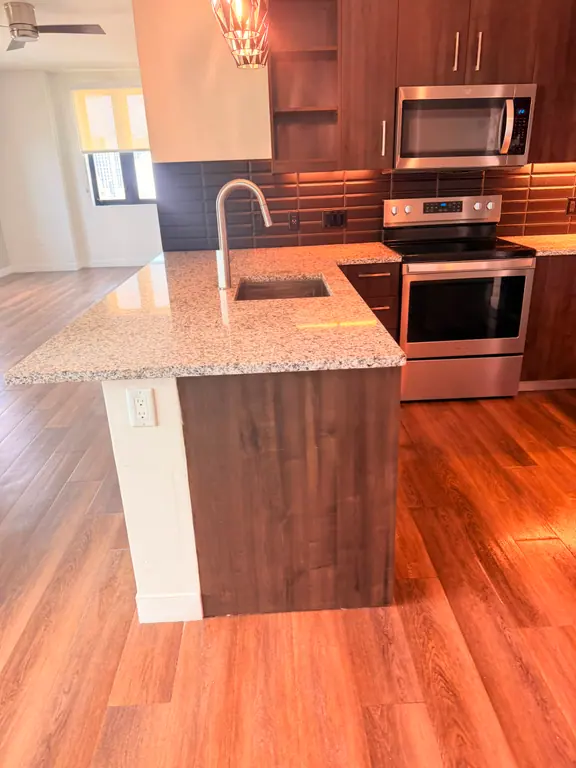
- Sink and backsplash: Scrub the sink, clean faucet handles, remove residue from the backsplash, and address grout where the material allows.
- Finishing work: Empty or wipe the trash area, clean baseboards, vacuum edges, and mop the floor.
Behind or beneath large appliances often requires moving them, which may not be safe or included. Ask before assuming those areas will be reached.
Bathroom
Bathrooms need more than a quick spray and wipe. Expect attention to shower walls, glass, tubs, toilets, sinks, faucets, cabinet exteriors, baseboards, exhaust-fan covers, and the floor.
Grout, soap scum, hard-water deposits, and shower-door tracks require agitation and suitable products. A deep clean can improve the appearance of these areas, but severe mold, damaged caulk, or heavy restoration may require a specialized service rather than ordinary housekeeping.
Bedrooms and living spaces
Cleaners typically dust ceiling fans, light fixtures, shelves, blinds, window ledges, door frames, and baseboards. They vacuum floors, upholstery where requested, under accessible furniture, along edges, and between couch cushions.
High-touch items include light switches, door handles, remote controls, drawer pulls, and frequently used desks. Personal belongings should be moved by the resident unless the provider has agreed to handle them.
Hallways, dining areas, and laundry rooms
Entryways, stairs, railings, dining tables, chair legs, laundry-room surfaces, accessible shelving, vents, and baseboards are easy to overlook during routine work. They should appear as individual checklist items, not disappear under a vague promise to clean “all rooms.”
For a useful room-by-room reference before requesting quotes, review this apartment deep cleaning checklist. Compare its line items with the provider's written scope, especially for interiors, tracks, and areas beneath furniture.
Standard Cleaning vs Deep Cleaning vs Move-In Move-Out Services
The wrong booking usually happens because customers compare service names instead of tasks. A standard clean maintains a usable home. A deep clean addresses accumulated detail. A move-in or move-out clean resets a property between occupants and usually puts more emphasis on empty cabinets, closets, walls, and every accessible interior surface.
| Task | Standard Clean | Deep Clean | Move-In/Move-Out |
|---|---|---|---|
| Countertops and visible surfaces | Wipe | Detailed cleaning and touchpoint attention | Detailed cleaning throughout |
| Appliance exteriors | Usually included | Included | Included |
| Appliance interiors | Usually excluded | Confirm scope or add-on | Often requested, confirm scope |
| Baseboards and window ledges | Light or spot attention | Detailed cleaning | Detailed cleaning |
| Cabinet fronts | Usually included | Detailed cleaning | Detailed cleaning |
| Cabinet interiors | Usually excluded | Often an add-on | Commonly requested, confirm scope |
| Grout and shower tracks | Surface maintenance | Scrubbing and detailing | Detailed reset |
| Floors | Vacuuming and mopping | Edge and under-furniture attention where accessible | Full accessible floor reset |
| Personal clutter | Generally left in place | Generally left in place | Property should be emptied first |
| Walls and doors | Spot cleaning | Spot or detailed attention by scope | More extensive wall and door cleaning may be requested |
Choose by condition, not by label
Book a standard clean when the home is already orderly and you need recurring maintenance. Choose a deep clean when dust, grease, buildup, or neglected edges have accumulated. Select move-in or move-out service when the property is changing hands and the cleaning must support a handover, inspection, listing, or new tenancy.
Move-out work is easier to assess when the home is empty. Furniture, boxes, and personal items block baseboards, closets, cabinet interiors, and floors. Renters should also check their lease or inspection checklist, then compare it with a practical move-out cleaning checklist for tenants.
Booking advice: Ask three questions before accepting a quote: What is included, what is an add-on, and what areas will the crew skip if access is blocked?
A deep clean isn't automatically a move-out clean. Conversely, a move-out package may include more reset work than a deep clean designed for an occupied home. The service name matters less than the written scope.
Inside the 36-Point Deep Clean Process
A structured 36-point deep clean turns a broad promise into a quality-control document. Canes Cleaners describes its deep-clean package as expanded detail across high-touch surfaces, fixtures, and interiors. The important feature isn't the number alone. It's the ability to identify which tasks were expected, completed, customized, or excluded.
Surfaces and floors
The surfaces category covers dust removal from reachable horizontal and vertical areas, cobweb removal, baseboards, doors, frames, switches, handles, and floors. A cleaner shouldn't treat a baseboard as clean because the wall above it looks clean. These narrow ledges collect dust and require a separate pass.
Floors receive attention after overhead and surface work. Vacuuming edges first captures debris before mopping, while carpets may need a HEPA-filter vacuum where the equipment and service scope support it. Steam cleaning or carpet extraction should be confirmed separately because they're not interchangeable with ordinary vacuuming.
Appliances and fixtures
Kitchen checkpoints may include the stovetop, fan or hood exterior, microwave interior and exterior, countertops, sink, cabinet fronts, appliance exteriors, and trash area. Bathroom checkpoints focus on toilets, sinks, shower surfaces, tubs, fixtures, grout, and hard-water residue.
The distinction between cleaning and disinfection matters most at touchpoints. Doorknobs, light switches, faucet handles, appliance handles, and restroom fixtures receive repeated contact, so the cleaner should use the appropriate product and observe its label dwell time rather than spraying and immediately wiping.
Windows, lighting, and specialized work
Window ledges, accessible tracks, blinds, ceiling fans, lamps, and light fixtures often sit outside a routine clean. Detailed vent cleaning, door frames, areas behind accessible furniture, and other property-specific tasks may sit in the specialized category.
The checklist also creates a fair customization conversation. A client with pets may prioritize hair under furniture. A renter may prioritize cabinet interiors. A renovated property may need post-construction cleaning instead of a normal deep clean. Ask the company to mark priorities before arrival, not after the team has spent its available time on other tasks.
How to Prepare Your Home for Deep Cleaning
Preparation doesn't mean cleaning the house before the cleaners arrive. It means removing obstacles so they can reach the surfaces you're paying to have cleaned.
Clear the work areas
Put away clothing, toys, paperwork, dishes, toiletries, and personal items from floors, countertops, tables, and bathroom ledges. Cleaners can wipe an empty surface thoroughly. They can't safely reorganize documents, decide where medication belongs, or move fragile decorations without your instructions.
Secure valuables, cash, important papers, and delicate objects. If a particular item must remain untouched, label it or point it out during the arrival walkthrough.
Give access and priorities
Open doors, provide parking or building instructions, identify alarm procedures, and make sure closets, laundry rooms, and requested cabinets are accessible. For apartments and condos, tell the team about elevator rules, loading zones, concierge access, and any building restrictions.
Write down problem areas in advance. Mention grease near the range, buildup in the shower tracks, pet hair beneath a bed, smoke odor, or a stained wall. Specific information helps the crew allocate effort and prevents an avoidable scope dispute.
Pets should stay in a secure, separate area unless they're comfortable with visitors and the company has approved access. Keep children away from wet floors and cleaning products during the appointment. Also tell the team about allergies, sensitive materials, freshly painted surfaces, or products you don't want used.
Use this short checklist before the crew arrives:
- Declutter first: Remove objects from areas that need wiping or vacuuming.
- Protect access: Open requested rooms and identify restricted spaces.
- Mark priorities: List the tasks that matter most if time or condition changes the plan.
- Separate pets: Keep animals comfortable and away from active cleaning zones.
The video below can help first-time customers visualize the type of preparation that makes a professional visit smoother.
Understanding Time and Cost Factors
Deep cleaning takes longer than standard cleaning because the crew performs more tasks, works in less accessible areas, and may need to allow disinfectants to remain wet for the product's stated contact time. The final duration depends on the home's size, condition, furniture, surface types, number of bathrooms, level of grease or buildup, and the number of requested interiors.
A home with clear surfaces and moderate buildup is easier to estimate than a crowded property with heavy soil. Move-in and move-out work can also be more efficient when the property is empty, but it may carry a broader scope because the team can reach cabinets, closets, walls, and floors that occupied-home cleaning often can't.
What changes the quote
Ask whether the estimate includes labor, supplies, equipment, travel, and the specific tasks you care about. Then separate base work from add-ons such as:
- Inside appliances: Oven, refrigerator, freezer, dishwasher, and microwave interiors.
- Interior storage: Cabinet shelves, drawers, closets, and pantry interiors.
- Glass and fabric: Interior windows, blinds, curtains, upholstery, and carpet treatment.
- Special conditions: Garages, boats, post-construction dust, heavy pet hair, smoke residue, or difficult access.
Don't compare bottom-line prices until the scopes match. One company may include cabinet interiors while another lists them separately. One quote may cover a microwave interior but exclude an oven. The cheaper figure can become more expensive once the missing tasks are added.
For broader market context, this guide to the average cost for house cleaning can help you understand why pricing varies by service type and property conditions. For a local quote, review the deep cleaning services prices alongside the exact rooms and add-ons you need.
Manager's recommendation: Request a written checklist, disclose the property's condition honestly, and ask how the company handles priorities if the original scope needs adjustment.
A trustworthy provider won't promise every possible task for one vague flat service. It'll explain what the base package covers, what requires extra labor or equipment, and how the team will confirm changes before doing chargeable work.
Common Questions About Deep Cleaning Services
A Miami-Dade homeowner may ask for eco-friendly products because children, pets, or sensitive surfaces are present. That request is reasonable, but product safety and cleaning performance still depend on using the correct product for the material, soil, and hygiene risk. Canes Cleaners states that it uses non-toxic, eco-friendly cleaning products, while customers should still identify surfaces that need special handling before the appointment.
Post-construction dust is another common mismatch. Fine renovation residue, adhesive traces, paint splatter, and job-site debris may need a post-construction cleaning rather than a standard deep clean. Tell the provider that the property was recently renovated so the team can recommend the correct service instead of treating construction residue as ordinary household dust.
Pet homes benefit from clear priorities. Ask for hair removal beneath accessible furniture, odor-focused attention, or upholstery work if needed. Those requests may require equipment or extra time, so they shouldn't be assumed to be included.
If you're unhappy with the result, contact the company promptly, identify the exact room and task, and use the written checklist to discuss a correction. A defined scope makes resolution practical. Without one, “deep clean” becomes an argument about expectations.
Frequency depends on occupancy, pets, allergies, cooking, traffic, renovations, and personal standards. Schedule recurring standard cleaning for maintenance, then book a deep clean when buildup returns or after a significant transition. DIY work can handle many tasks, but professionals bring a sequence, equipment, and checklist that reduce missed areas.
Canes Cleaners offers standard cleaning, a 36-point deep clean, move-in and move-out services, post-construction cleanup, and customized residential packages across Miami-Dade County. Review the written scope, identify your priority rooms and add-ons, and visit Canes Cleaners to request a service that matches the condition of your home.