
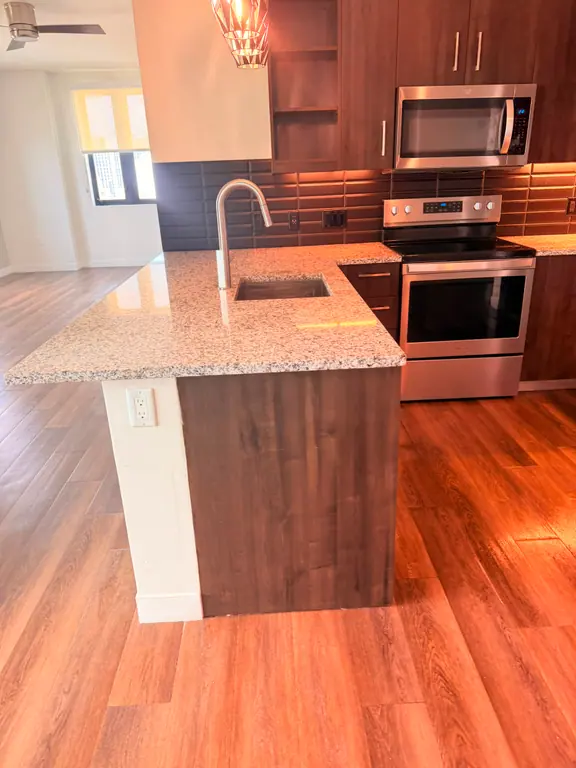
It's Sunday evening. The living room looks fine, but the refrigerator handle feels sticky, the shower has a cloudy film, and grit catches under your feet on the way to the kitchen. You could spend the evening cleaning whatever catches your attention, or start with a weekly cleaning list that tells you when you've done enough.
Give each task a place in the week instead of saving everything for a marathon reset. Keep the kitchen and bathroom work specific, clean floors after dusting, and separate ordinary upkeep from jobs that need extra attention. A clear finish line matters more than making every room perfect.
The checklist entries below are designed to copy onto a printed page. Suggested time boxes are planning allowances, not measured completion times, and assume accessible surfaces and ordinary weekly soil. Adjust them for your home's size, then record what fits. Apartments can use shorter routes, families can divide rooms, students can rotate shared spaces, and short-term rental hosts should schedule essential resets around departures rather than the calendar.
Table of Contents
- 1. Vacuum and Mop All Hard and Soft Floors
- 2. Scrub and Sanitize Bathrooms
- 3. Degrease and Clean the Kitchen
- 4. Dust Surfaces, Fixtures, and Baseboards
- 5. Change and Launder Bed Linens
- 6. Sanitize High-Touch Surfaces
- 7. Empty and Clean Trash and Recycling Bins
- Weekly cleaning tasks compared by surfaces, tools, and frequency
- Print It, Post It, and Adjust by Household
1. Vacuum and Mop All Hard and Soft Floors
- Weekly slot and suggested time box: Saturday, about thirty minutes for an initial maintenance pass. Vacuum carpets, rugs, accessible upholstery, and hard floors, then damp-mop suitable hard surfaces.
Start by lifting shoes, cables, and lightweight obstacles. Use the vacuum's crevice attachment along edges and beneath accessible furniture, then clean open areas without rushing past gritty entrances. Shake out or vacuum entry mats before finishing the surrounding floor.
Floor care deserves its own slot. In a survey of 1,000 Americans, respondents reported spending an average of 56.6 minutes per week vacuuming, mopping, or sweeping, according to ECOVACS' cleaning habits report.
Remove grit before adding moisture
Pre-treat sticky spots with a surface-compatible cleaner. Mop with a well-wrung pad, change dirty water promptly, and avoid soaking laminate or wood. Our guide to deep-cleaning floors explains the more involved work when a maintenance pass isn't enough.
Finish line: The floor should be free of loose grit and sticky patches, with no puddles left behind.
For a Miami apartment with tile throughout, follow a continuous route toward the exit. Families should prioritize dining areas and pet routes; students should clear shared floors before the assigned cleaner starts. In a short-term rental, complete floor work after beds, bathrooms, and kitchen surfaces so you don't track debris over finished areas.
2. Scrub and Sanitize Bathrooms
- Weekly slot and suggested time box: Monday, about twenty-five minutes per bathroom for routine soil. Clean mirrors, sink, shower or tub, toilet, and accessible fixtures, then finish the floor.
A cloudy shower needs cleaning, not a mist of disinfectant. Remove soap residue with a cleaner suited to the surface, rinse it away, and treat compatible touchpoints separately when sanitizing or disinfection is needed. Avoid acidic limescale removers on marble and other acid-sensitive stone.
Apply shower cleaner first so it can work while you clean the mirror and basin. Keep toilet tools separate from sink cloths, and clean the toilet exterior before finishing with the bowl. Never mix bleach with vinegar, ammonia, or other cleaners.
The following bathroom-cleaning demonstration can help you visualize the sequence.
Match the product to the job
Use an EPA-registered disinfectant when disinfection is appropriate, keeping the surface wet for its labeled contact time. A general-purpose cleaner isn't automatically a sanitizer, and an environmental label alone doesn't establish germ-killing performance.
- Apartment adjustment: Keep a compact bathroom kit so collecting supplies doesn't become a separate chore.
- Family or student adjustment: Assign the whole bathroom to a named person, including hair removal from the drain cover.
- Rental adjustment: Clean between guests, inspect behind the toilet, and remove used toiletries.
Run the exhaust fan while cleaning and afterward. Persistent mold growth, recurring dampness, or deteriorated caulk needs attention beyond ordinary weekly scrubbing.
3. Degrease and Clean the Kitchen
- Weekly slot and suggested time box: Wednesday after dinner, about twenty-five minutes. Clean counters, stovetop, sink, microwave, appliance exteriors, and greasy handles.
A kitchen can look tidy while the stove controls and refrigerator handle remain greasy. Clear food and dishes first, then work from cleaner preparation areas toward the stovetop and sink. Keep a dedicated kitchen cloth rather than borrowing the bathroom cloth.
For stainless steel, wipe with the grain and buff with a clean, dry microfiber cloth. On a cooled induction cooktop, use a compatible nonabrasive cleaner and lift residue gently rather than attacking it with a rough scourer.
Keep the weekly scope under control
- Degrease carefully: Apply cleaner to a cloth near controls, not directly into switches or openings. For stubborn deposits, follow our guide to cleaning stove grease.
- Refresh the microwave: Soften splashes with a warm, damp cloth, then wipe the cavity and wash the removable turntable.
- Finish the sink: Scrub the basin, faucet base, and strainer, then rinse away cleaner.
For a student apartment, the assigned cleaner handles shared surfaces while residents remove their own dishes beforehand. Families should tackle cooking splashes when they happen rather than storing them up for Wednesday. Rental hosts should also inspect for abandoned food and crumbs inside frequently used storage areas.
Don't save food-contact hygiene for the weekly clean. Wash cutting boards after use, and use a food-contact-safe sanitizer when needed, including any required rinse. Full oven and refrigerator-interior cleaning belongs on a separate detail list unless spills demand immediate attention.
4. Dust Surfaces, Fixtures, and Baseboards
- Weekly slot and suggested time box: Friday before floor cleaning, about twenty minutes. Damp-dust reachable furniture, shelves, sills, and visibly dusty baseboards; rotate less-used fixtures into a separate detail session.
Dusting should remove particles, not just move them around. Fold a lightly dampened microfiber cloth into clean faces, wipe without flicking, and switch faces as they become dirty. Spray the cloth rather than the furniture, particularly around electronics or unfinished edges.
In an Australian household study, dry-cloth or dusting-wand use was associated with higher dust-related pollutant levels in a study cohort, as described in Frontiers in Public Health. That finding supports paying attention to technique, but it doesn't establish that a particular household routine prevents illness.
Work downward without expanding the job
Turn fans off before cleaning accessible blades. Use an extension tool from a stable position, and leave fixtures requiring unsafe access out of the routine. Our instructions on how to dust explain surface-by-surface techniques.
Don't empty every bookshelf during weekly upkeep. Clean accessible surfaces now and schedule the detailed shelf reset separately.
In a small apartment, concentrate on the desk, bedside table, television stand, and window ledges. Families can assign personal bedroom surfaces to their occupants, while students rotate shared desks and entertainment areas. Rental hosts should check visible ledges and lamp bases during each turnover.
After renovation, don't treat persistent fine debris as ordinary weekly dust. Keep that cleanup separate so you can maintain the rest of the home without repeatedly spreading residue.
5. Change and Launder Bed Linens
- Weekly slot and suggested time box: Saturday morning, about fifteen minutes of hands-on work per bed, with washing and drying scheduled separately. Replace sheets and pillowcases, launder used bedding, and remake the bed.
Strip the bed before starting other bedroom cleaning. Roll used sheets inward, carry them directly to the hamper or washer, and avoid shaking them through the room. Clean the bedside surfaces before laying out fresh bedding.
Keeping the task visible helps prevent it from slipping. In Frontdoor's December 2024 survey of 984 American homeowners, 35% reported not following the recommended weekly schedule for changing sheets, according to its home-maintenance checklist report.
Separate active work from machine time
- Wash appropriately: Choose the warmest temperature permitted by the fabric-care label, and leave room for bedding to move.
- Dry completely: Check corners and elastic edges before folding or remaking the bed.
- Rotate extras: Wash protectors, blankets, and pillows according to their care instructions and condition rather than adding everything to every load.
An apartment with shared laundry needs a laundry reservation as much as a cleaning reminder. Families can stagger bedrooms; students should keep personal bedding separate from communal cleaning duties. Short-term rentals need fresh linens between guests regardless of the weekly slot.
If you're comparing detergent formats, laundry care alongside home air products is a shopping reference, not evidence of cleaning or health performance. Choose detergent for the fabric, washer, and household's fragrance preferences.
6. Sanitize High-Touch Surfaces
- Weekly slot and suggested time box: Thursday, about ten minutes for a defined route. Clean handles, switches, remotes, railings, and shared device surfaces, then sanitize or disinfect compatible surfaces where appropriate.
Choose the route before you pick up a cloth. Start at the entrance, move through shared living areas, and finish at kitchen and bathroom touchpoints. This is more reliable than wiping whichever handle happens to catch your eye.
Cleaning and disinfecting aren't interchangeable. Remove visible dirt first unless the product specifically permits a combined process for the conditions present. Use enough disinfectant to maintain the labeled wet contact time, rather than immediately polishing it dry.
Keep moisture away from electronics
- Phones and remotes: Follow the device manufacturer's cleaning instructions, avoid openings, and don't spray directly onto the device.
- Switch plates: Use a cloth that isn't dripping and keep liquid out of electrical gaps.
- Handles and rails: Check finish compatibility and move to a fresh cloth face as it becomes soiled.
Scope rule: A completed touchpoint route is more useful than an ambitious promise to disinfect everything.
For a shared student apartment, include the microwave button, refrigerator handle, and shared keyboard if there is one. Families can add frequently handled cupboard pulls; apartment dwellers should include their own entry hardware without assuming responsibility for building-managed fixtures. Rental hosts should repeat the route between guests.
Increase attention when someone is ill or a surface becomes contaminated. Ordinary weekly maintenance isn't a substitute for handling those events promptly, and routine cleaning doesn't require disinfecting every decorative surface in the home.
7. Empty and Clean Trash and Recycling Bins
- Weekly slot and suggested time box: The evening before collection, about fifteen minutes. Empty indoor bins, clean lids and leaked residue, dry the containers, and fit fresh liners.
Emptying a bag doesn't clean the container beneath it. Inspect the bottom, lid underside, pedal, and rim for residue, especially where a liner has slipped or leaked. Remove debris before washing so you aren't rubbing food waste around the bin.
Use detergent and a dedicated brush, rinse where practical, and dry the container before relining it. If disinfection is warranted, use a compatible product after cleaning and follow its dilution, contact-time, and rinsing instructions. Don't improvise a stronger mixture.
Keep collection and container cleaning separate
- Kitchen waste: Remove leaking or odorous food waste promptly rather than waiting for the weekly slot.
- Recycling: Empty containers and follow current Miami-Dade or building-specific sorting instructions.
- Bathroom bins: Check beneath liners and keep their cleaning tools separate from kitchen supplies.
In a condo, clean personal bins in a suitable utility area, not a communal hallway or somewhere wash water will create a slip hazard. Families can assign collection to one resident and container cleaning to another, but both jobs need an owner. Students should name who takes bags all the way to the designated disposal point.
For short-term rentals, empty bins between guests and inspect them before inserting new liners. A scented bag won't fix residue stuck beneath the lid, and adding fragrance can conceal a problem instead of removing it.
Finish with a dry bin, a secure liner, and a clean surrounding floor. Persistent pest activity needs separate attention; ordinary cleaning isn't pest treatment.
Weekly cleaning tasks compared by surfaces, tools, and frequency
| Item | Main Surfaces Covered | Key Tool or Product | Typical Frequency |
|---|---|---|---|
| Vacuum and Mop All Hard and Soft Floors | Carpets, rugs, upholstery, tile, vinyl, sealed hardwood | HEPA vacuum and pH-neutral floor cleaner | Weekly; more often in high-traffic areas |
| Scrub and Sanitize Bathrooms | Toilets, sinks, showers, tubs, mirrors, fixtures, floors | EPA-registered disinfectant | Weekly |
| Degrease and Clean the Kitchen | Countertops, stovetop, backsplash, sink, appliance exteriors, cabinet fronts | Degreaser and food-safe sanitizer | Weekly |
| Dust Surfaces, Fixtures, and Baseboards | Shelves, furniture, electronics, fans, blinds, fixtures, window sills, baseboards | Microfiber cloth | Weekly |
| Change and Launder Bed Linens | Sheets, pillowcases, duvet covers, mattress protectors | Laundry detergent | About once a week |
| Sanitize High-Touch Surfaces | Handles, switches, remotes, faucets, railings, phones, shared devices | Surface-safe disinfectant | Weekly; daily wiping may complement it |
| Empty and Clean Trash and Recycling Bins | Indoor trash and recycling bins, surrounding floor areas | Bin liner and diluted disinfectant | Weekly |
Print It, Post It, and Adjust by Household
Copy the checkbox entry beneath each heading onto a page, then add a name beside every task. Post it near the laundry supplies or inside a utility cupboard, where the person doing the work can check it. Keep the supporting instructions available for unfamiliar jobs rather than cramming them onto the printed sheet.
Treat the suggested time boxes as starting points. If a task repeatedly overruns, reduce its scope, divide it by room, or schedule accumulated buildup separately. Don't turn a missed dusting session into a reason to postpone the kitchen and bathroom.
- Apartments: Shorten the floor route and combine small-bin cleaning with collection night. Keep storage and access limitations in mind before buying bulky equipment.
- Families: Split bedding by bedroom and assign reachable dusting to household members who can do it safely. Share the planning as well as the physical work.
- Students: Rotate shared kitchen and bathroom responsibility, with clear completion standards. Personal dishes and belongings should be cleared before the cleaner starts.
- Short-term rentals: Schedule linens, bathrooms, kitchen surfaces, touchpoints, bins, and floors around every guest departure. Use the weekly calendar for additional detail, not as permission to skip a turnover task.
A separate plan helps you organize chores by frequency without bloating the weekly sheet. Refrigerator interiors, full baseboard washing, and detailed fixtures can have their own slots unless their condition calls for earlier action.
If ordinary upkeep can't remove the existing buildup, begin with a reset. Our Express Clean covers room-by-room upkeep, while our 36-Point Deep Clean adds details such as baseboards, fans, fixtures, and touchpoints. We publish the checklists before the appointment so you can compare the scopes line by line.
A useful weekly cleaning list fits the household that uses it. Keep the essential work visible, write down exceptions, and revise assignments when schedules change. Consistent, clearly finished tasks matter more than an impressive list nobody can maintain.
Canes Cleaners offers scheduled and on-demand cleaning across Miami-Dade, including home upkeep, deep cleaning, student apartments, and short-term rental turnovers. Visit Canes Cleaners to compare published checklists, choose your priority rooms, and book a scope that supports your weekly routine.