
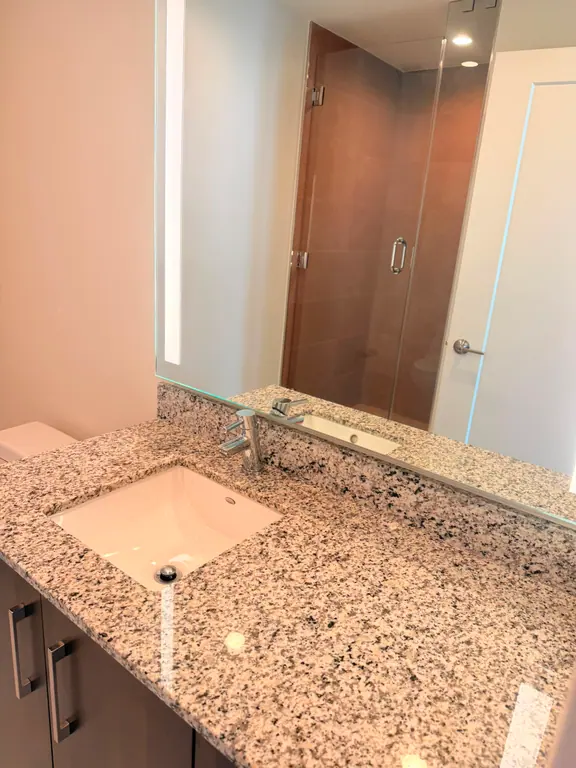
You booked the deep clean before listing the condo. The crew came, you paid, and then you opened the oven door: the same ring of carbonized grease on the glass that was there two weeks ago. The guest bath grout is still gray where it meets the wall.
Nothing on the invoice was false. Deep clean doesn't have a fixed definition. The U.S. Census Bureau's janitorial services category, NAICS 561720, counts 67,799 employer establishments, and deep cleaning sits inside that industry as a scope of work each company defines for itself. Two quotes for the same three-bedroom can describe completely different jobs.
A room-by-room list fixes that. The eight tasks below are the ones that change a room's condition rather than its surface. Each entry explains what the work involves, where it commonly goes wrong, and how to decide whether you need the full treatment or a lighter version. Start with the room that bothers you most and build the scope from there.
Table of Contents
- 1. Oven and Appliance Interior Degreasing
- 2. Grout and Tile Restoration
- 3. Baseboard, Wall, and Trim Washing
- 4. Ceiling Fans, Vents, and Light Fixture Dusting
- 5. Upholstery and Mattress Shampooing
- 6. HEPA Post-Construction Dust Removal
- 7. Kitchen Cabinet and Drawer Interior Cleaning
- 8. Move-In/Move-Out Turnover Deep Clean
- How the eight deep cleaning tasks compare by room, best use, and main risk
- Build Your Own Scope Before You Book
1. Oven and Appliance Interior Degreasing
Oven interior work is the easiest task in a deep clean to fake. Spray, wait three minutes, wipe the door glass, and from standing height the oven reads as clean. The carbonized spills on the back wall, the rack runners, the broiler pan and the hood filter are where the grease lives, and they need dwell time more than elbow grease.
Three stages, in order
A real interior degrease runs in sequence. The product goes onto warm surfaces and sits for ten to twenty minutes so it can break down polymerized oil before any scrubbing starts. Then comes the scrape, with a plastic blade only on glass and enamel, because metal leaves scratches that show under the oven light. Racks come out and soak separately in a utility sink while the cavity gets worked.
Picture a Miami-Dade homeowner hosting Thanksgiving for twelve and booking an oven and hood degrease. The cavity is the visible half of the job. The hood filter is what fills the kitchen with smoke at 400 degrees, and in coastal humidity grease turns tacky faster and grabs dust, so those filters want a monthly hot-water soak rather than an annual one.
What I'd cut first: the self-clean cycle on an older oven with tired door seals. It bakes residue into a harder film and can trip the thermal fuse.
Ventilation isn't optional. Run the exhaust fan or open a window, and rinse every surface you treated, since degreaser residue on a rack transfers straight to food. If you'd rather skip heavy chemistry, a gentler oven cleaning routine built on baking soda and steam handles moderate buildup, though it won't cut through years of carbon.
2. Grout and Tile Restoration
Grout is a sponge with a decorative job. It's porous by design, and in a Miami bathroom it absorbs soap scum, body oil and humidity until the color you remember is gone. Restoration means bringing both the tile face and the grout lines back to their original tone, then sealing so the next six months don't repeat the last six.
Test, scrub, seal, wait
The order matters more than the product on the bottle.
- Test on a hidden tile first. Natural stone and some porcelain react badly to acidic grout cleaners, and a patch behind the toilet costs nothing to check.
- Use a stiff nylon grout brush. A wire brush scratches glazed tile and roughens the grout surface so it traps dirt faster.
- Fix the ventilation, not just the stain. If the same corner goes black within a month, airflow is the problem. Run the exhaust fan during and after showers.
- Respect the cure window. Sealed grout usually needs to stay dry for the period on the label, often 24 hours. Foot traffic too early ruins the seal and you pay twice.
A condo owner in Miami Beach restoring a bathroom before listing gets a surprise here: grout restoration changes the light in the room. A lanai in Coral Gables is the other version, where green-black mildew returns between guest stays unless the outdoor surface gets sealed and the drainage is corrected.
One boundary worth knowing. Mildew on grout is a cleaning task. Mold inside a wall cavity is remediation, and unless it's in a written proposal, it sits outside what a cleaning scope covers.
3. Baseboard, Wall, and Trim Washing
Baseboards collect dust pushed to the room's edges, along with scuffs, fingerprints, and pet hair. They are easy to miss during routine upkeep, even when the floor looks clean. A 2025 Cleaning Institute survey of spring cleaners found that 80% planned to clean floors and baseboards.
Top down, barely damp
Start with a dry microfiber cloth to lift loose dust. Then wipe with a cloth wrung out until barely damp, and dry the surface promptly. Excess water can swell MDF baseboards, leaving a raised edge that will not flatten. Work from the top of the wall downward so drips do not streak a cleaned area.
Paint finish determines how much pressure to use. Flat and matte paint can lose its appearance when rubbed, while an abrasive pad may leave a visible patch. Test a hidden spot, such as the back of a closet wall, before wiping a hallway. Include door frames, switch plates, and knobs in the same pass, since hands and daily contact leave marks there.
In humid Miami conditions, damp surfaces can take longer to dry, so use as little water as the finish allows. Scope the work by room: a pet-heavy home may need hair and nose prints addressed along baseboards and trim, while a rental turnover may call for attention to visible wall scuffs. For routine upkeep, focus on reachable marks; a deep clean gives these edges and touchpoints more detailed attention. If a move-out clean is needed, choose that scope rather than assuming a standard room refresh covers every turnover detail.
4. Ceiling Fans, Vents, and Light Fixture Dusting
Dust on a ceiling fan blade doesn't stay on the blade. The EPA's guidance on indoor particulate matter reports that Americans spend about 90% of their time indoors and that concentrations of some indoor pollutants run 2 to 5 times higher than typical outdoor levels. It also notes that dust becomes airborne through vacuuming, walking and cleaning itself.
That's the trade-off nobody mentions when they hand you a dry cloth. Wiping a loaded fan blade with a dry rag launches the dust into the air you're breathing. Order and tool choice matter more than effort.
The sequence that doesn't backfire
- Kill power at the breaker before touching fixtures or fan motors, not just at the wall switch.
- Vacuum the grilles first. A brush attachment pulls dust out of a vent cover that wiping only pushes deeper.
- Wipe fan blades from the top toward the leading edge so the dust gathers on the cloth instead of the sofa.
- Replace the HVAC filter after the work. Cleaning a register doesn't stop recirculation if the filter is already loaded.
A residential client in Aventura booking this before an extended family gathering usually notices one thing first: the rooms get brighter. An office in Miami scheduling it for common areas is chasing light output, since a dusted diffuser throws noticeably more.
Duct cleaning is a separate promise. The EPA states that routine air-duct cleaning has not been shown to prevent health problems, so treat it as a project you decide on deliberately, not a step that belongs on a deep cleaning services list by default.
5. Upholstery and Mattress Shampooing
Sofas and mattresses absorb what people leave behind: body oils, sweat, pet dander, spilled drinks. Shampooing pulls that out of the fabric and the padding under it, which is why a microfiber wipe and a spray bottle doesn't do the same job at all.
The label decides the method
Every upholstered piece carries a cleaning code, usually under a cushion or on the frame.
- W means water-based cleaning is fine, so low-moisture extraction works.
- S means solvent only. Water can shrink the fabric, leave rings or brown the dye.
- WS accepts either method.
- X means vacuum only, no liquid at all.
Running a hot-water extractor on an S-code sofa is the most expensive mistake in this category, and it's usually irreversible. Check before anything touches the fabric.
Drying is the second failure point. Miami humidity slows evaporation, and a damp cushion core grows mildew in about a day. Run fans or a dehumidifier and count on most of a day, not a couple of hours, before the sofa is back in use. A short-term rental host in Miami Beach schedules sofa and mattress work between guest stays for the odor, and a pet owner in Coral Gables books it for dander and urine. Both need the dry time built into the calendar, not squeezed in. For pieces that need detail beyond extraction, matching fabric couch cleaning to the code and the padding type matters more than the machine.
6. HEPA Post-Construction Dust Removal
Drywall dust is finer than the filter on a shop vacuum and lighter than anything a broom can push. After a renovation it settles on every horizontal surface, gets pulled into the HVAC return and reappears on the dining table three days after you wipe it down.
A staged pass, in order, beats a more expensive vacuum.
Vacuum, wipe, repeat
Start overhead with a HEPA vacuum on ceilings, crown molding, ledges and cabinet tops. Follow with a damp microfiber wipe, changing cloths often, because a loaded cloth just smears plaster dust around. Finish with a second vacuum pass on floors once everything above has been cleared.
Two scheduling details decide the outcome. Book the clean after paint and final fixtures are installed, or you'll pay for a clean you immediately undo. Keep the HVAC off during the work and change the filter after, since fine dust that reaches the return gets redistributed through every room. A developer in Bal Harbour showing new units has the same sequence at a larger scale, and it's the second and third passes that make the difference, not the first.
A homeowner in Miami finishing a kitchen renovation and booking before furniture goes back in gets the cleanest version of this, because empty rooms have no hiding places. For the wall-specific technique, see how to remove construction dust from walls without grinding it into the paint.
7. Kitchen Cabinet and Drawer Interior Cleaning
The inside of a kitchen cabinet is the only place in a house where crumbs become structural. Grease films the pantry shelves, a sticky ring forms under the syrup bottle, and the cabinet tops gather a layer of cooking vapor nobody sees until the doors come off.
Empty it, don't wipe around it
Interior cabinet work means taking every item out, vacuuming with a crevice tool, wiping shelf by shelf from the top down, drying immediately and replacing worn liners. Wiping around the jars is a different service at a different price, and the difference shows up the first time you reach into the back of a shelf.
- Dry wood fast. Particleboard and MDF swell at the edges when water sits, and a swollen shelf never goes flat again.
- Watch the back corners. Ant trails and roach frass show up where the shelf meets the wall, and finding them early is worth the phone call.
- Don't skip the cabinet tops. That grease film is what makes a kitchen smell like last night's dinner every time the room warms up.
- Replace liners last. Old shelf liner holds the residue you just removed.
A condo owner in Doral prepping a listing wants the whole run done and reorganized, which is a solid half-day on a full kitchen. A short-term rental host in Miami is chasing the sticky drawer and the crumb-filled cutlery tray between bookings.
This is also where package tiers get honest. A recurring upkeep visit handles the outside of the appliances and the visible kitchen surfaces. Cabinet and drawer interiors belong to the deep tier, alongside baseboards, fans, fixtures and ledges.
8. Move-In/Move-Out Turnover Deep Clean
A move-out clean answers to a different judge than a deep clean. A deep clean resets a home you're living in. A move-out clean has to satisfy a landlord, a buyer's agent or a property manager walking through with a checklist and a deposit in mind, which is why the move version reaches into the oven, the refrigerator, the closets and the window tracks.
The CDC guidance on cleaning and disinfecting at home draws a line worth repeating at every turnover. Ordinary soap and water removes most germs, and disinfection is generally unnecessary unless someone is sick, someone at higher risk lives there, or a sick person has recently been in the space. It also advises cleaning visibly dirty surfaces before disinfecting and following the product label.
A longer chemical list is not a healthier clean. Ventilation, dwell time and residue removal decide whether a disinfectant helps or just leaves a film on a counter someone eats off.
What the inspection actually checks
Turnover cleaning sorts into inside appliances, inside cabinets and closets, bathrooms and fixtures, floors and edges, and the touchpoints a hand lands on: handles, switches, thermostats and remotes. Photograph the property before and after, and schedule the clean after the movers leave and before furniture arrives, so nothing gets cleaned twice.
A tenant in Miami working from a move-out checklist is protecting a deposit. A property manager in Aventura booking several units on the same day is protecting vacancy days. Our 48-Point Moving Clean covers 48 defined points across kitchen, bathroom, bedroom and living areas, office space and move-specific detail, including the inside of the oven, stove hood, refrigerator and microwave.
How the eight deep cleaning tasks compare by room, best use, and main risk
| Item | Best For | Main Area Covered | Key Risk to Check |
|---|---|---|---|
| Oven and Appliance Interior Degreasing | Removing baked-on grease and cooking odors | Ovens, microwaves, range hoods, and refrigerator interiors | Harsh cleaners may damage surfaces or require careful ventilation and rinsing |
| Grout and Tile Restoration | Refreshing stained tile and grout in damp areas | Tile faces, grout lines, and edges | Acidic cleaners can damage natural stone |
| Baseboard, Wall, and Trim Washing | Removing scuffs, dust, and fingerprints | Baseboards, painted walls, door frames, and trim | Excess moisture or scrubbing can damage paint and drywall |
| Ceiling Fans, Vents, and Light Fixture Dusting | Reducing surface dust and improving room brightness | Fans, vents, light fixtures, and high ledges | Ladder safety and electrical power should be checked |
| Upholstery and Mattress Shampooing | Removing fabric odors, allergens, and embedded dirt | Sofas, chairs, cushions, and mattresses | Inadequate drying can cause odors or mildew |
| HEPA Post-Construction Dust Removal | Preparing renovated or newly built spaces for occupancy | Fine dust, fixtures, vents, window tracks, and cabinets | Residual dust may remain in ducts or hidden crevices |
| Kitchen Cabinet and Drawer Interior Cleaning | Refreshing food-storage areas before a move or sale | Cabinet and drawer interiors, doors, handles, and tracks | Excess moisture can damage wood or laminate |
| Move-In/Move-Out Turnover Deep Clean | Preparing a property for inspection or new occupants | Rooms, closets, cabinets, appliances, bathrooms, and floors | Unclear scope can lead to disputes about what is included |
Build Your Own Scope Before You Book
Start with the room that needs the most attention, then choose a service based on its condition, not just its size. Express Clean suits routine upkeep. The 36-Point Deep Clean is a top-to-bottom reset for buildup that ordinary upkeep leaves behind. The 48-Point Moving Clean adds inside-the-home details for a change of occupants.
Canes Cleaners' Express Clean starts at $124 and covers kitchens, bathrooms, bedrooms and living areas, including vacuuming, sweeping and mopping, and cleaning the inside and outside of the microwave. It is room-by-room upkeep, not detailed cleaning of baseboards, ceiling fans, fixtures, ledges, and additional touchpoints. The 36-Point Deep Clean starts at $199 and has 36 defined points across the kitchen, bathrooms, bedrooms and living areas, and office. The exact price appears in the booking flow. The 48-Point Moving Clean has 48 points and combines the deep-clean scope with details suited to renters, owners, buyers, sellers, and property teams.
If a home has not been professionally cleaned recently or needs more than routine upkeep, the deep clean is generally the strongest starting point. Published checklists show the scope of upkeep, deep cleaning, and empty-home detail before the appointment. Compare the room-by-room points with your priorities, and flag any areas that need a specific approach.
Before booking, confirm the rooms, included tasks, and available appointment window with the cleaning company. A written scope makes the final walkthrough easier to compare against what was agreed. That practical approach also applies when scheduling emergency calls for plumbing companies: clarify the work and timing before the appointment.
Canes Cleaners offers Express Clean, 36-Point Deep Clean, and 48-Point Moving Clean, with published checklists and online booking for homes, condos, rentals, offices, and student apartments across Miami-Dade. Review the checklists and choose a service and available time through Canes Cleaners.