You're halfway out the door already, and the apartment is full of boxes, dust, and last-minute chaos. The landlord is coming back to judge the place room by room, and a “good enough” clean usually isn't enough to protect your deposit. If you're renting in Miami-Dade, humidity, salt air, and fast turnovers make the hidden stuff matter even more, especially in kitchens, bathrooms, and any room that held moisture for too long.
This move out cleaning checklist for tenants is built like a system, not a random to-do list. It gives you the order to clean in, the supplies worth having on hand, the spots landlords inspect, and the Miami-specific problems that can trip up even careful renters. It also shows when a professional service like Canes Cleaners makes more sense than trying to squeeze everything into one exhausting weekend.
Table of Contents
- 1. Deep Clean Kitchen Appliances and Surfaces
- 2. Bathroom Deep Sanitization and Fixture Polishing
- 2. Bathroom Deep Sanitization and Fixture Polishing
- 4. Carpet Vacuuming, Spot Cleaning, and Stain Removal
- 4. Carpet Vacuuming, Spot Cleaning, and Stain Removal
- 6. Window and Glass Cleaning Interior and Exterior
- 6. Window and Glass Cleaning Interior and Exterior
- 7. Dust and Vacuum High-Touch and Hard-to-Reach Areas
- 9. Laundry Room Cleaning and Appliance Maintenance
- 9. Laundry Room Cleaning and Appliance Maintenance
- 10. Final Walkthrough and Quality Assurance Inspection
- 10-Item Move-Out Cleaning Comparison
- Hand Over the Keys with Confidence or Let the Pros Handle It
1. Deep Clean Kitchen Appliances and Surfaces
Oven cavities and refrigerator seals are where deposit deductions multiply, because those are the spots inspectors check after a quick visual pass misses the hidden mess. Grease on the range, crumbs in the microwave, mildew in the dishwasher gasket, and sticky residue on cabinet pulls all signal that the kitchen was only surface-cleaned. A tenant who leaves the appliance fronts shiny but skips the inside edges and hidden seams gives the landlord exactly what they need to justify a deduction.
Start with the appliances that hold the most residue. Remove oven racks and soak them separately, then clean the cavity, the door glass, and the broiler drawer if your unit has one. Wipe the inside of the refrigerator and freezer, then clean the seals, shelves, drawers, and the area under the bins. If your refrigerator coils are reachable without forcing anything, clear the dust so the unit is left in working order. For a focused method, follow this refrigerator cleaning guide and adapt it to your appliance model.
Practical rule: use a food-safe degreaser on food-contact areas and check the appliance manual before using anything harsh on stainless steel, coated surfaces, or electronics.
After the appliances are handled, work outward across the room. Clean the stovetop, range hood, counters, backsplash, cabinet faces, sink, switch plates, and the floor around the baseboards. Miami humidity makes grease tackier and slows drying, so pay attention to seams, corners, and places where moisture sits after cooking. Salt air can leave a thin film on metal finishes near windows or balcony doors, so wipe those surfaces with a damp microfiber cloth and dry them immediately instead of letting residue settle.
Give extra attention to details that are easy to miss during a rushed move-out. Pull out the microwave turntable and wash it, clean under the toaster or coffee maker if they stayed in place, and wipe the tops of upper cabinets where dust and cooking oil collect together. If the kitchen has a dishwasher, clean the filter, the door edges, and the detergent compartment, then run a rinse cycle only if the unit's instructions allow it.
Use a plastic scraper for stuck-on food, not a metal tool that can mark glass or enamel. Open shelves, vent covers, and the lip behind the stove are common deposit traps because they collect grime in narrow strips that are hard to see from the doorway. Wipe those zones before you finish the room, then recheck the appliance handles, sink rim, and backsplash under stronger light.
2. Bathroom Deep Sanitization and Fixture Polishing
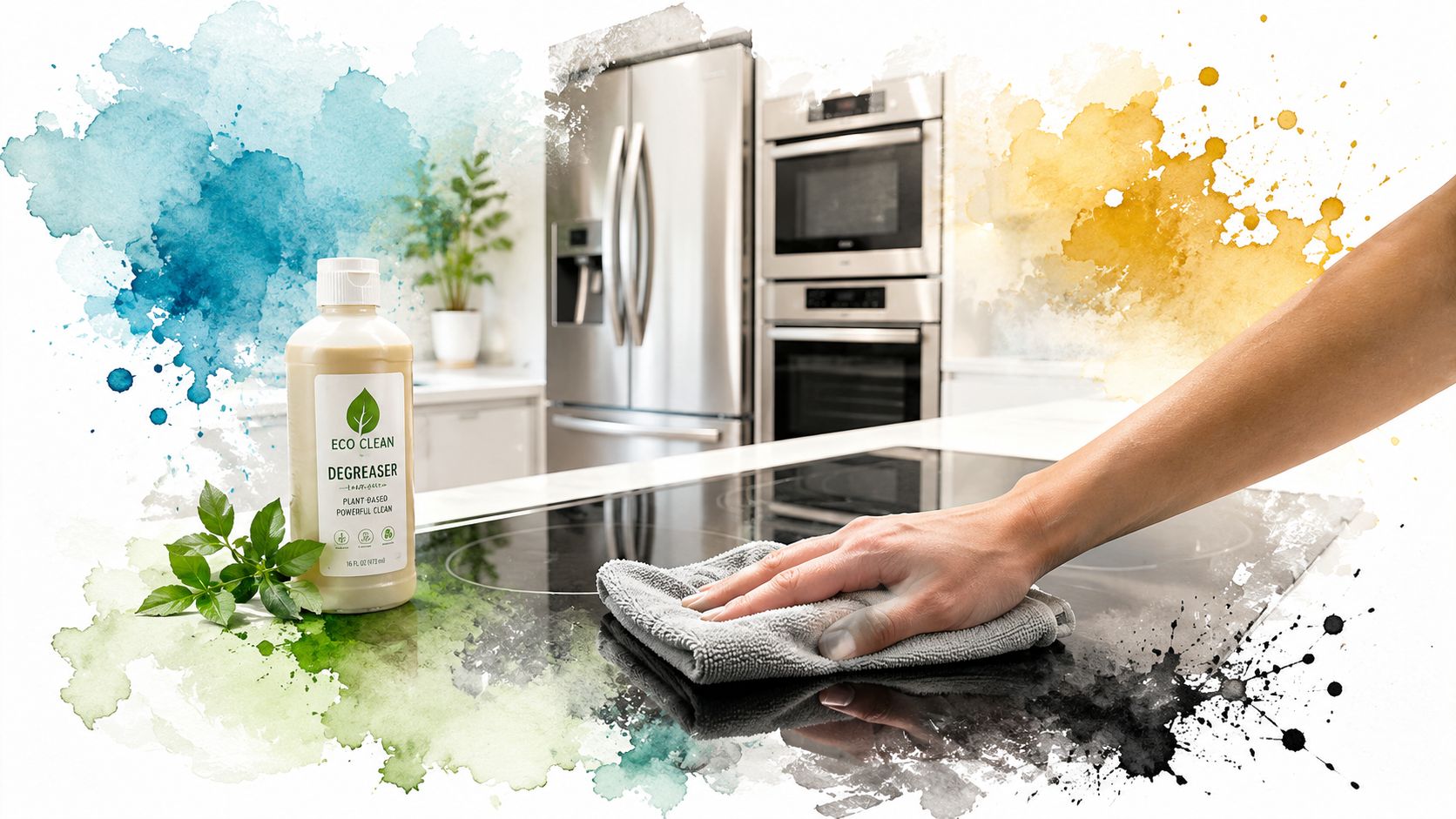
Grout mildew around the shower line and soap film at the faucet base trigger deductions fast, even when the rest of the room looks clean. Landlords inspect toilets, showers, tubs, sinks, mirrors, grout, caulking, exhaust fans, and hard-water buildup because those spots show whether the bathroom was properly maintained, not just wiped down before move-out. That is why these problem areas keep showing up on tenant and landlord cleaning checklists, including Tidy's landlord checklist.
Start with the toilet, then move through the shower, tub, and sink in that order. Scrub inside the bowl, under the rim, around the base, and behind the hinges if the seat lifts off. Clean shower walls, glass, tracks, and the tub edge, then descale the faucet, showerhead, and any visible mineral buildup on the handles.
Mirror and vanity work comes next. Wipe the mirror until it clears without haze, clean the sink basin and drain ring, and remove toothpaste specks from the backsplash and the outside of cabinet doors. If the bathroom has shelving or a medicine cabinet, check the lower edges and corners, because those are common places for dust, dried product, and hair to collect.
Miami-Dade bathrooms need extra attention because humidity keeps residue in place and makes mildew return faster after a rushed clean. If the unit sits near the coast or stays closed up between showings, inspect grout lines, caulking, and exhaust fan covers more closely than you would in a dry climate. Use a microfiber cloth on chrome and glass to limit streaks, and follow with a dry pass so moisture does not sit on fixtures and leave a film.
A squeegee helps on shower glass and tiled walls, but only if you use it after every rinse and dry the frame edges by hand. Hard-water spots on faucets and glass are easier to remove before they set again, so check them under strong light before you leave the room. If you want a professional service option with guaranteed results, Canes Cleaners on refrigerator cleaning is the kind of process-driven reference tenants often use when they want a tighter final standard across the apartment.
2. Bathroom Deep Sanitization and Fixture Polishing
Bathrooms are the second place tenants get hit with deductions, and the reasons are predictable. Landlords check toilets, showers, tubs, sinks, mirrors, grout, caulking, exhaust fans, and hard-water buildup, because mold, soap scum, and mildew signal poor upkeep fast. Those recurring inspection points show up across tenant-facing and landlord-facing checklists, including Nationwide's tenant moving-out guide.
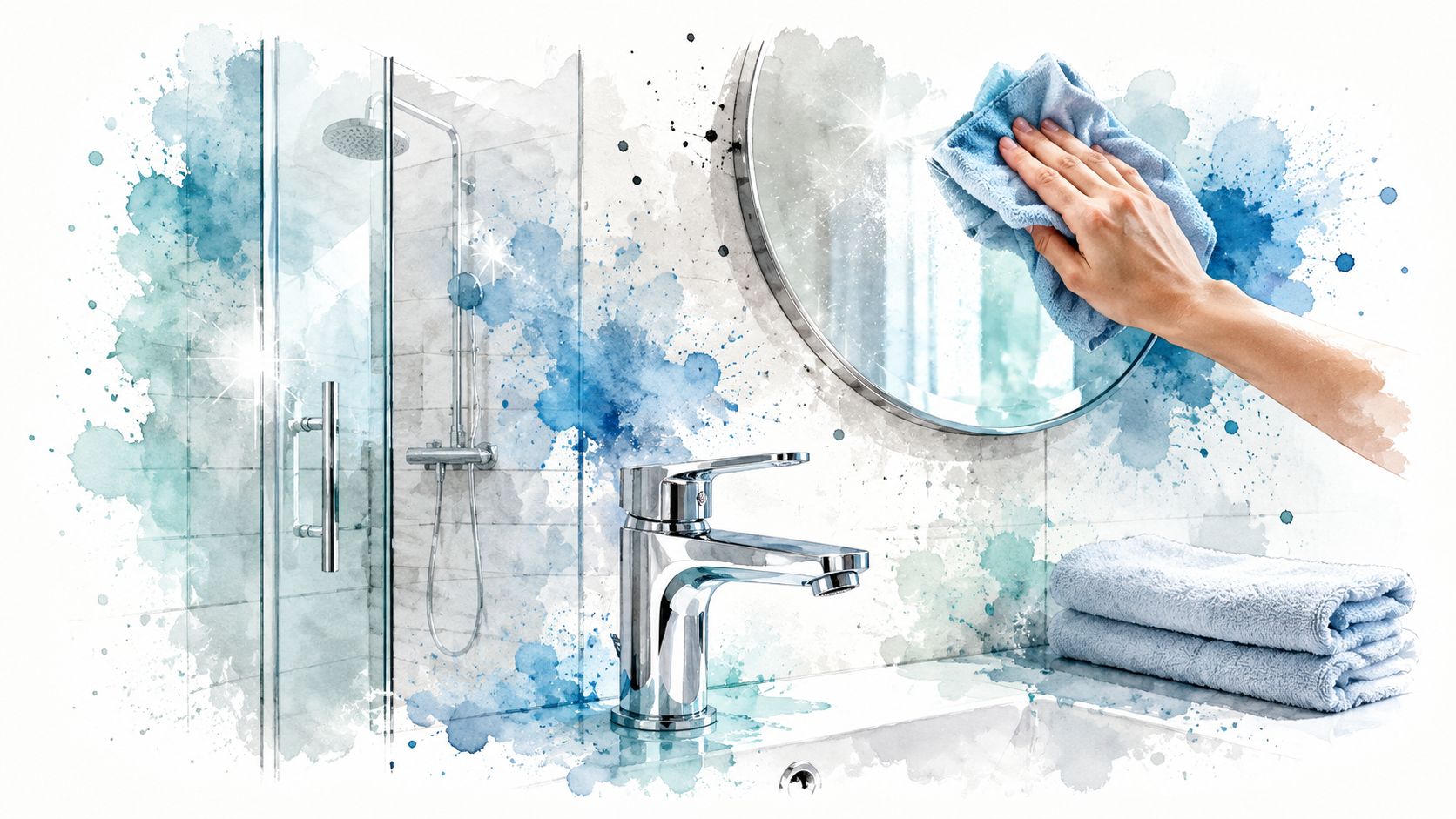
Work from the fixtures outward. Scrub the toilet inside, outside, and around the base. Clean the shower walls, glass, tub, and tracks, then descale the faucet and showerhead. Wipe the vanity, sink, mirror, and the outside of any storage doors, because fingerprints and toothpaste splatter often hide there until the light hits them just right.
For Miami-Dade bathrooms, salt air and humidity make a normal clean less forgiving. If you live near the coast or in a high-rise where moisture lingers, look closely at grout lines, caulking, and vent covers. A microfiber cloth helps on chrome and glass because it cuts streaking, while a squeegee on shower glass keeps mineral buildup from returning before the final inspection. If mold is present, treat it with enough dwell time to work, then dry the area completely so you don't leave a damp patch behind.
What matters more than shine
Landlords usually care less about a polished look than about the absence of residue. A shiny faucet with soap film around the base still reads as neglected. A clean toilet bowl with mildew in the grout does too.
If the caulking is cracked or lifting, report it instead of scrubbing it harder. Cleaning can't fix failing sealant, and trying to hide the issue often makes the problem more obvious when the manager looks closely. In a tight turnover market, the goal is simple, leave the bathroom smelling neutral, looking dry, and free of visible buildup.
4. Carpet Vacuuming, Spot Cleaning, and Stain Removal
Carpets can look acceptable at a glance and still fail a walkthrough. A quick pass with the vacuum lifts surface dirt, but it will not clear embedded grit, pet odor, food spills, or traffic stains that stay in the fibers and show up under natural light. Stained carpet is one of the most common reasons tenants lose part of a deposit, so treat this section like a process, not a chore.
Start by identifying the stain type before you put anything on it. Pet accidents, drinks, grease, and food all respond differently, and the wrong product can spread the spot, set the color, or leave a ring that looks worse than the original mark. Strong suction comes first, then targeted treatment with a carpet-safe cleaner matched to the stain. For organic stains, enzymatic cleaners are usually the better choice because they break down the source instead of just covering the smell.
Extraction matters more than scrubbing. Work the cleaner into the fibers, then remove it with as much moisture as possible so you are not leaving residue behind that attracts dirt later. If you use a rental machine or a home extractor, make slow passes and overlap them so the carpet gets cleaned instead of just dampened on top. That approach matters in Miami apartments, where carpets that stay wet too long can become a problem before the final inspection. For a practical step-by-step method, use this carpet cleaning guide from Canes Cleaners.
Dry time is part of the job. Fans help, and open windows can help too if the weather allows it, but the primary goal is a clean carpet that feels dry before the keys change hands. Check edges, baseboards, and furniture lines after cleaning because those spots collect the grime that a fast pass misses. If a stain has bled through the pad or has already been set by heat, document it and decide whether a professional service or a replacement discussion makes more sense than repeated spot treatment.
4. Carpet Vacuuming, Spot Cleaning, and Stain Removal
Carpets punish rushed cleaners. A quick vacuum can make the room look better, but it won't help much if the fibers still hold pet odor, food spills, or traffic stains. Tidy's checklist notes that stained carpet is one of the most common cleaning-related deduction points, and that matches what tenants see in real turnover disputes.
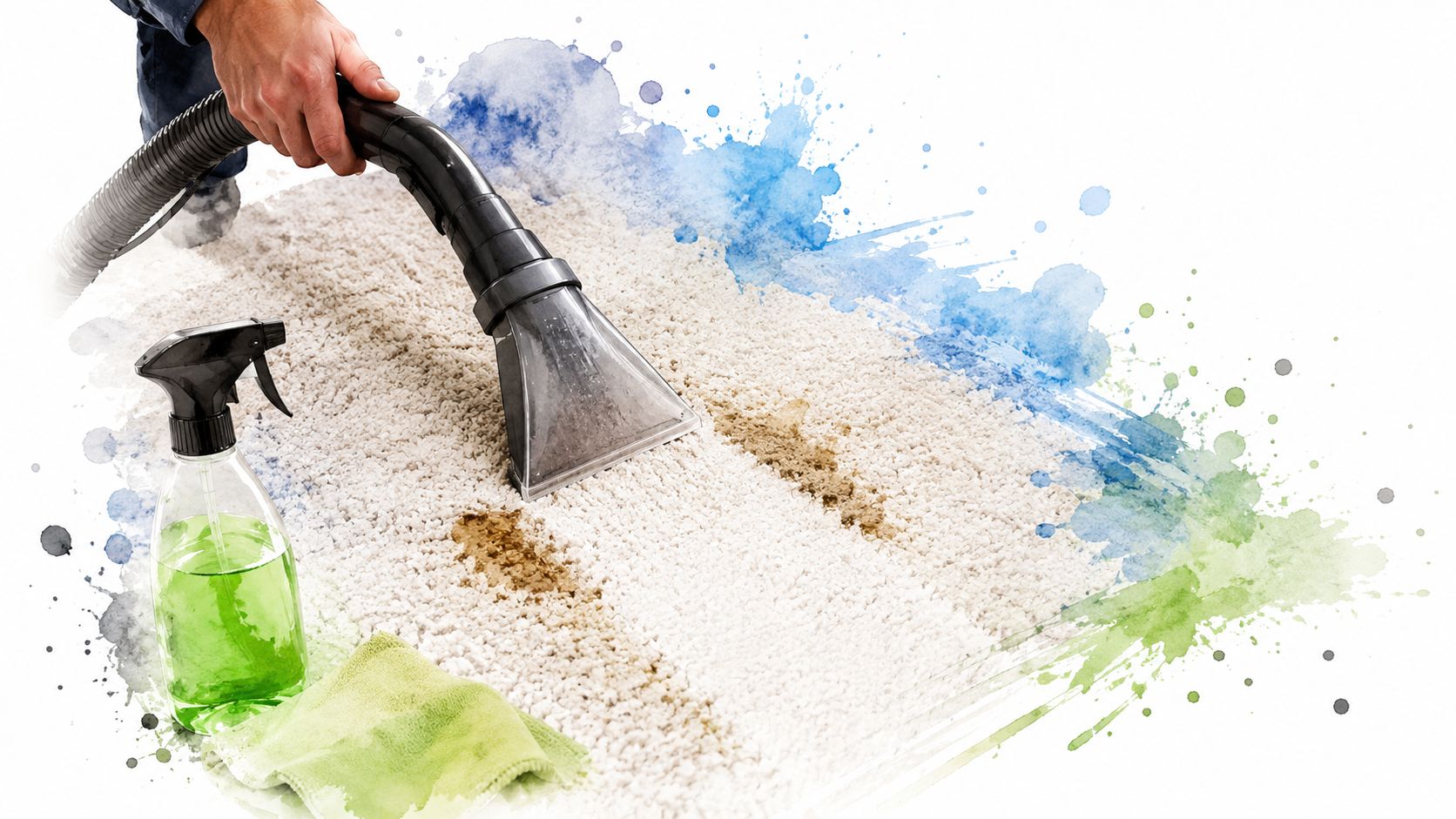
Identify the stain before you treat it. Pet accidents, food, and drinks each respond differently, and spraying the wrong product can spread the spot or set the color deeper. A vacuum with strong suction should come first, then targeted treatment with a carpet-safe cleaner. For organic stains, enzymatic cleaners are the better choice because they break down the source instead of just masking the smell.
The biggest mistake tenants make is over-wetting. In Miami humidity, wet carpet can stay damp longer than people expect, and that creates a mold risk in an empty apartment with limited air movement. Use extraction, not soaking, and give the carpet real drying time before the walkthrough. Fans and open windows help, but only if the weather lets you ventilate safely.
If a stain won't lift, stop scrubbing it into a larger patch. Photograph it, note what you tried, and be direct with the landlord. A permanent stain handled directly is better than a soaked patch that smells like cleaner and damp padding.
For a deeper how-to on carpet care, Canes Cleaners' carpet cleaning guide is a useful reference when the carpet needs more than a standard vacuum and spot treatment.
6. Window and Glass Cleaning Interior and Exterior
Salt deposits on coastal high-rise glass can show up within minutes of entry, especially if the unit faces the water or gets steady humidity through open sliders. That is the kind of detail landlords notice fast. Tracks, sills, glass doors, mirrors, and exterior panes all need to be clean enough that light passes through without haze, streaks, or grit.
Start with the tracks and sills, because that is where sand, dead insects, and salt residue collect in Miami buildings. A detail brush and vacuum attachment clear out the loose debris before you touch the glass. After that, use microfiber cloths and a squeegee so you are not leaving lint, swipe marks, or dried cleaner behind.
For mineral buildup, distilled water or a hard-water treatment solution usually works better than a standard spray cleaner. Plain glass cleaner can smear the residue and leave the pane looking cloudy. If the exterior glass is accessible and safe to reach, clean it as well, since a spotless interior pane still looks unfinished when the outside side is hazy.
Do the windows late in the cleaning process, after dust-producing jobs are finished. If you clean them too early, you will spend time redoing the glass after vacuuming, wiping baseboards, or moving supplies around. Check each window from more than one angle, because streaks often stay hidden until the light changes.
Some Miami-Dade apartments also need extra attention on balcony sliders and screen frames, where humidity and salt air leave a film that regular spray cleaner does not fully remove. A quick pass is not enough if the tracks still feel gritty under your hand. If the glass is too high, too stained, or too time-consuming to finish before the walkthrough, bring in a pro service such as Canes Cleaners for the final pass and document the condition before handoff.
6. Window and Glass Cleaning Interior and Exterior
A cloudy slider or a streaked mirror can hurt a move-out inspection fast, especially when the unit is otherwise clean. Inspectors notice window tracks, sills, glass doors, mirrors, and exterior glass because fingerprints, salt residue, and dried cleaner stand out the moment light hits the surface. That focus shows up in Tidy's inspection list and in tenant checklists that treat glass care as part of a proper turnover.
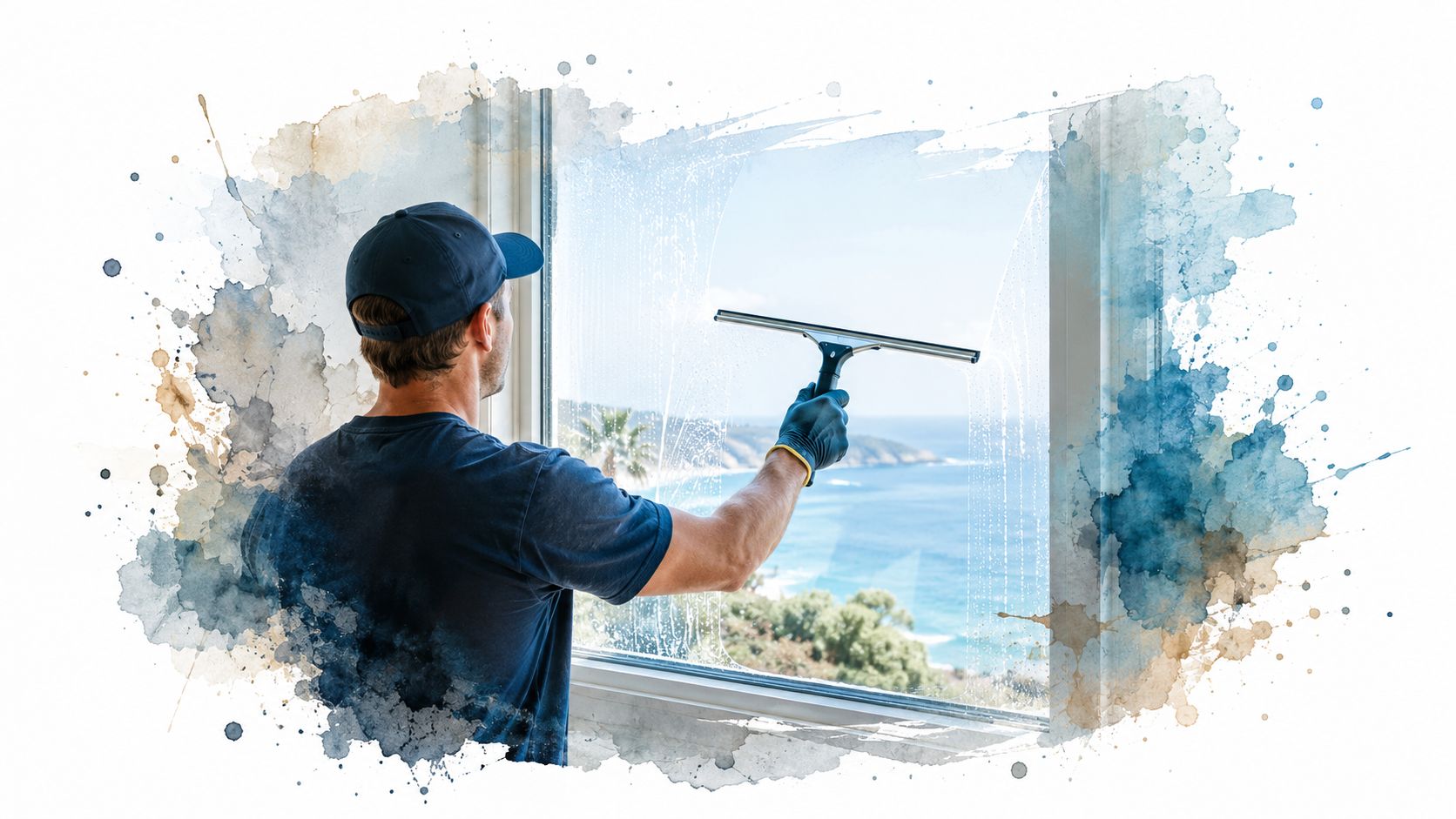
Start with the tracks and sills. In Miami buildings, sand, dead insects, and salt residue settle there first, especially near balconies and coastal exposure. A detail brush and vacuum attachment clear the loose debris before you touch the glass, which keeps grit from dragging across the pane. After that, use microfiber cloths and a squeegee so you are not leaving lint, swipe marks, or dried cleaner behind.
For mineral buildup, distilled water or a hard-water treatment solution usually works better than a standard spray cleaner. Plain glass cleaner can smear the residue and leave the pane looking cloudy. If the exterior glass is accessible and safe to reach, clean it as well, since an interior pane can still look unfinished when the outside side is hazy.
Do the windows late in the cleaning process, after dust-producing jobs are finished. If you clean them too early, you will spend time redoing the glass after vacuuming, wiping baseboards, or moving supplies around. Check each window from more than one angle. Streaks often stay hidden until the light changes, and that is when a landlord is most likely to spot them.
Some Miami-Dade apartments also need extra attention on balcony sliders and screen frames. Humidity and salt air leave a film that regular spray cleaner does not fully remove. A quick pass is not enough if the tracks still feel gritty under your hand. If the glass is too high, too stained, or too time-consuming to finish before the walkthrough, bring in a pro service such as Canes Cleaners for the final pass and document the condition before handoff.
7. Dust and Vacuum High-Touch and Hard-to-Reach Areas
A forgotten rug pad behind the couch, a half-empty box of hangers in the closet, or dust packed into the air vent can cost more than a quick sweep ever saves. These spots are easy to miss during move-out, and they are exactly where landlords and property managers look when the apartment is empty and the big surfaces already look fine.
Clean from the top down
Start at the highest surfaces and work down in a fixed order. Ceiling fan blades, light fixtures, shelves, tall trim, and crown molding should come first, then switches, outlets, and door frames, then baseboards and floors. That order keeps dust from falling onto areas you already cleaned, which matters in Miami apartments where humidity can make dust cling to corners and vent covers.
Use an extendable duster for vaulted ceilings, built-ins, and high ledges. It saves time and keeps you from brushing grime onto walls or blinds while trying to reach the top edge. Vacuum return grates and visible vent covers carefully, then wipe light bulbs and fixture covers so they do not look cloudy under evening light.
The space under appliances deserves the same attention. Pull out what you can safely reach, clear the loose buildup, and remove the lint, crumbs, and pet hair that settle where a landlord is most likely to check by sight or smell. In coastal Miami-Dade units, salty air and damp conditions can make that buildup feel heavier than it looks, so a light pass is rarely enough if the area has been ignored for months.
A clean apartment can still fail inspection if dust is sitting in the places nobody sees during daily living. Handle the high points, the vents, the trim, and the hidden edges, and the whole unit reads as cared for before the walkthrough starts.
9. Laundry Room Cleaning and Appliance Maintenance
Dryer exhaust hose kinks and washer gasket mustiness are the utility-space deductions tenants miss. Property managers notice laundry areas because they reveal whether the unit was kept dry, ventilated, and free of hidden buildup, especially in Miami where humidity can leave rubber seals damp and sour-smelling fast.
Clean the machines, not just the room
Start with the washer. Wipe the drum, clean the gasket, and check the folds for lint, hair, detergent residue, and trapped moisture. If the machine has a cleaning cycle, run it before move-out so the interior does not carry a stale smell into the walkthrough.
Then move to the dryer. Empty the lint trap completely, brush out any visible lint around the housing, and inspect the exhaust hose for kinks, blockages, or loose connections. A bent or clogged hose is more than a visual problem, it can raise safety concerns and leave the unit looking poorly maintained.
Wipe the exterior panels, knobs, and lids after the internal cleaning is done. Finish by cleaning the floor around and behind the machines, where detergent dust, lint, and damp debris usually collect. In condo and townhouse laundry closets, poor airflow can trap that residue, so let the area dry fully before closing it up. If you want the full turnover sequence for appliances and utility spaces, the apartment deep cleaning checklist from Canes Cleaners lays out the order that keeps small misses from turning into deposit disputes.
9. Laundry Room Cleaning and Appliance Maintenance
Laundry rooms get ignored because they feel secondary, but property managers are paying more attention to them. Washer drums, dryer lint traps, hose connections, and floor buildup matter in humid climates, and tenant move-out checklists increasingly include these utility spaces as part of a proper turnover clean.
Clean the machines, not just the room
Wipe the washing machine drum and gasket, then run a cleaning cycle if the machine allows it. In Miami humidity, gaskets can hold moisture and develop a musty smell fast. Clean the dryer lint trap completely, then inspect the exhaust hose for blockages, kinks, or damage. That matters for safety, not just appearance.
Finish by wiping the exterior of both machines and cleaning the floor around them. Detergent dust, lint, and damp lint crumbs often accumulate behind or underneath the units, and those details show up as soon as a manager leans in. If the hose connection is loose or damaged, document it instead of forcing a repair that isn't your responsibility.
Laundry rooms in condos and townhouses often share the same problem, poor airflow. Let the space dry out fully before closing it up, or the room can smell closed-in even after it's cleaned. A clean laundry room says the apartment was maintained, not merely emptied.
10. Final Walkthrough and Quality Assurance Inspection
The final walkthrough is where the cleaning either holds together or falls apart. At this stage, you're not scrubbing randomly, you're checking the apartment like a landlord would, room by room, with the lease and move-in photos in mind. That documentation-first approach is reinforced in checklists that emphasize inspection readiness, because proof now matters almost as much as the cleaning itself.
Use a room-by-room inspection pass
Walk the unit with the lights on, then check problem areas again with different lighting if possible. Look for smudges on glass, dust on fixtures, moisture in corners, odors, sticky spots on floors, and switch plates you missed. Test locks and light switches so a cleaning issue doesn't get mixed up with a functional issue.
Take timestamped photos of every room, including inside appliances, closets, cabinets, and any spot you repaired or couldn't fully restore. If you have move-in photos, compare them directly. If not, write down what you cleaned and note any damage that existed before you moved out.
For tenants who want a more formal process, Canes Cleaners' apartment deep cleaning checklist is a practical reference point for comparing your own walkthrough against a structured standard. Keep your notes and photos in one folder, then share copies with the landlord if requested.
The goal isn't to prove perfection. The goal is to show that the unit was left in inspection-ready condition and that any exceptions were documented clearly before key handover.
10-Item Move-Out Cleaning Comparison
| Task | Implementation Complexity 🔄 | Resources & Time ⚡ | Expected Outcomes 📊⭐ | Ideal Use Cases 💡 | Key Advantages ⭐ |
|---|---|---|---|---|---|
| Deep Clean Kitchen Appliances and Surfaces | High 🔄, interior appliance work; risk if done wrong | Specialized degreasers, brushes, vacuums; 2–3 hrs (std apt) ⚡ | Thorough grease removal; higher inspection pass rate; ⭐⭐⭐⭐ | Move-outs, pre-inspections, food-contact areas | Improves deposit return; prevents hygiene claims; eco-safe |
| Bathroom Deep Sanitization and Fixture Polishing | Medium–High 🔄, grout & mold attention | Descalers, disinfectants, grout tools; 1.5–2 hrs/bath ⚡ | Eliminates odors, mold risk; code-compliant appearance; ⭐⭐⭐⭐ | High-humidity units, rentals with hard water stains | Prevents mold claims; improves rental appeal |
| Wall Washing and Scuff Mark Removal | Medium 🔄, careful product selection to avoid paint damage | Microfiber, spot cleaners, gentle erasers; time varies ⚡ | Removes marks to avoid repainting; better inspection scores; ⭐⭐⭐ | Family homes, student housing, units with artwork hooks | Cost-effective alternative to repainting; restores appearance |
| Carpet Vacuuming, Spot Cleaning, and Stain Removal | Medium–High 🔄, stain identification, drying required | High-powered vacuums, enzymatic/steam equipment; 24 hr drying recommended ⚡ | Odor/stain reduction; avoids carpet replacement; ⭐⭐⭐⭐ | Pet-friendly rentals, high-traffic units, short-term stays | Removes allergens; extends carpet life; reduces disputes |
| Floor Stripping, Waxing, and Deep Polishing | High 🔄, professional machines and floor-specific care | Floor scrubbers, strippers, sealants; 4–6 hrs apt; 12–24 hr curing ⚡ | Restores shine and protection; strong visual impact; ⭐⭐⭐⭐ | Hardwood/tile-heavy properties, historic homes | Protects floors; long-lasting finish; improves inspections |
| Window and Glass Cleaning (Interior and Exterior) | Medium–High 🔄, exterior safety and mineral removal | Squeegees, hard-water treatments, ladders/ropes; variable time ⚡ | Improved curb appeal and light; removes salt/minerals; ⭐⭐⭐ | Coastal/high-rise condos, commercial lobbies | High visual ROI; inexpensive vs other services |
| Dust and Vacuum High-Touch and Hard-to-Reach Areas | Medium 🔄, access to high/hidden areas needed | Extendable dusters, microfiber, detail vacuum tools; moderate time ⚡ | Reduces allergens; prevents common inspection complaints; ⭐⭐⭐ | High-ceiling units, built-in shelving, hotel-standard turnovers | Improves air quality; low cost with big inspection impact |
| Trash Removal and Debris Disposal | Low–Medium 🔄, logistics for bulky/hazardous items | Bags, hauling, bulky-waste pickup coordination; time variable ⚡ | Immediate move-in readiness; avoids fines/pest issues; ⭐⭐⭐ | Student move-outs, large-debris turnovers, abandoned items | Prevents health code violations; enables rapid turnover |
| Laundry Room Cleaning and Appliance Maintenance | Medium 🔄, appliance-specific procedures | Machine cleaners, vent cleaning tools, hose inspection; moderate time ⚡ | Reduced fire/mold risk; improved appliance efficiency; ⭐⭐⭐ | In-unit laundry, shared laundry rooms, multifamily units | Prevents fires; extends appliance life; reduces mold |
| Final Walkthrough and Quality Assurance Inspection | Medium 🔄, trained inspector and documentation | Standardized checklist, camera, report generation; adds final time/cost ⚡ | Objective documentation; fewer disputes; ensures completeness; ⭐⭐⭐⭐ | All move-outs, legal compliance, property management handovers | Reduces deposit disputes; provides evidence for landlords/tenants |
Hand Over the Keys with Confidence or Let the Pros Handle It
A strong move-out clean gives you the best shot at getting your deposit back without a fight. The value isn't just visible shine, it's the discipline of cleaning the places landlords inspect first, documenting what you did, and leaving behind no easy reason for a deduction. In Miami-Dade, that matters even more because humidity, salt air, and fast turnovers make small misses show up quickly.
If you're short on time, dealing with a furnished unit, or staring at a kitchen and bathroom that need more than a weekend can handle, hiring help is often the practical move. Canes Cleaners offers a 48-point Move-Out Clean built for apartments, condos, student moves, and turnover-ready rentals across Miami-Dade. It's a straightforward option when you want the job handled with a checklist, not guessed at room by room.
A professional service also helps when you need a clean, documented finish before key handover. That matters in dispute situations, especially when the lease calls for a specific standard or when the unit has high-use areas like a laundry room, balcony, or coastal-facing windows that need more than a quick wipe.
Use the checklist, take the photos, and clean in the right order. If the job still feels bigger than the time you have left, book Canes Cleaners and get the apartment inspection-ready without turning move-out week into a second full-time job.
A CTA for Canes Cleaners.