You walk into the house after work, set your bag down, and catch that faint something off smell again. It might be the bathroom, the kitchen, or a musty corner that seems clean until the air turns damp. In Miami-Dade, that's usually not random, it's a sign that moisture, residue, or hidden buildup is still sitting in the home.
The good news is that most household odors can be traced to a source, not just “bad air.” Once you find the source, you can stop chasing the smell with sprays and start removing what's causing it. That approach works better, lasts longer, and fits the humid reality of South Florida homes.
Table of Contents
- Your Guide to a Fresher Smelling Home
- The Odor Detective Pinpointing Common Sources
- Your Eco-Friendly Odor Removal Toolkit
- Proactive Odor Prevention and Humidity Control
- Troubleshooting Tough Smells Smoke Pets and Mildew
- When to Call for Professional Odor Removal
Your Guide to a Fresher Smelling Home
A home that smells “clean” often isn't clean at all, it's just being covered up. I've seen plenty of rooms where scented candles, plug-ins, and sprays made the air sweeter for an hour, then the odor came right back because the source was still there. That's why how to remove odors from home starts with the source, not the scent.
Think of odor as a clue. A kitchen smell can point to old food residue, a bathroom smell can point to dampness, and a closet smell can point to trapped humidity or mildew. When you treat the odor like a signal, the whole process gets simpler and a lot less frustrating.
Practical rule: if the smell returns after you stop spraying or opening windows, you're probably treating the air instead of the material that's holding the odor.
For Miami-Dade homes, that matters even more because heat and humidity help odors linger in bathrooms, laundry areas, and enclosed rooms. If your place needs a deeper reset, Canes Cleaners explains how indoor cleaning supports better air quality in homes on its indoor air quality guide.
The Odor Detective Pinpointing Common Sources
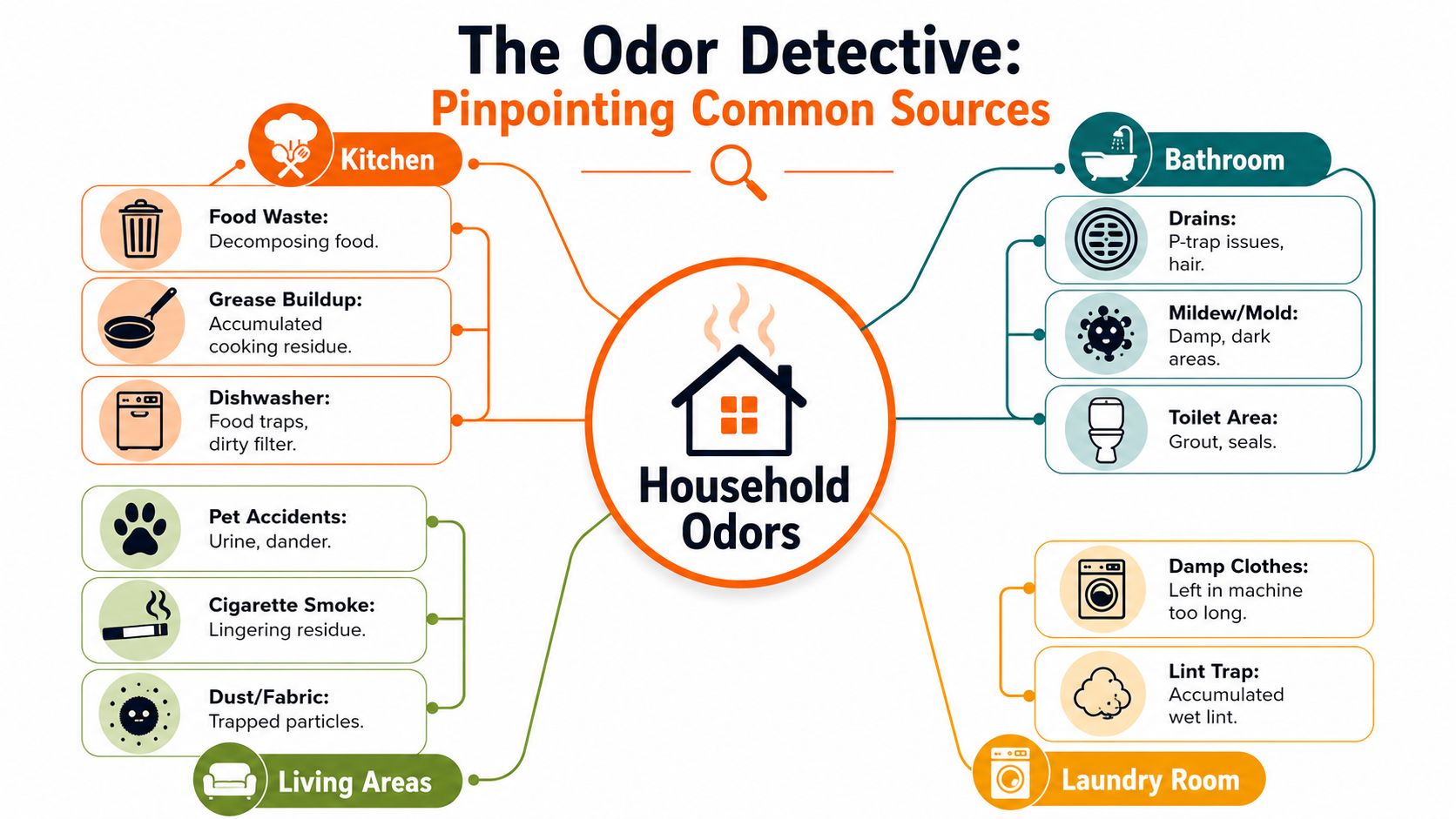
Start where smells collect fastest
A real odor search is room by room, not fragrance by fragrance. In the kitchen, check the garbage area, the fridge drip zone, sponge holders, and any place where grease or food film can sit. In bathrooms, focus on drains, toilet bases, damp grout, and towels that never seem fully dry.
Living areas often hide odors in fabric and airflow. Pet beds, rugs, couch cushions, and HVAC vents can hold onto stale smells long after the room looks tidy. If the odor changes when the AC turns on, that's a strong sign the vent or duct path needs attention, not just the floor.
Use a simple cleanup sequence
The most reliable workflow is straightforward. Find the source, remove or clean the source material, then ventilate and dry the space before you judge the result again. That matters because your nose can get less sensitive after being around a smell for too long, so a quick re-check isn't always accurate. The technical workflow described in this odor removal guide follows the same logic.
If you only deodorize the air, the odor usually comes back. If you clean the source and dry the space, the smell has far less to feed on.
A quick room-by-room checklist
- Kitchen corners: lift trash bins, inspect under the sink, and check for sticky residue around appliance edges.
- Bathroom edges: smell near the toilet base, around drains, and behind hampers where damp towels may be sitting.
- Laundry spots: open the washer door, check the gasket, and notice whether clothes are staying wet too long.
- Living fabrics: press your nose near curtains, cushions, and pet bedding, since soft materials trap odor longer than hard surfaces.
That search process turns the problem from vague to solvable. Once you know where the smell lives, cleaning gets targeted instead of endless.
Your Eco-Friendly Odor Removal Toolkit
The safest odor fixes are usually the least dramatic. On hard surfaces, warm water, gentle detergent, and good drying do a lot of the work. On soft surfaces, an absorbent deodorizer can help pull moisture and odor out before vacuuming, which is why Consumer Reports cites American Cleaning Institute guidance to sprinkle baking soda on smelly carpets and floor coverings before vacuuming it up in its odor-control advice.
Match the solution to the surface
Kitchen counters, appliance exteriors, and bathroom fixtures usually respond well to a simple vinegar-and-water wipe if the surface allows it. Fabrics need a different approach, because the odor is often in the fibers rather than on top of them. For closets and storage areas, a passive odor absorber like activated charcoal can help with stale, enclosed air, while citrus peels and spices can freshen a space temporarily without introducing heavy chemical perfumes.
Good habit: treat the material first, then freshen the air later. That order keeps you from masking a problem you haven't fixed.
If you want a stronger non-toxic approach on mineral residue and stubborn buildup, Canes Cleaners has a useful breakdown of citric acid cleaning, which fits well in homes that need a gentler reset.
Natural Solutions for Common Household Odors
| Odor Source | DIY Solution | Pro Tip |
|---|---|---|
| Greasy kitchen smell | Wipe surfaces, degrease the source, then ventilate | Clean the hidden edges around the stove, not just the visible top |
| Pet accident | Blot first, clean thoroughly, then dry completely | Don't stop at the surface if the smell is still noticeable |
| Musty laundry | Rewash damp items and air-dry them fully | Leave the washer door open after use so moisture doesn't sit |
| Closet odor | Use activated charcoal and improve airflow | Remove any damp fabric or cardboard that's feeding the smell |
| Carpet odor | Pre-treat with baking soda, let it sit, then vacuum well | Repeat only after the carpet is fully dry |
These methods work because they change the odor conditions instead of just layering on a new smell. That's a much better fit for eco-minded cleaning, and it's usually easier on people who are sensitive to strong fragrances.
Proactive Odor Prevention and Humidity Control
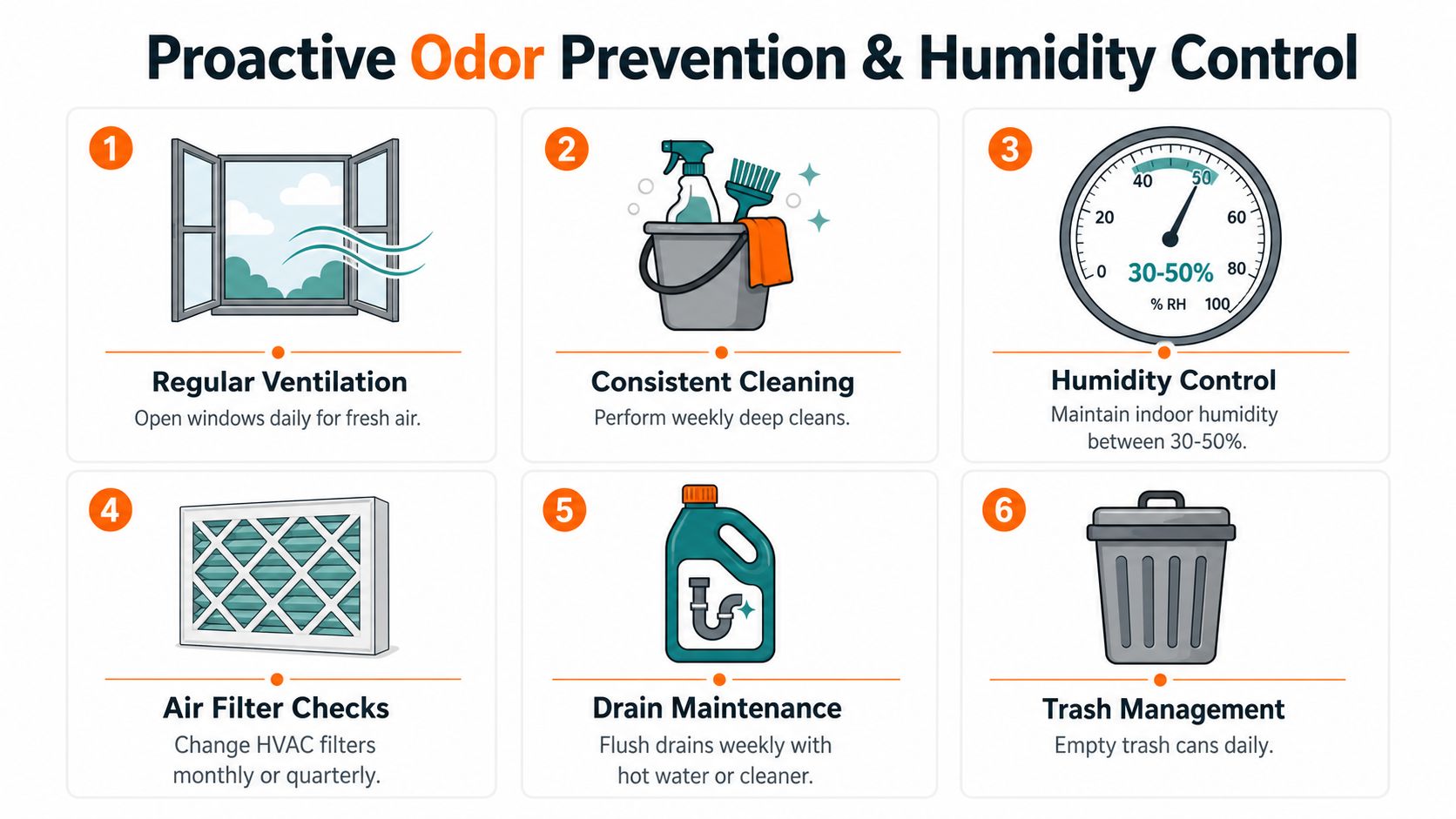
In a humid place, prevention beats repeated deodorizing almost every time. The U.S. EPA recommends keeping indoor relative humidity between 30% and 60%, fixing leaks, and drying damp materials within 48 hours to prevent mold growth and musty odors in its odor and indoor moisture guidance. That advice lines up perfectly with Miami-Dade living, where moisture can build up fast in bathrooms, kitchens, laundry rooms, and shaded corners.
Build habits that cut odor at the source
Open windows when the weather allows it, especially after cooking or showering. Run exhaust fans so steam doesn't settle into ceilings and grout. Empty trash before it starts to smell, not after, and keep HVAC filters on a regular replacement schedule so dust and stale air don't keep recycling through the home.
Bathrooms deserve extra attention. Consumer Reports notes that running the fan for about 20 minutes before and after showering helps suppress fungal growth, which is one of the common drivers of bathroom odors in the first place. If the fan is weak, dirty, or just not moving air well, moisture lingers and the smell sticks around too.
Watch the spaces that trap moisture
Basements, laundry closets, and windowless bathrooms need a more deliberate routine. Check for leaks under sinks, dry wet towels quickly, and never leave damp clothing in the washer longer than necessary. If a room smells stale even after cleaning, that's often a ventilation or humidity issue rather than a surface-cleaning problem.
In Miami-Dade, moisture control is odor control. If the air stays damp, smells have more places to settle and stay.
A clean home should feel breathable, not perfumed. Once humidity is under control, odors have a much harder time coming back.
Troubleshooting Tough Smells Smoke Pets and Mildew
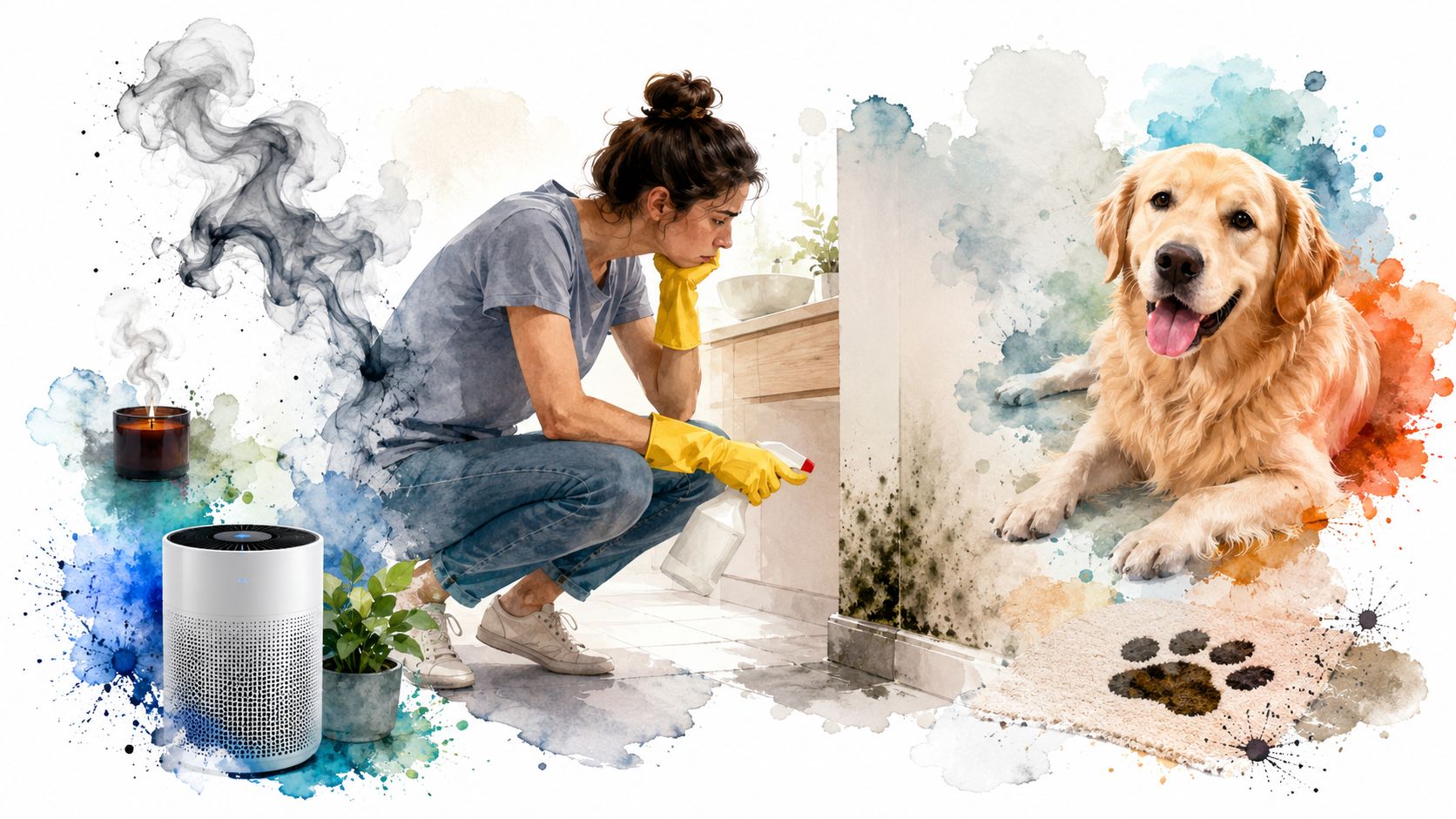
Smoke, pet odors, and mildew are different problems, and they need different solutions. Smoke particles cling to fabrics, walls, and hidden surfaces. Pet odors can sink into carpet padding or mattress layers. Mildew usually points back to dampness, which means the smell can keep returning until moisture is handled.
A lot of popular hacks are weak or temporary here. Bowls of baking soda, coffee grounds, or scented products can make a room feel a little better for a while, but they don't remove embedded residue. Some online advice even pushes ozone generators for smoke, but that's not a routine household fix and it carries indoor air-quality risks. General deodorizing advice on WikiHow's room deodorizing guide reflects that same basic caution, source removal is more dependable than masking.
What actually helps with each problem
For smoke, washable surfaces need a full wipe-down, and fabrics usually need laundering or deeper cleaning if the odor has settled in. For pet accidents, the stain has to be removed fully and the affected material has to dry completely, or the smell can stay trapped below the surface. For mildew, the damp material has to be dried, cleaned, or removed, because fresh air alone won't undo fungal odor.
If the issue is a pet stain in a mattress, this step-by-step mattress guide is more useful than quick sprays because it focuses on the material itself.
When DIY starts to fail
- Odor comes back right away: That usually means the source is still active.
- The smell is in soft goods: Carpet, bedding, and upholstery often hold odor longer than hard flooring.
- The room is still musty after drying: Hidden moisture is probably still present.
These are the jobs where patience matters, but so does realism. If the smell has spread into porous materials or keeps returning after a proper clean, a heavier reset is usually the smarter move.
When to Call for Professional Odor Removal
A professional cleaning team makes sense when the odor problem is bigger than one surface, one room, or one afternoon. Persistent musty smells, smoke that won't leave soft furnishings, pet odors that keep returning, and post-renovation dust or residue all point to a deeper reset. In Miami-Dade, where humidity can keep a bad smell active, that reset often needs more than a quick wipe and a window open.
The practical advantage of hiring help is coverage. A 36-point Deep Clean can tackle built-up grime across the home, a 48-point Move-In/Move-Out Clean is built to reset spaces between occupants, and post-construction cleaning is designed to remove fine dust and job-site debris that can carry odor and irritate the air. Canes Cleaners offers those kinds of services with non-toxic products, which is helpful when the goal is to remove what's causing the smell instead of covering it up.

That's also the right call after a tenant turnover, a long vacancy, or a renovation that left the home feeling dusty and stale. A house should smell neutral and feel dry, not like a layering of cleaning sprays and old residue.
If your home still smells off after you've cleaned the source, dried the room, and checked the ventilation, it's time to bring in a team that can do a fuller reset. Book a professional cleaning with Canes Cleaners and give the home a fresh start that tackles the odor at its root.