
A porcelain tub usually doesn't look filthy all at once. It goes dull by degrees. First the shine softens near the drain. Then a faint soap ring hangs on after rinsing. Then you try a stronger product, scrub harder, and the finish still looks tired.
That's where many encounter trouble. Porcelain is durable, but it isn't forgiving of the wrong tools or sloppy technique. A lot of damage comes from trying to force the clean instead of letting chemistry do the work. If you've been wondering why your tub still looks dingy after repeated scrubbing, the answer is usually method, not effort.
Clean porcelain the right way and it can look bright again without aggressive powders, scratch pads, or guesswork. If you want a broader bathroom-safe approach before you start, this guide on how to clean a bathtub is a useful companion.
Table of Contents
- From Dull and Dingy to Bright and Gleaming
- Your Gentle Arsenal and Routine Cleaning Ritual
- Tackling Tough Stains on Porcelain
- The Essential Do's and Don'ts of Porcelain Care
- Preventative Maintenance for a Lasting Shine
- When to Call a Professional Cleaning Service
From Dull and Dingy to Bright and Gleaming
Most porcelain tubs that look “old” aren't worn out. They're coated with layers of soap scum, body oil, cleaner residue, and mineral film that flatten the shine. The surface stops reflecting light evenly, so the tub reads as gray, chalky, or permanently stained even when it isn't.
I've seen this play out in otherwise beautiful bathrooms. The faucet gleams, the tile is clean, but the tub still looks off. Homeowners often tell me they've tried bleach, powder cleanser, or a rough scrub pad because the mild products “weren't doing anything.” What usually happened is simple. The cleaner didn't sit long enough, or it wasn't rinsed away completely, so the finish never got a fair chance to recover.
Porcelain has a specific personality. It's hard, smooth, and resistant to staining when intact, but it doesn't respond well to abrasion. That trade-off is why random bathroom cleaning advice often fails on tubs.
Practical rule: If a porcelain tub looks dull, assume buildup first and surface damage second. Start with the gentlest effective method and judge the finish after a proper rinse and dry.
A bright porcelain tub doesn't come from brute force. It comes from choosing soft tools, using the right dwell time, and knowing when to stop scrubbing and rinse. That's the difference between removing grime and slowly sanding the finish.
Your Gentle Arsenal and Routine Cleaning Ritual
A porcelain tub keeps its shine with restraint. Use products that dissolve film, tools that won't scratch the glaze, and a rinse process that leaves nothing behind.
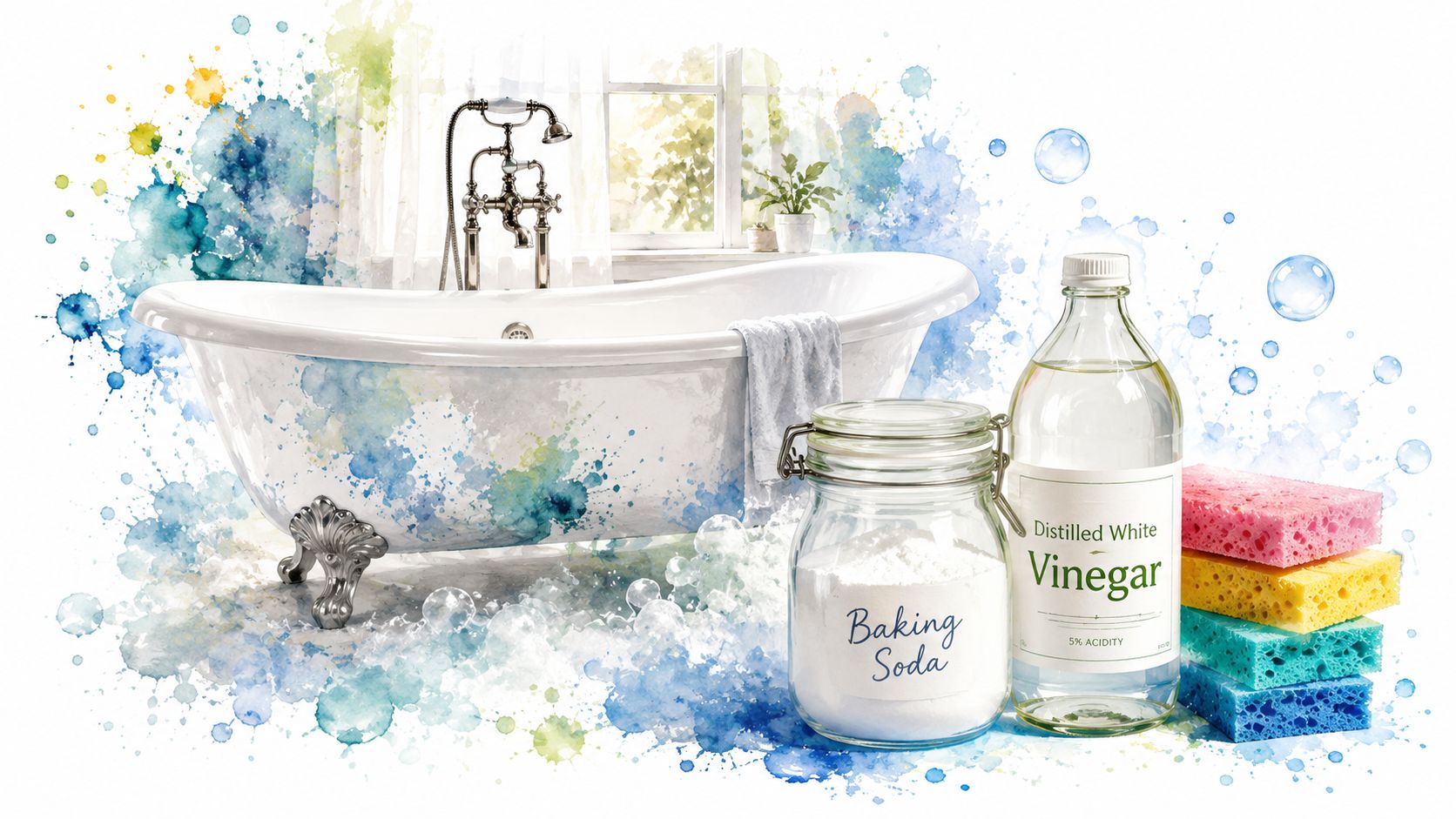
What to keep within reach
For routine care, keep the kit simple:
- Distilled white vinegar and water in a spray bottle: A 1:1 mix handles everyday soap film without introducing a harsh abrasive.
- Baking soda: Useful as a light scrubbing aid once the surface film has been softened.
- Soft nylon brush or non-scratching sponge: These clean the contour of the tub without grinding the finish.
- Ultra-plush microfiber cloths: Use them for drying and for checking whether residue is gone.
- Gloves: Helpful around the drain, overflow, and any area with body oil buildup.
Skip steel wool, stiff scrub brushes, melamine pads, and gritty powder cleansers. Porcelain is non-porous, so grime usually sits on top of the surface rather than soaking in. That is the good news. The trade-off is that the glossy finish can lose clarity fast if it is abraded. If you want to work with a different mild acid for mineral film, this guide to citric acid cleaning for household surfaces explains where it fits and where extra care matters.
The routine that protects the finish
Remove bottles, bath mats, and loose hair first. Then rinse the tub with warm water. That step softens fresh residue so the cleaner can contact the buildup instead of sitting on top of dry soap and dust.
Spray the 1:1 distilled vinegar and water mixture across the entire tub, with extra attention to the waterline, corners, and around the drain. Let it sit long enough to loosen film. Then sprinkle on baking soda where you need more bite and scrub from top to bottom with a soft nylon brush or non-scratching sponge. This Old House outlines a similar gentle porcelain tub approach.
Work in controlled sections.
Top-to-bottom cleaning matters for a practical reason. Residue breaks down into a slippery slurry as it lifts. If you start low, you drag that slurry back over cleaned porcelain and spread it into a thin haze. That haze is one reason a tub can look cloudy even after a full scrub.
Here's a quick visual walkthrough before you start the second half of the job.
A Critical Finish Check
Do not judge the tub by sight alone. Clean porcelain can still hold a transparent layer of loosened soap scum or leftover cleaner, and that residue kills shine once it dries.
Run a clean, wet hand over the surface before the final rinse. It should feel uniformly smooth, not tacky, chalky, or slick in patches. If your hand catches at the waterline, near the drain, or on the back wall, there is still residue on the tub. Reapply cleaner to that area and make another light pass instead of scrubbing harder.
Then rinse thoroughly with hot water. Professional cleaners are fussy about this step for a reason. A complete rinse removes the degraded residue you just loosened, along with any cleaner left on the glaze. Finish by drying with microfiber cloths so minerals in standing water do not settle back onto the surface.
Tackling Tough Stains on Porcelain
Routine cleaning handles most tubs. Trouble starts when one type of buildup gets ahead of you and hardens into a separate problem. The safest way to handle that is to identify the stain first, then match the method to the stain.
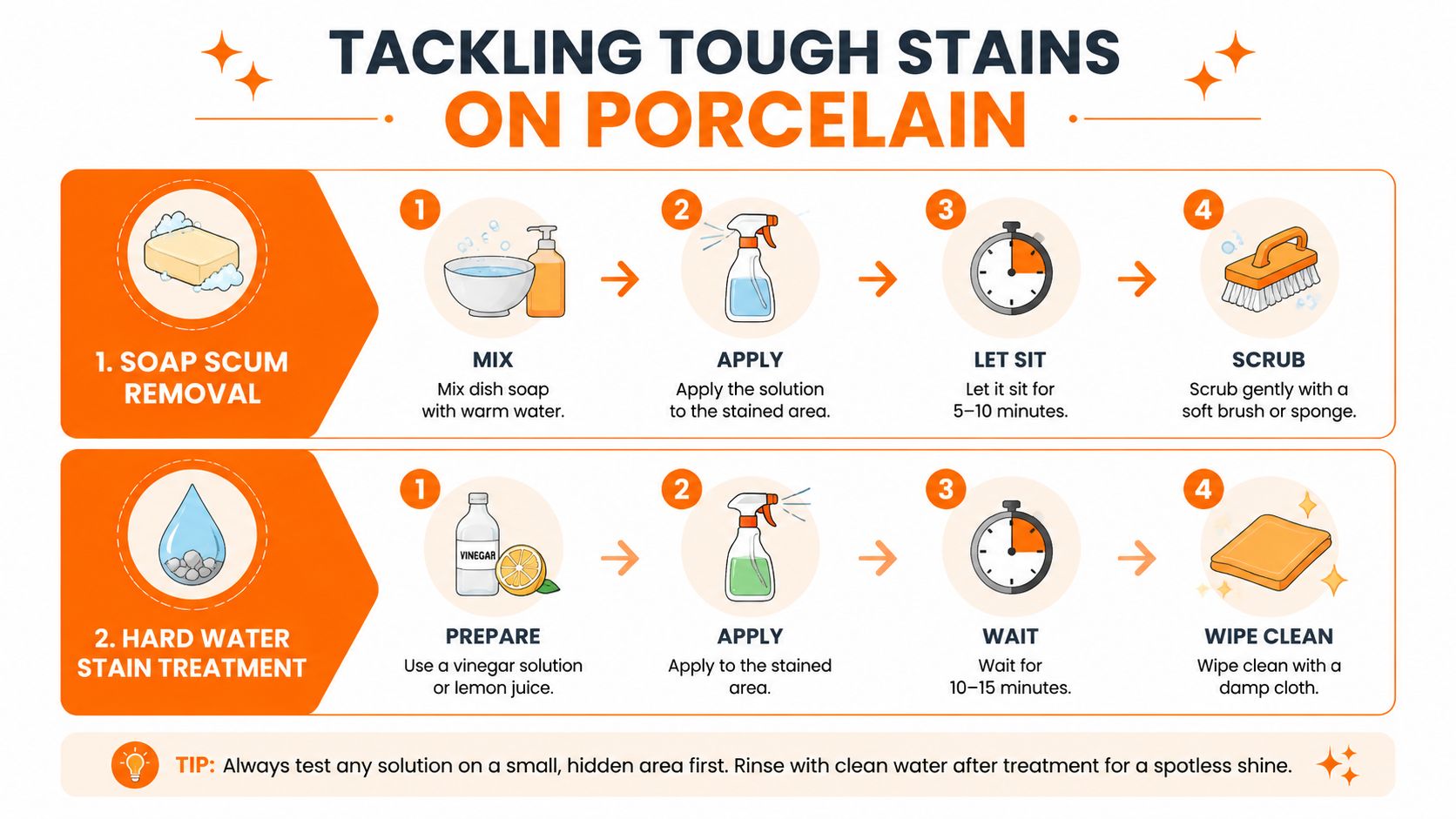
Soap scum that keeps coming back
Soap scum is the most common culprit behind a tub that looks dull no matter how often it's wiped. It bonds into a hazy layer, especially at the waterline and on the back wall where rinse water doesn't fully sheet away.
Use your regular vinegar solution first. Spray generously, let it sit, then add baking soda over the problem band and work in small circles with a non-scratch sponge. Don't try to strip the whole tub at once if the buildup is heavy. Work in sections and rinse between passes so you can see what's improving.
A useful habit here is patience. Soap scum often loosens in stages. The first pass softens it. The second removes what the first exposed.
Hard water film and mineral crust
Mineral stains don't always look dramatic. Sometimes they show up as a chalky cast that kills the tub's shine, especially around the drain, overflow plate, and the line where water sits after bathing.
For this kind of residue, direct contact matters more than scrubbing. Soak paper towels in your vinegar solution and lay them over the affected areas so the cleaner stays in place. After the dwell, lift the towels, scrub gently with a soft sponge, and rinse.
If a stain is mineral-based, more pressure usually doesn't help. Longer contact does.
If the crust is stubborn, repeat instead of escalating to abrasive powder. On porcelain, repeating a gentle cycle is often safer than winning fast with a rough product.
Rust stains without harsh abrasion
Rust is one stain people often attack with the wrong cleaner. Heavy-duty rust removers can be too aggressive for a porcelain finish, especially if the stain is small and localized.
A safer benchmark method is to use a salt-coated lemon half and gently scrub the rusted area for 3 to 5 minutes. For stubborn stains, you can let it dwell for up to 30 minutes, based on the rust-removal technique demonstrated in this cleaning video.
The reason this works is balance. The lemon provides acid, the salt provides mild scrubbing action, and the contact stays focused on the stain instead of the whole tub. Afterward, rinse thoroughly and check the area once it's dry before deciding whether to repeat.
Minor scuffs and dark transfer marks
Not every dark mark is a stain. Some are transfer marks from shoes, buckets, metal cans, or tool contact. These often sit on top of the finish rather than inside it.
For these, make a loose baking soda paste and rub gently with a damp non-scratch sponge. Keep the motion tight and local. If the mark lightens, continue. If it doesn't change after a careful attempt, stop before you turn a cosmetic issue into a surface problem.
A quick reference helps:
| Problem | Best first move | What to avoid |
|---|---|---|
| Soap scum ring | Vinegar dwell, then baking soda and soft sponge | Dry scrubbing |
| Mineral film | Vinegar-soaked paper towels, then gentle agitation | Powdered abrasive cleanser |
| Rust spot | Salt-coated lemon half | Aggressive rust remover on the whole tub |
| Scuff mark | Baking soda paste on a damp sponge | Razor scraping or metal tools |
The Essential Do's and Don'ts of Porcelain Care
A tub can look clean at the end of a scrub and still be headed in the wrong direction. I see that often with porcelain. The surface is non-porous, so grime usually sits on top of it. The catch is that the glazed finish is also easy to scratch at a microscopic level, and those tiny defects give soap film and mineral residue more to cling to on the next round.
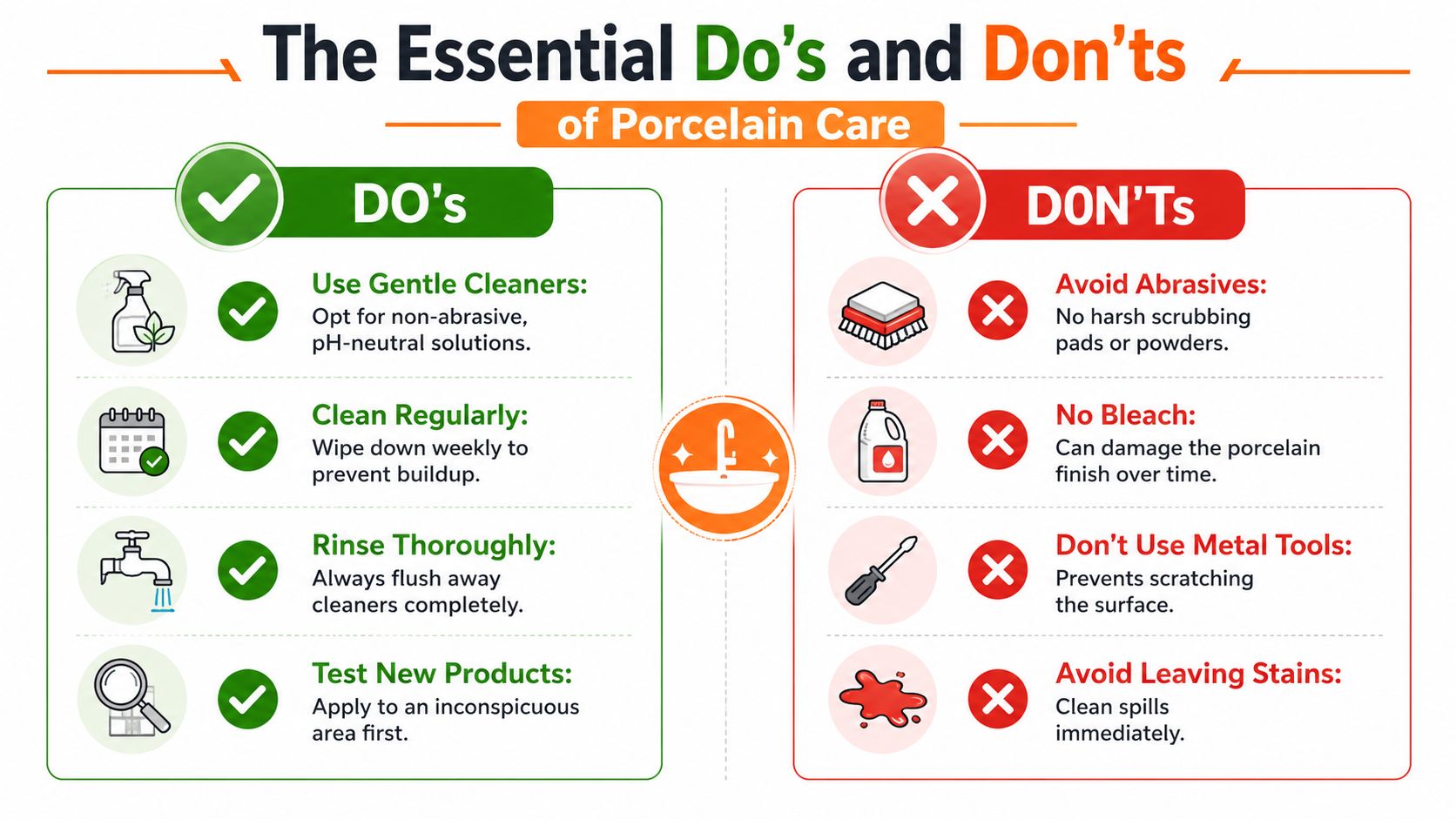
What to do consistently
Treat porcelain like a finished surface, not a work sink. Good results come from loosening residue, lifting it off gently, and rinsing until nothing slippery or chalky is left behind. That last step matters more than many DIY routines account for, because leftover cleaner film becomes the next layer of buildup.
A few habits protect the finish better than stronger products do:
- Use soft tools every time: Non-scratch sponges, microfiber cloths, and soft-bristle brushes clean without cutting into the glaze.
- Give the cleaner time to work: A short dwell softens soap scum and body oil so scrubbing stays light.
- Rinse with intent: Keep rinsing until the surface feels clean, not slick. Residue degradation starts when cleaner traces are allowed to dry on the tub.
- Dry the surface after cleaning: Microfiber removes the final water film, which helps reduce spotting and prevents dissolved minerals from settling back onto the porcelain.
- Clean walls and tile first: Runoff from higher surfaces can redeposit grime into a freshly cleaned tub.
Those with the best-looking tubs are not cleaning harder. They are protecting the finish while removing every trace of loosened residue.
What to stop doing immediately
Porcelain usually does not fail all at once. It gets slightly rougher, then duller, then harder to keep clean.
Avoid these habits:
- Scouring pads, abrasive powders, and stiff scrub brushes: They can leave fine scratches that trap grime and flatten the shine.
- Undiluted bleach as a routine cleaner: It is harsher than the job requires and can leave the surface dry-looking over time.
- Acid products left on too long: Vinegar and other mild acids have a place, but extended dwell time can wear on the finish and metal trim.
- Metal blades or scraping tools: They can chip or score the enamel faster than people expect.
- Partial rinsing: A tub that looks bright but still carries cleaner residue often turns dull again quickly.
The trade-off is simple. Aggressive methods may give a short-term visual improvement, but they often shorten the life of the finish. Gentle chemistry, light agitation, and a complete rinse keep porcelain brighter because they solve the residue without changing the surface.
Preventative Maintenance for a Lasting Shine
A porcelain tub stays easier to clean when you stop buildup before it cures onto the surface. That doesn't require a long routine. It requires a few habits done consistently.
Small habits that keep buildup from setting
After a shower or bath, rinse away product residue and pull excess water toward the drain. If you keep a microfiber cloth nearby, dry the bottom curve of the tub, the drain area, and the back ledge where water likes to sit.
A few other preventative fixes help more than people expect:
- Handle drips early: A leaking faucet leaves mineral trails and can encourage rust staining around hardware.
- Remove bottles from the ledge: Trapped water under shampoo and soap containers leaves rings and discoloration.
- Wash bath mats and suction accessories often: They hold soap film against the porcelain.
- Do a light weekly wipe-down: Short maintenance cleans are easier on the finish than waiting for heavy buildup.
Why the final rinse matters more than most people think
The biggest missed step in DIY porcelain care is the rinse. Plenty of people clean carefully, use a decent product, and then leave a thin film behind because the tub looks clean enough. That leftover film can create its own problem over time.
A common oversight is failing to rinse until the water feels completely non-slippery. Unreduced cleaner residue, even from “natural” products like vinegar, can slowly degrade the tub surface over time if not flushed thoroughly, as noted in this discussion of bathtub cleaner residue and rinse protocols.
That's one of the clearest differences between casual bathroom cleaning and professional-level finish care. The rinse isn't the end of the job. It is the step that decides whether the surface stays crisp or starts slowly dulling under leftover chemistry.
A good final rinse has two checks. The water should run clear, and the surface should feel clean rather than slick. If there's odor, slipperiness, or drag under your hand, keep rinsing.
When to Call a Professional Cleaning Service
Some porcelain tubs respond beautifully to a careful DIY cleaning. Others are past the point where home methods are the smart first move. The trick is knowing which situation you're in before you spend an afternoon scrubbing a finish that needs more than routine care.
Signs the tub needs more than DIY maintenance
If the tub still feels rough after proper cleaning, that's a warning sign. A rough feel can point to etched enamel, embedded residue, or prior damage from abrasive tools. You may also be dealing with staining that's too widespread to evaluate accurately until the entire bathroom is cleaned in the correct order.
These cases usually deserve professional attention:
- The finish looks permanently dull even when fully dry
- Stains return quickly after cleaning
- There's widespread grime from move-out, vacancy, or renovation dust
- You suspect previous use of harsh abrasives or strong chemicals
- The tub has buildup around fixtures, caulk lines, and edges that home cleaning can't safely break down
Here's what a professional-grade service environment looks like when the rest of the property also needs attention.

Where professional service makes the biggest difference
This is especially true in heavy-condition bathrooms. Move-in and move-out work, post-construction cleanup, and neglected rental turnovers often involve layered dust, residue, and bathroom grime that need a full-system approach, not a one-product fix. If you're comparing service options, it helps to review professional cleaning packages and scopes before booking so you can match the job to the condition of the space.
Professionals also bring consistency that DIY cleaning often lacks. The right sequence, the right dwell, and the right rinse protocol make a bigger difference on porcelain than is commonly understood. If your tub is valuable, vintage, or part of a high-finish bathroom, protecting the enamel is usually worth more than testing one more harsh cleaner.
A porcelain tub can absolutely be maintained at home. But once the finish is compromised, the stakes change. At that point, the goal isn't just to make it look cleaner. It's to avoid making it worse.
If your bathroom needs more than a quick scrub, Canes Cleaners offers non-toxic, eco-friendly cleaning services across Miami-Dade County, including deep cleans, move-in and move-out cleaning, and post-construction cleanup. For porcelain tubs and other delicate bathroom surfaces, that kind of detailed, surface-aware cleaning can save time and prevent avoidable damage.