
The text comes in: your friends are twenty minutes out, the kitchen looks like breakfast and lunch had a fight, there's toothpaste on the bathroom mirror, and the living room has somehow collected cups, chargers, mail, and a hoodie that nobody claims. That's when the first five minutes are wasted walking in circles.
A fast clean starts when you stop trying to clean everything.
The houses that get guest-ready quickly don't rely on motivation. They rely on order, triage, and a short list of jobs that change what people see first. That matters because Americans spend an average of 23 hours and 36 minutes per month on house cleaning activities, which adds up to nearly two years of a lifetime, according to this breakdown of cleaning time. Efficiency isn't laziness. It's the only sane way to handle routine mess.
When people ask how to clean a house fast, they usually want one of two things. They either need a rescue plan for today, or they need a repeatable method that keeps the house from getting out of control again. This guide handles both. It's the same kind of system cleaning pros use when there's a hard deadline and no time for guesswork.
Table of Contents
- Your Guide to a Spotless Home in Record Time
- The Speed Cleaning Mindset and Essential Toolkit
- Timed Cleaning Templates for Any Deadline
- Focus on High Impact Priority Zones
- The Two Person Speed Cleaning Workflow
- When to Book a Professional for a Truly Fast Clean
Your Guide to a Spotless Home in Record Time
Unexpected guests are the classic stress test. You don't need a perfect house. You need a house that looks controlled, smells fresh, and has no obvious red flags. That means no dish pile in the sink, no streaked bathroom mirror, no sticky counters, and no clutter sitting where people naturally look.
The biggest mistake I see is people starting with low-visibility chores. They fold laundry in a bedroom nobody will enter. They organize a drawer. They start scrubbing one stubborn spot on the stove. Meanwhile, the main bathroom still looks rough and the coffee table is buried. Fast cleaning works when you aim for visible wins first and detailed work second.
A repeatable routine helps even more than effort. If you already have a basic weekly house cleaning schedule, emergency cleaning gets easier because you're resetting a manageable mess instead of digging out from days of buildup. But even if you're behind, you can still make a home feel dramatically cleaner in one focused session.
Practical rule: Guest-ready is a visual standard first and a perfection standard second.
Think like a hotel housekeeper on a tight turnover. Clear the obvious mess. Restore the rooms people notice. Leave hidden projects for later. A house can feel fresh long before it's fully cleaned.
That's the frame for everything that follows. You'll use a strict order, work in timed blocks, and spend your best minutes where they pay off fastest.
The Speed Cleaning Mindset and Essential Toolkit
Fast cleaning falls apart when the workflow is random. If you bounce from bathroom to bedroom to kitchen and back again, you waste motion, repeat tasks, and miss things that should've been obvious.
Two rules that save the most time
First, declutter before you clean. Put away trash, dishes, laundry, shoes, papers, and anything sitting on counters or tables that doesn't belong there. A room with clear surfaces already looks half cleaned. More important, you can wipe and vacuum without lifting ten objects every few seconds.
Second, work top to bottom and dry to wet. The benchmark method for rapid house cleaning uses that exact sequence because dust falls as you work. According to this rapid cleaning workflow guide, gravity causes approximately 80% of particulate dust to settle downward, and skipping that order leads to a 35 to 50% reduction in perceived cleanliness efficiency because you end up re-cleaning lower surfaces.
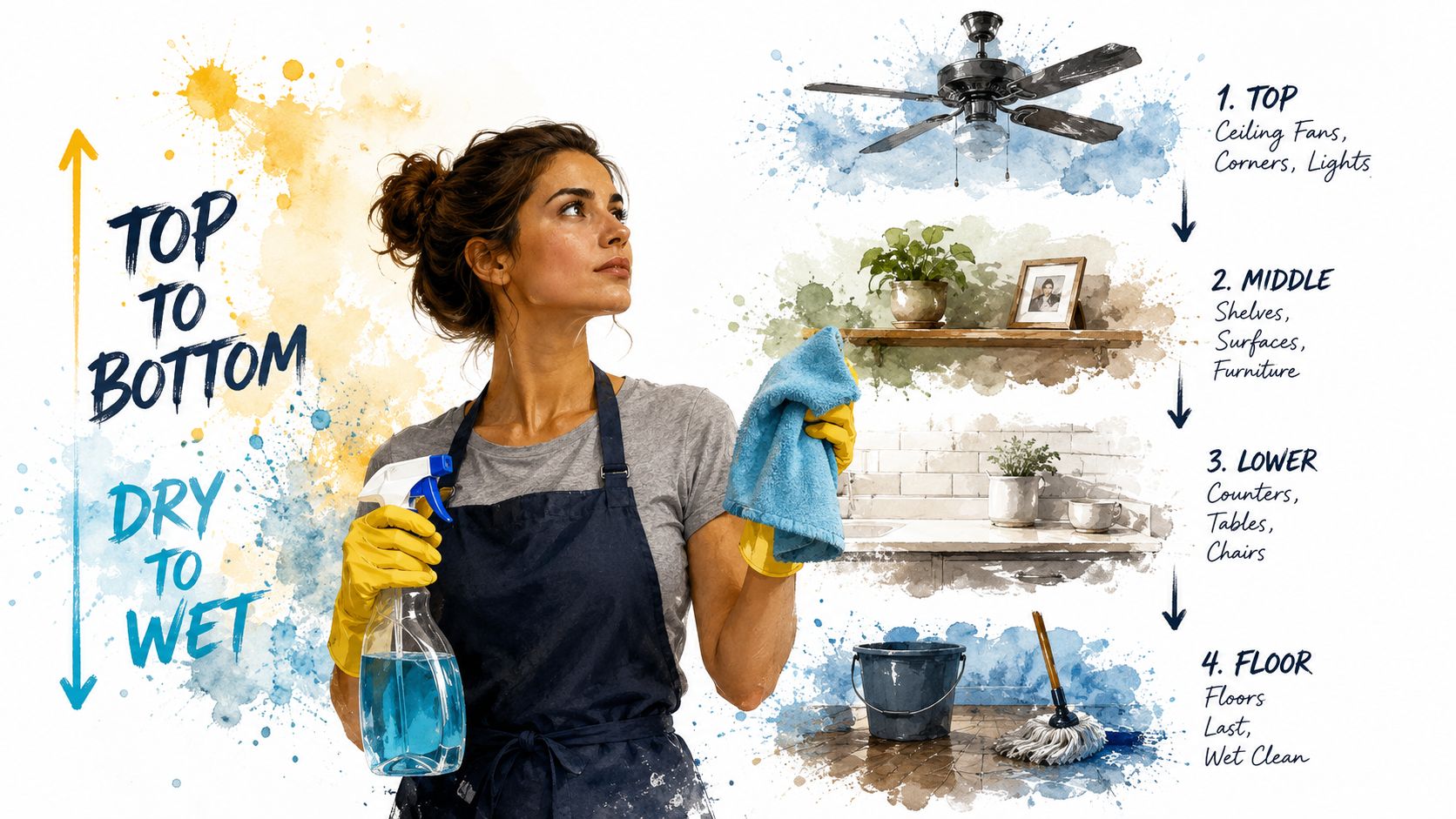
That translates into a simple sequence:
- Start high: ceiling corners, shelves, mirrors, upper surfaces.
- Move to mid-level: counters, sinks, tables, appliance fronts.
- Finish low: floors last, always.
If you're doing dry tasks like dusting and vacuuming plus wet tasks like wiping counters and mopping, keep those categories in that order too.
Don't chase dirt twice. If dust is still falling, the lower surface isn't ready yet.
Your Speed Cleaning Toolkit
You don't need a giant cart of products. You need a compact caddy that handles most surfaces without constant switching.
| Item | Purpose |
|---|---|
| Microfiber cloths | Wipe mirrors, counters, fixtures, and dust without leaving lint |
| All-purpose cleaner | Handle most hard surfaces quickly |
| Disinfectant spray or wipes | Clean high-touch areas like faucets, handles, and toilet seats |
| Glass cleaner | Clear mirrors and glass fast without haze |
| Scrub sponge or non-scratch pad | Break through stuck-on kitchen and bathroom residue |
| Toilet brush | Swish bowl fast while other products sit |
| Trash bags | Collect visible clutter and empty small bins |
| Laundry basket or tote | Sweep up out-of-place items room by room |
| Cordless vacuum or stick vacuum | Hit high-traffic floors without dragging a cord |
| Broom and dustpan | Quick pass in entryways, kitchens, and small hard-floor areas |
| Flat mop | Fast finish on kitchen and bathroom floors |
| Paper towels or disposable cloths | Backup for greasy messes and toilet-area cleanup |
Keep the caddy in one hand and the laundry basket in the other. That setup alone cuts the wandering that eats time.
Timed Cleaning Templates for Any Deadline
The fastest system is the one that matches the clock you have. If you've got fifteen minutes, don't pretend you're doing a deep clean. If you've got ninety, use it for impact, not busywork.
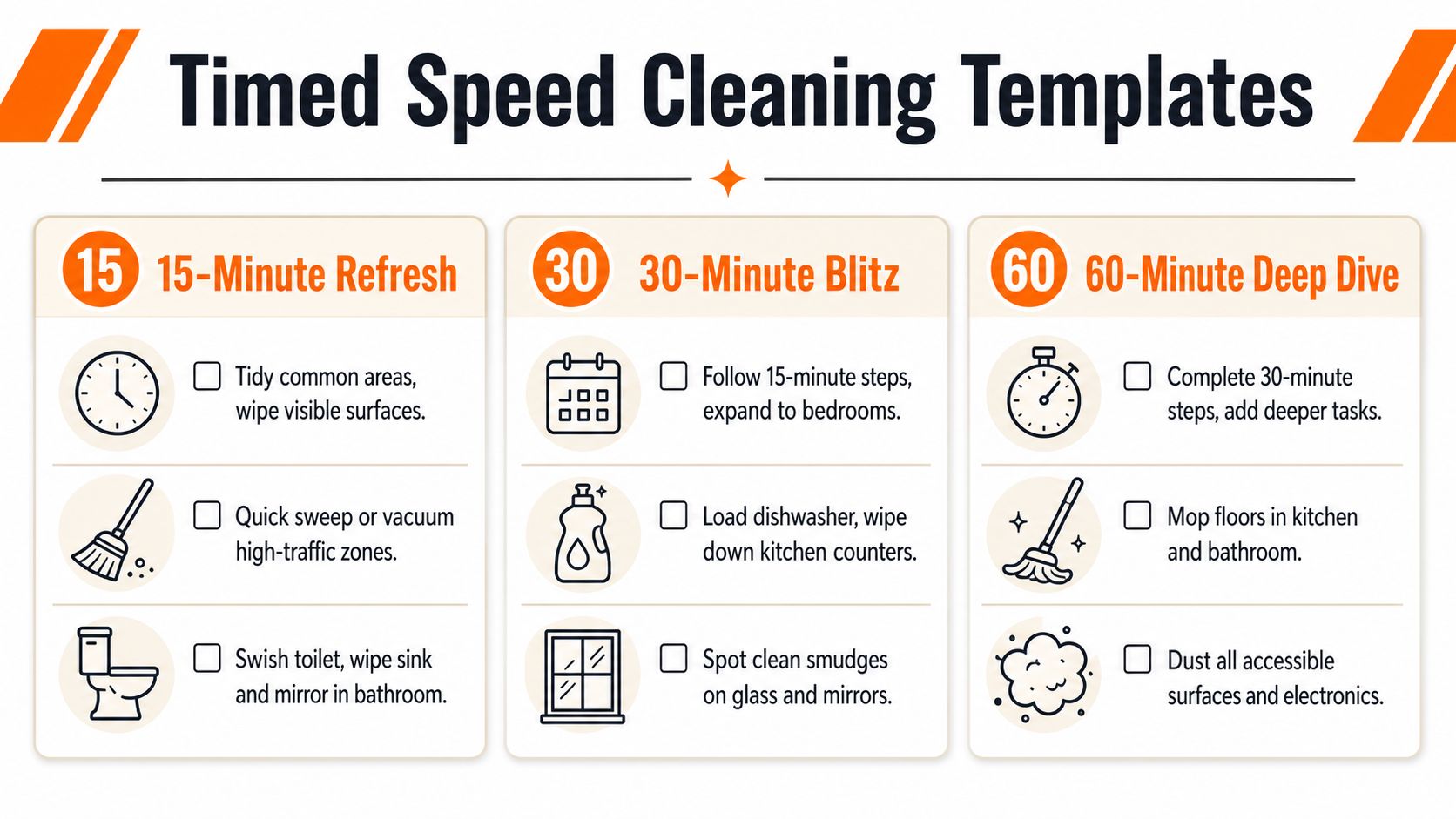
For a fuller room-by-room reset, it helps to keep a saved cleaning checklist for recurring use. In a rush, though, use these stripped-down versions.
The 15 minute Panic Clean
This is damage control. You're cleaning what guests will notice in the first minute.
- Start the kitchen immediately. Load the dishwasher or stack dishes neatly in it. If there's no time to run a full hand-wash session, get everything out of the sink and off the counters.
- Grab visible clutter. Use a basket for shoes, mail, chargers, toys, and random items. Don't sort now.
- Wipe the bathroom sink and mirror. Then swish the toilet and wipe the seat and rim.
- Quick wipe in the kitchen. Hit counters, faucet, and the front of the sink area.
- Vacuum or sweep the obvious path. Entry, living room center, kitchen floor crumbs.
If time remains, fluff couch pillows and fold one throw blanket. That tiny reset changes the whole room.
The 30 minute Guest Ready Refresh
Now you're adding a bit of polish. The goal is a home that feels intentionally maintained.
Use the first fifteen-minute plan, then add:
- Living room reset: clear the coffee table, straighten cushions, remove cups.
- Kitchen front-facing details: wipe appliance handles and the fridge door if it has fingerprints.
- One main bedroom only: make the bed if guests might see it.
- Spot clean glass: any mirror or glass surface with obvious smudges.
- Empty small trash cans: bathroom and kitchen first.
This is the point where people often lose time on dishes. Don't hand-scrub every pot unless it's essential. Hide what you can in the dishwasher, soak the rest, and move on.
A fast clean is about changing the room's signal. Clear surfaces and clean fixtures tell people the space is cared for.
The 60 minute Impressive Tidy
An hour gives you enough time to make the whole house feel settled instead of barely recovered.
Move through the house in this order:
- Declutter pass through every room
- Pick up loose items
- Empty visible trash
- Return dishes to the kitchen
- Dust and dry pass
- Shelves
- Side tables
- TV stand
- Bathroom ledges
- Wet pass
- Kitchen counters and sink
- Bathroom sink, mirror, toilet exterior
- Dining table
- Entry table
- Floor pass
- Vacuum main living spaces
- Sweep kitchen and bathroom
- Mop hard floors where people will walk barefoot or notice grime
For this time block, don't deep detail baseboards, window tracks, or inside appliances. You're going for broad, clean coverage with good finish quality in the visible zones.
The 90 minute Deep Impact Clean
This is the closest thing to a pro-style turnover clean without turning it into an all-day project. If someone asks me how to clean a house fast but still make it feel thoroughly reset, this is the version I'd give them.
First 20 minutes
Handle setup and clutter fast.
- Start machines first: dishwasher, then washing machine if laundry is blocking progress
- Open windows if weather allows: fresh air helps odors leave while you work
- Collect all trash
- Do one whole-house pickup pass
Next 25 minutes
Hit kitchen and bathrooms hard.
- Kitchen
- Clear sink completely
- Wipe counters
- Clean faucet and sink basin
- Wipe stove top if visibly dirty
- Spot clean appliance fronts
- Bathrooms
- Apply cleaner to toilet, sink, and shower-touch surfaces
- Wipe mirror
- Clean sink and faucet
- Swish toilet bowl
- Wipe toilet seat, lid, and base area
- Replace hand towel if needed
Next 25 minutes
Restore dust-free surfaces and floors.
A lot of homes look clean until the floor tells the truth. Vacuuming after the surface work matters because dust and crumbs settle as you move.
- Dust high to low in common spaces
- Vacuum rugs and traffic lanes
- Sweep hard floors
- Mop kitchen and bathroom last
Final 20 minutes
Do your finishing pass.
- Reset soft furnishings: pillows, throws, dining chairs
- Check mirrors for streaks
- Take out trash
- Do one doorway scan of each room
- Handle smell: fresh air, clean sink, empty trash, dry towels
A final scan catches what rushed cleaners miss. Stand in the doorway and look at the room like a guest would. You'll see the cup on the side table, the towel on the floor, the streak on the mirror, or the crumbs under the breakfast bar.
Focus on High Impact Priority Zones
Not every room deserves equal time. If you're trying to clean a house fast, the smart move is to target the rooms that absorb the most labor and create the strongest cleanliness signal.
According to these household cleaning statistics, cleaning kitchens and bathrooms consumes approximately 68% of the total time spent on household cleaning. That's why pros go there first. Those rooms contain grease, soap residue, water spots, and the fixtures people inspect without even thinking about it.
If you've only got energy for a partial clean, don't spread that effort thin across every room. Put it where it changes the outcome.
Kitchen quick wins
The kitchen tells people whether the house feels under control. A cluttered sink and messy counters broadcast stress.
The fastest high-impact kitchen sequence is short:
- Empty or hide dishes: dishwasher first
- Clear counters completely: leave only essentials
- Wipe counters and backsplash splashes
- Polish the sink and faucet
- Sweep crumbs from the visible floor area
A shiny sink does a lot of work. So do bare counters. If the stove top has one bad spill, wipe that too. If it's generally used but not alarming, leave detailed degreasing for another day.
For room-specific detail work when you have more breathing room, a focused guide on how to clean a kitchen helps you go beyond the speed-clean version.
Bathroom quick wins
Bathrooms judge you fast. The good news is they also transform quickly.
Focus on the pieces with the strongest visual and hygiene impact:
- Mirror first. A clean mirror brightens the whole room.
- Sink and faucet second. Toothpaste spots and water marks are what people notice.
- Toilet third. Swish the bowl, wipe the seat, handle, rim, and outside.
- Freshen the floor. Pick up hair, tissue bits, and damp towels.
- Straighten what's visible. Fold the hand towel, close products, empty the small trash if needed.
If the shower door is streaky but the rest of the bathroom is clean, that's acceptable in a rush. If the toilet area looks rough, it isn't.
The bathroom doesn't need spa-level detail. It needs to look sanitary, dry, and recently wiped down.
Living spaces and entry areas
Living rooms and entryways are mostly about editing. Remove what doesn't belong and reset what guests see at eye level.
That means:
- Coffee table clear
- Blankets folded
- Pillows straightened
- Shoes lined up or moved
- Visible floor debris vacuumed
These spaces usually don't need heavy scrubbing. They need order. If you spend too long polishing decor while clutter is still on the floor, you've picked the wrong battle.
The Two Person Speed Cleaning Workflow
If two people are available, don't both start in the kitchen. That's how you collide, wait on each other, and turn help into traffic.
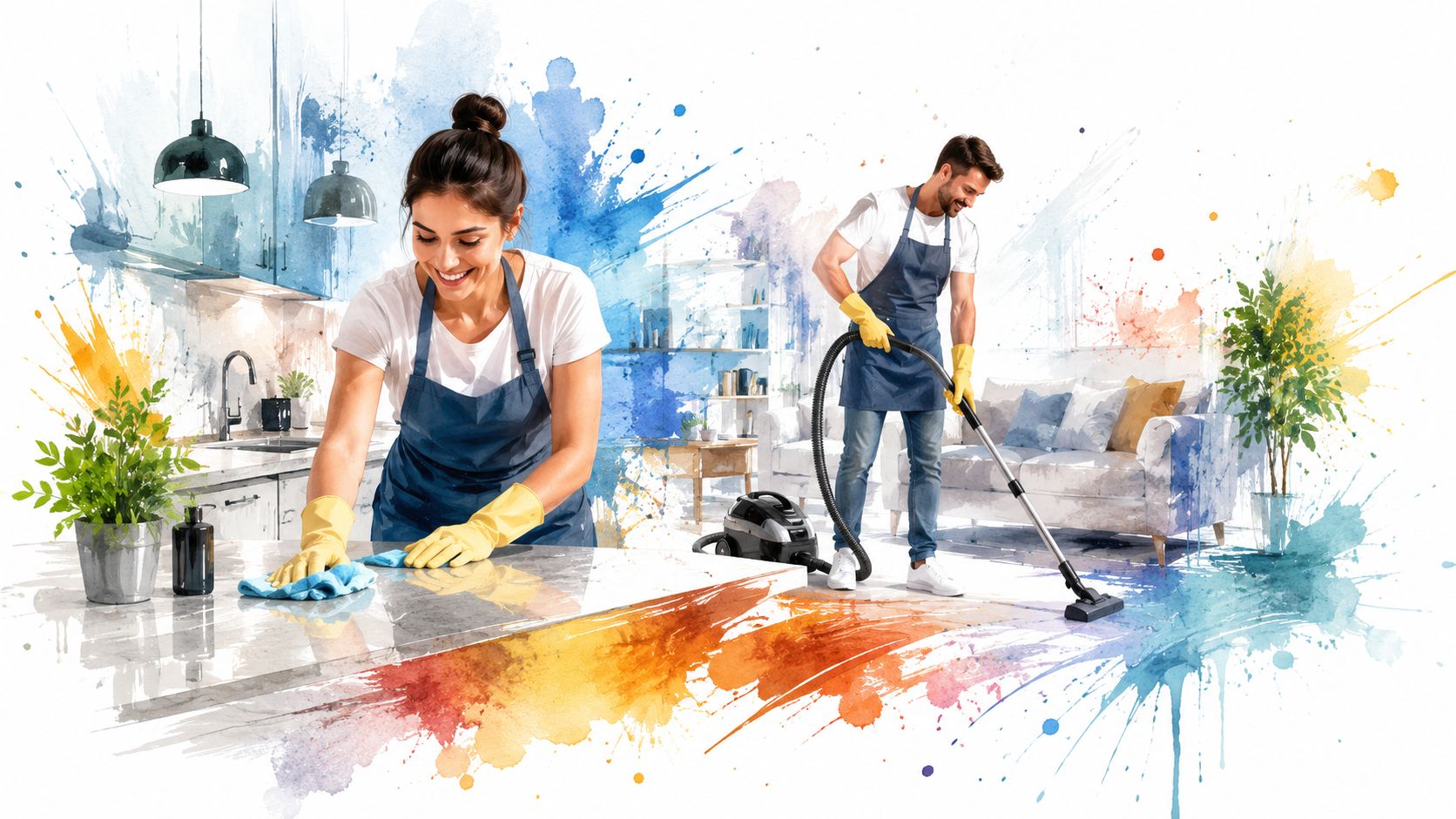
The better method is a relay. One person handles dry tasks and pickup. The other follows with wet tasks and finish work. That creates flow instead of overlap.
A useful benchmark from this discussion of speed-cleaning tactics is that body doubling can increase cleaning velocity by 40 to 60% compared to working alone. The same source also points out that loading the dishwasher and washing machine immediately turns those appliance cycles into dead time you can use for manual cleaning.
How to split the house without getting in each other's way
Person A handles dry and pickup work
- Carry a basket for clutter
- Empty trash
- Put dishes in the kitchen
- Dust upper and mid-level surfaces
- Vacuum common areas and bedrooms
Person B handles wet and finish work
- Start dishwasher and laundry
- Wipe counters, tables, and handles
- Clean bathrooms
- Spot clean mirrors
- Mop kitchen and bathroom floors after vacuuming or sweeping
The key is spacing. Person A moves ahead room by room. Person B starts where Person A just finished clearing.
Here's a short visual if you want to see the movement in action:
The appliance head start
Don't wait to “get to the dishes later.” Start every machine in the first minutes.
That means:
- Dishwasher loaded and running
- Washing machine started if towels or linens are part of the mess
- Bathroom cleaner applied early so it can sit while you work elsewhere
Active cleaning time is precious. While a cycle runs or a cleaner sits on a surface, you should be somewhere else making progress.
One more rule: don't let both people perfection-clean the same room. In fast cleaning, shared ownership often means duplicated effort. Split the roles cleanly and keep moving.
When to Book a Professional for a Truly Fast Clean
Some homes can be reset quickly with a disciplined DIY pass. Others can't. If you're facing heavy buildup, move-in or move-out pressure, post-renovation dust, or a property that has to meet guest standards on a tight deadline, professional speed matters more than motivation.
That's especially true in Miami's short-term rental market, where turnover windows are tight and expectations are high. A 2025 Airbnb operational report cited by Apartment Therapy's coverage of fast whole-house cleaning found that 68% of Miami-Dade short-term rental hosts see cleaning speed between guests as their top operational bottleneck, with average turnaround times exceeding 110 minutes despite standard speed-cleaning tips. That gap is real. Generic advice doesn't always fit a market where one delayed clean can disrupt the whole day.
In practice, the tipping point is simple. If the job requires hotel-style consistency, faster turnover, or a deeper reset than you can finish without cutting corners, outside help is the faster option. It also keeps routine maintenance from turning into another weekend lost to catch-up cleaning.
If you want a faster way to get a Miami home, apartment, office, or short-term rental guest-ready, Canes Cleaners offers scheduled and on-demand cleaning across Miami-Dade with hotel-trained teams, defined checklists, and online booking. It's a practical option when you need reliable results without spending your own evening racing room to room.